
Hul'qumi'num: kwumsuli'qw (mushroom)
Latin: Ganoderma oregonense

Photo Credits: Flora Lake
Description: This is a shelf polypore (conk) that is part of the reishi family. It grows from decaying wood, and its size ranges from something that fits in the palm of your hand to something that requires two hands to hold. It usually has a short and stubby stalk attaching to its host log; however, the stem can grow to be elongated and reaching. The top of the cap changes with age. When it is young, it is a deep red at its stalk and center, followed by a yellow/orange band, then a white band at its outermost edge with a soft, rounded margin. At this point, the mushroom is soft and somewhat spongy to the touch, and the white margin will bruise easily. As it matures, it loses the yellow/orange and white bands, and the entirety of the cap becomes a brilliant purple/red (kidney bean) colour. The cap becomes hard, and its shape curls downward towards its margin, which develops a more defined edge. The top of the cap at both these stages is smooth and shiny, thus the name “Varnish Conk”. As it ages, the conk “spores out”; at this stage, it completely covers itself in spores. You no longer see its brilliant colour or its shiny texture; instead, it is covered in a layer of dusty brown spores. Through all these stages, the underside of the mushroom remains white, porous, and bruising brown, that is, until it begins to decay.
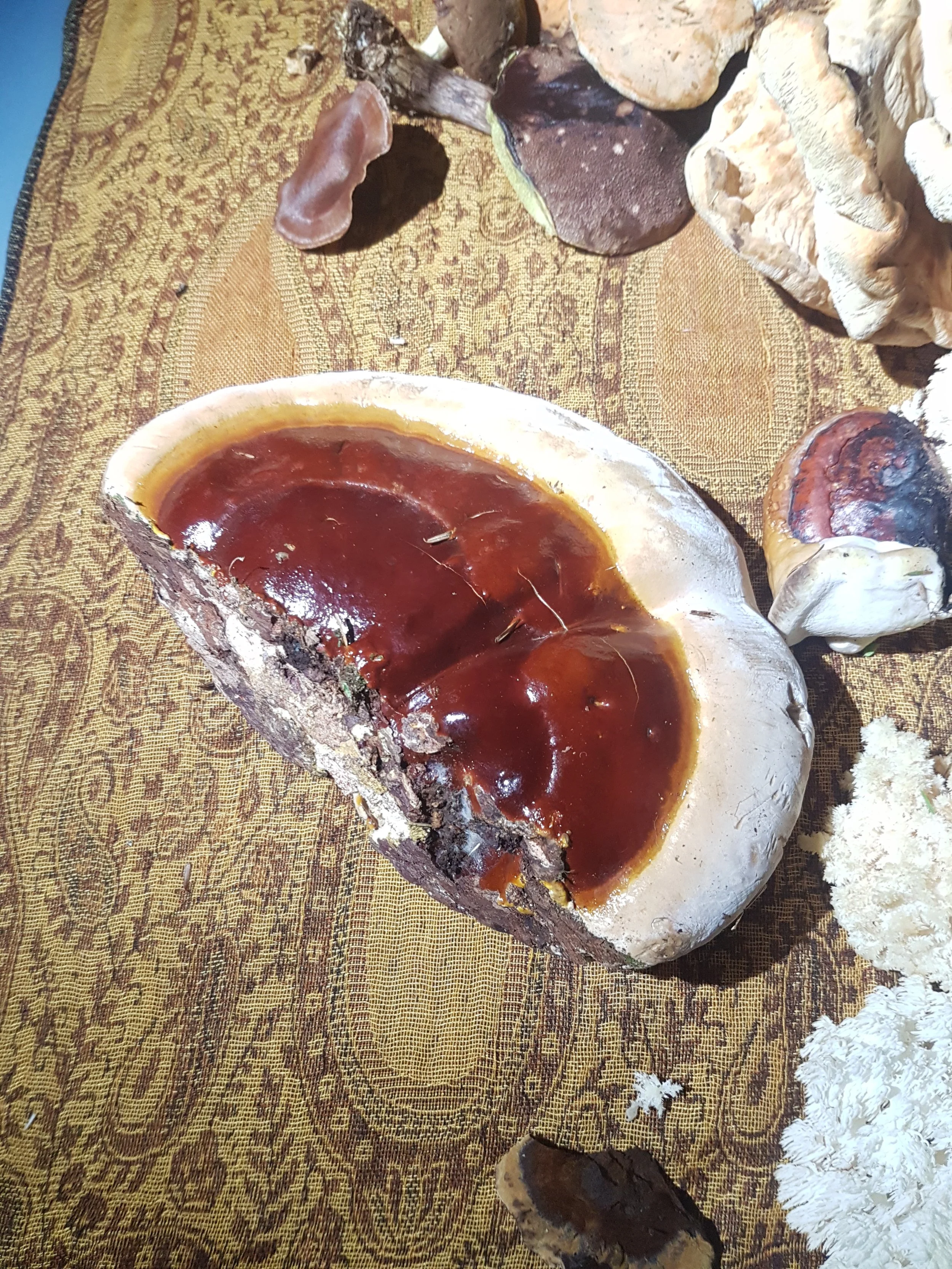
Photo credit: Flora Lake
A young Varnish Conk (left) and Red-Belted Conk (Right) showing their similar colours, but notable difference in shine.
Look-a-like: If you are a first-time forager for this mushroom, you may mistake the Red-Belted Conk (Fomitopsis pinicola) for the West Coast Reishi. The Red-Belted Conk resembles the early stage of West Coast Reishi, with the deep colour center, yellow/orange band, with a rounded white margin. Once you see the shine of a Varnish Conk, you will never mistake these two, but if you haven't found Varnish Conk before, you may be fooled. Especially since these two species can share the same host at the same time! Some other ways to distinguish these two, you’ll find Red-Belted Conk is much denser and harder, with its center colour closer to black, and it is a lot more common growing on younger, alive, dying, or dead conifers. Red-Belted Conk is not toxic and also has some medicinal qualities, so there is not much risk in mistaking these two.
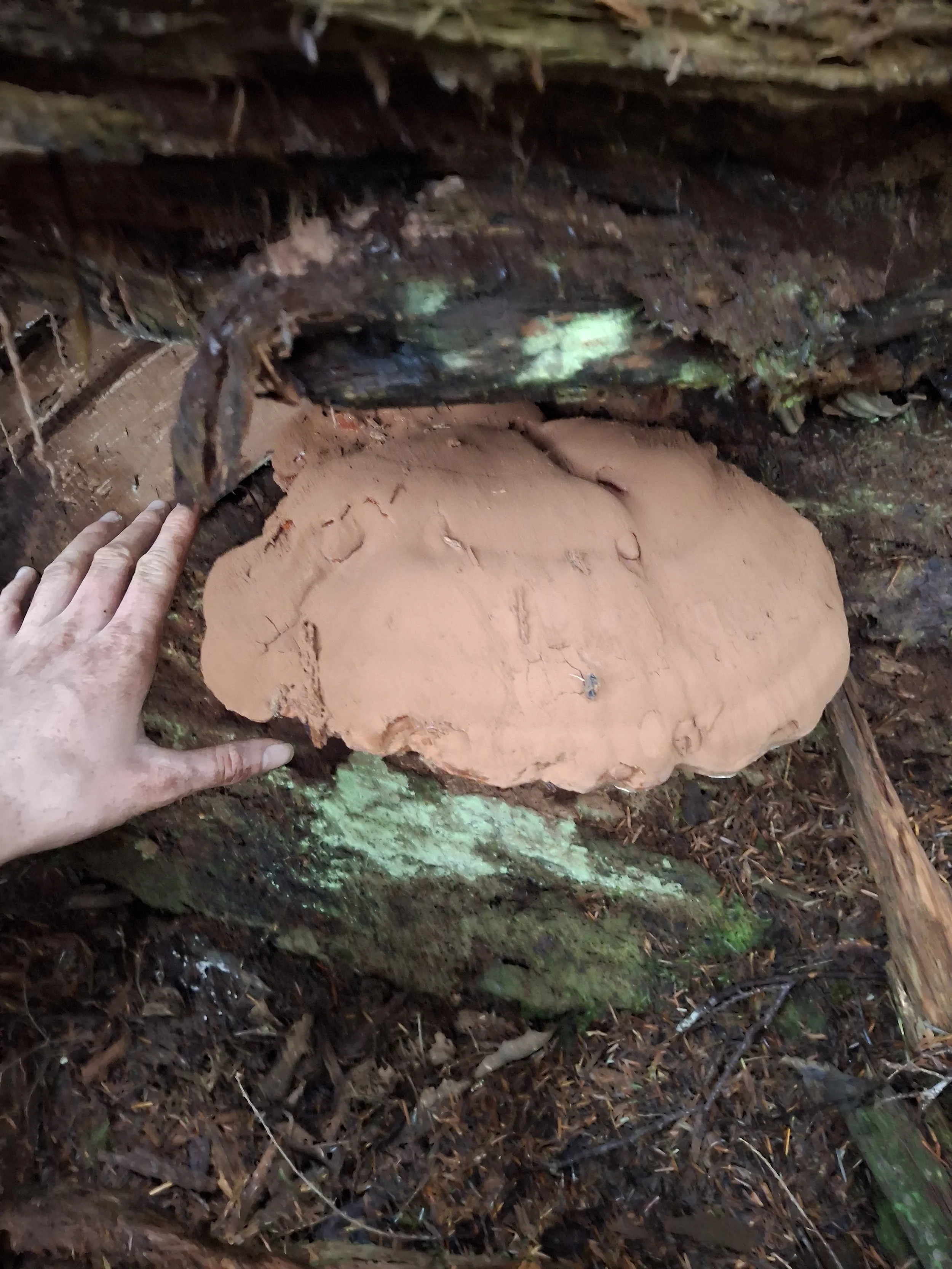
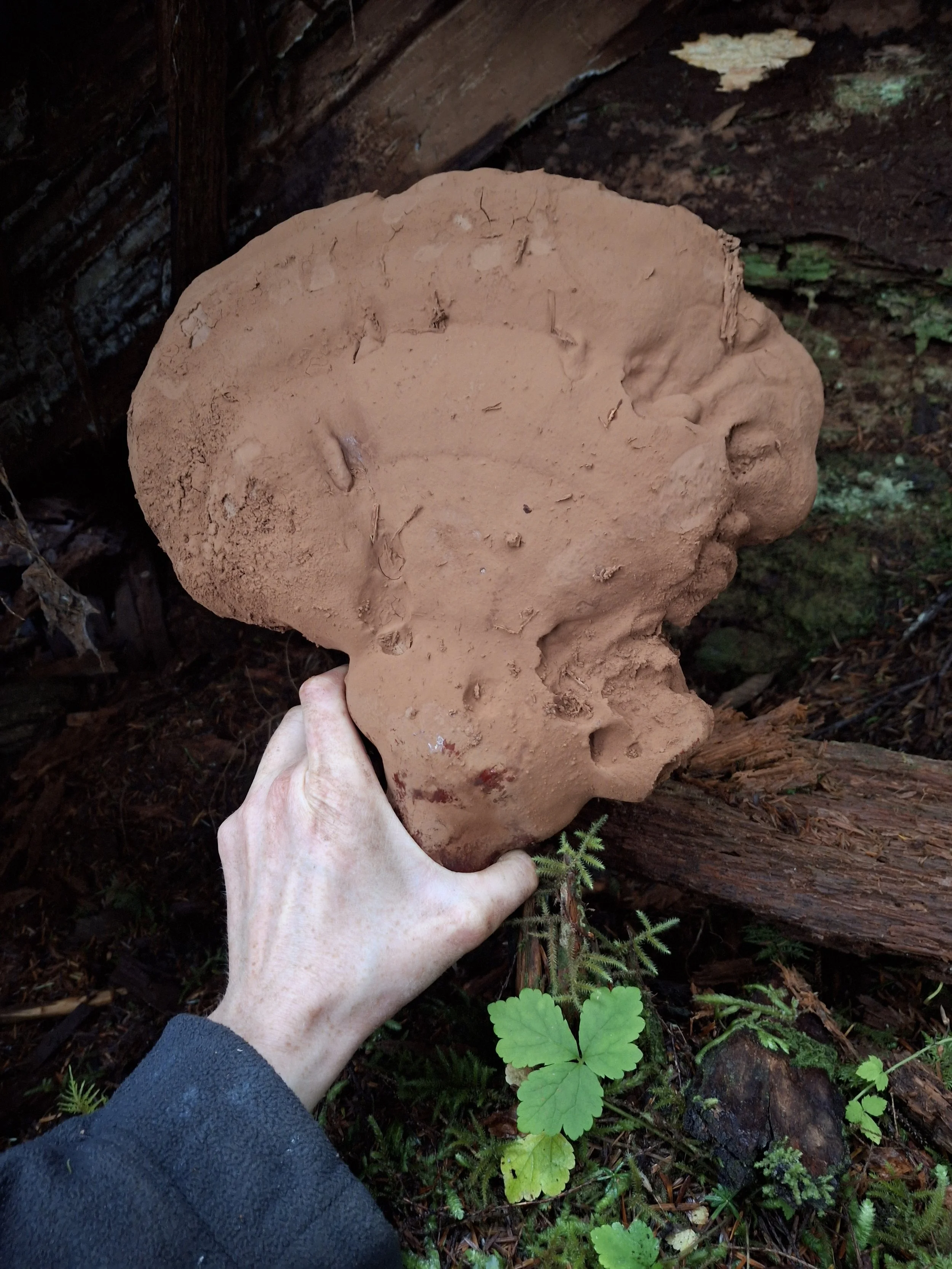
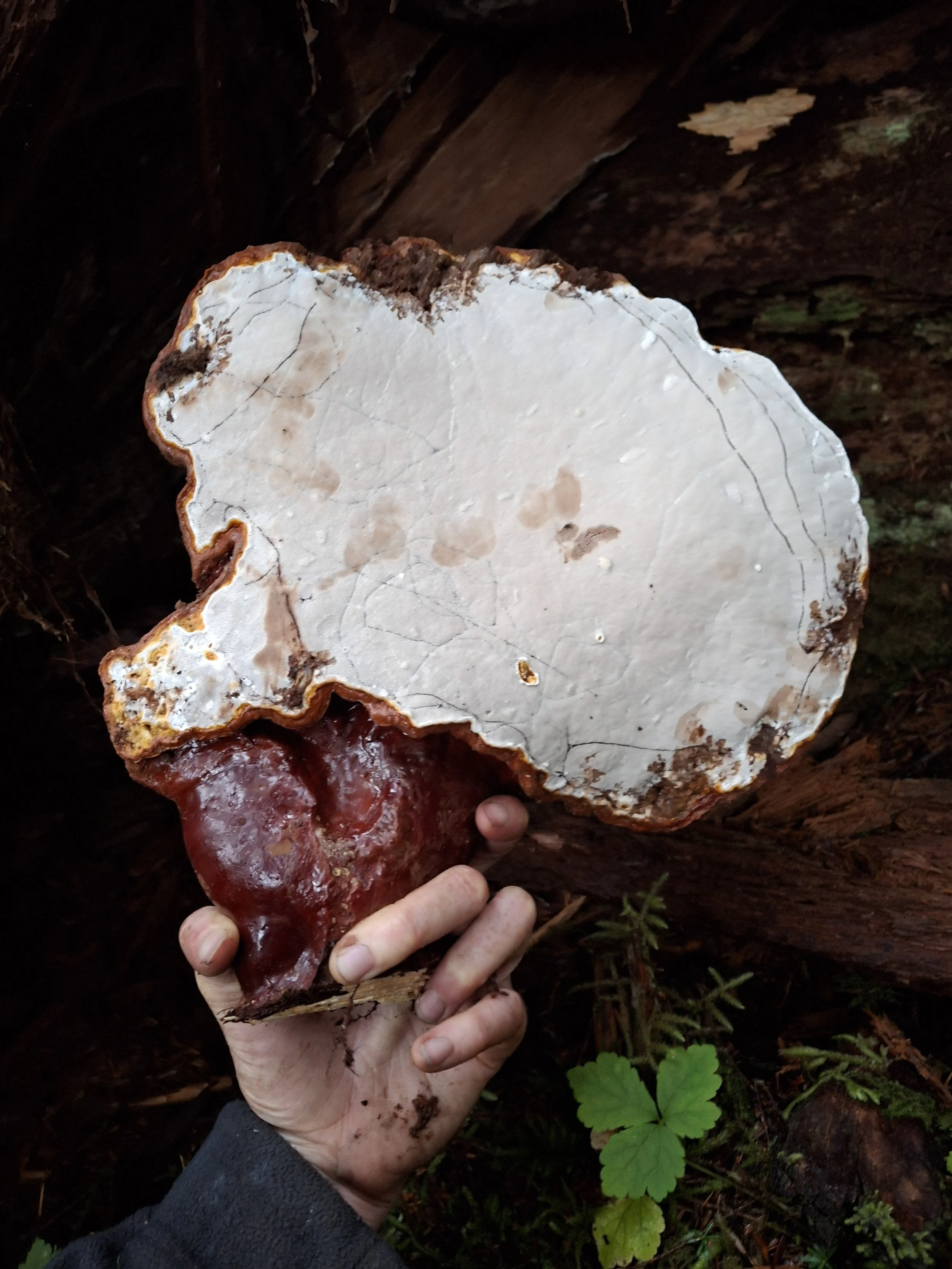
Harvest and Sustainability: The best time to harvest Varnish Conk is usually August/September, but you can also find them in the surrounding months. These mushrooms grow on dead or dying old-growth conifers. I have had the most luck finding them on old hemlock stumps and logs, but I’ve also found them on Doug fir and other conifers. These are mushrooms that will fruit annually from the same log, so when you find them, save the location, time of year, and check back in the following years. This also means that sustainable harvest is important to sustain future fruitings. It is generally in good practice to cut and leave part of the stem of this mushroom attached to the log to encourage more fruiting. As long as the underside of the mushroom seems white and fresh, it is good to harvest. When the underside turns more brown in its entirety, it is past its prime. I have found that they do not keep as well in their younger, soft stage, so unless you process them right away, I recommend harvesting at the more mature stages. After harvesting, they will become more and more hard, so although the more mature ones are more stable, they will become harder to process as time passes. It is overall best practice to process them as soon as possible.
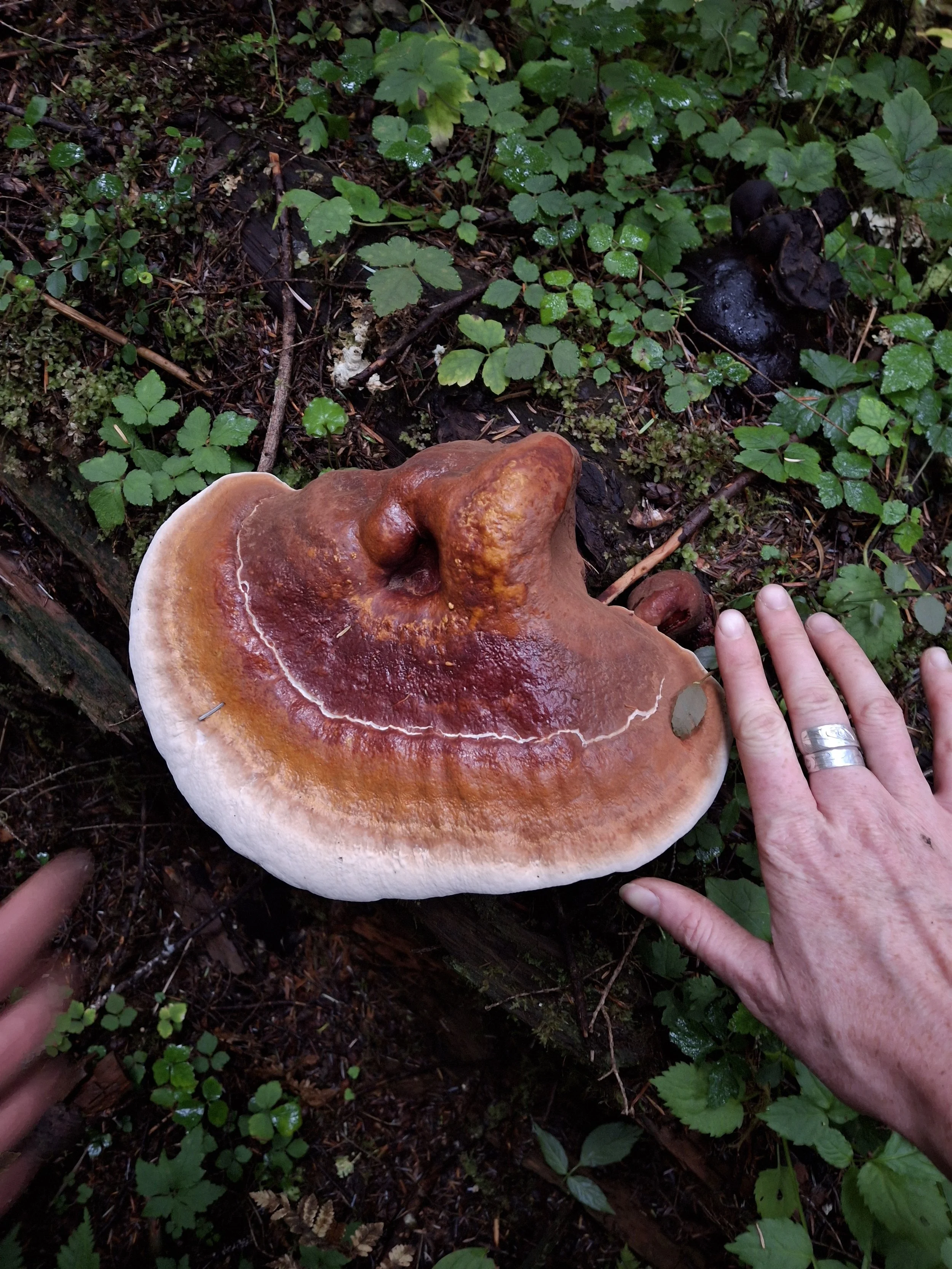
Photo Credits: Flora Lake
Uses: As a part of the reishi family, this mushroom is an incredible medicine. In traditional Asian medicine, reishi is known to heal the body as well as the spirit. Potential benefits of taking West Coast Reishi are as follows:
Immune support
Ant-bacterial
Anti-viral
Anti-tumor
Anti-inflammatory
Benefit lungs/respiratory tract
Support for heart and liver
Can relieve pain, anxiety, insomnia and depression
Sleep aid
Increased energy
Improved cognitive function
Antioxidant qualities
I would highly recommend doing your own research to understand the scope of potential benefits and the limitations of studies on Varnish Conk to conclude if it is something you would benefit from taking as a medicine.
Tea: Vanish Conk can be cut and dried to be brewed as tea. Fun fact: if you dry your reishi in the sun, it will actually absorb vitamin D that is then made available to you upon consumption. Like Turkey Tail, reishi tea is one that should be simmered on the stove for multiple hours, and can be reused with fresh water for multiple batches of tea. If you want to go even further, you can dry the pieces you used for tea and grind them into a powder that you can also take. A lot of the beneficial elements in this mushroom are water-soluble, so you can get many benefits from taking it in these ways.
Tincture: Another method that I used for processing Vanish Conk was a double extraction tincture. This extracts different qualities of the mushroom by using both alcohol and water. Some of my notes on this method:
Using a strong alcohol such as Everclear is essential for extracting the entirety of the medicinal qualities from this and other mushrooms. In Canada, this was very hard to find, but I managed to have a BCL order it in for me.
The longer you steep it in the alcohol, the better. I happen to leave mine for a year, which may be on the edge of being unnecessarily long, but it doesn’t hurt the tincture.
Shake and stir up your tincture most days to extract the most benefits and give it good intentions.
This website describes the general process of a double extraction: https://modern-forager.com/making-medicinal-mushroom-tincture/
I have found my tincture to work very well. I often take it when I feel like I may be getting sick, if something is going around, or when I'm feeling unbalanced.
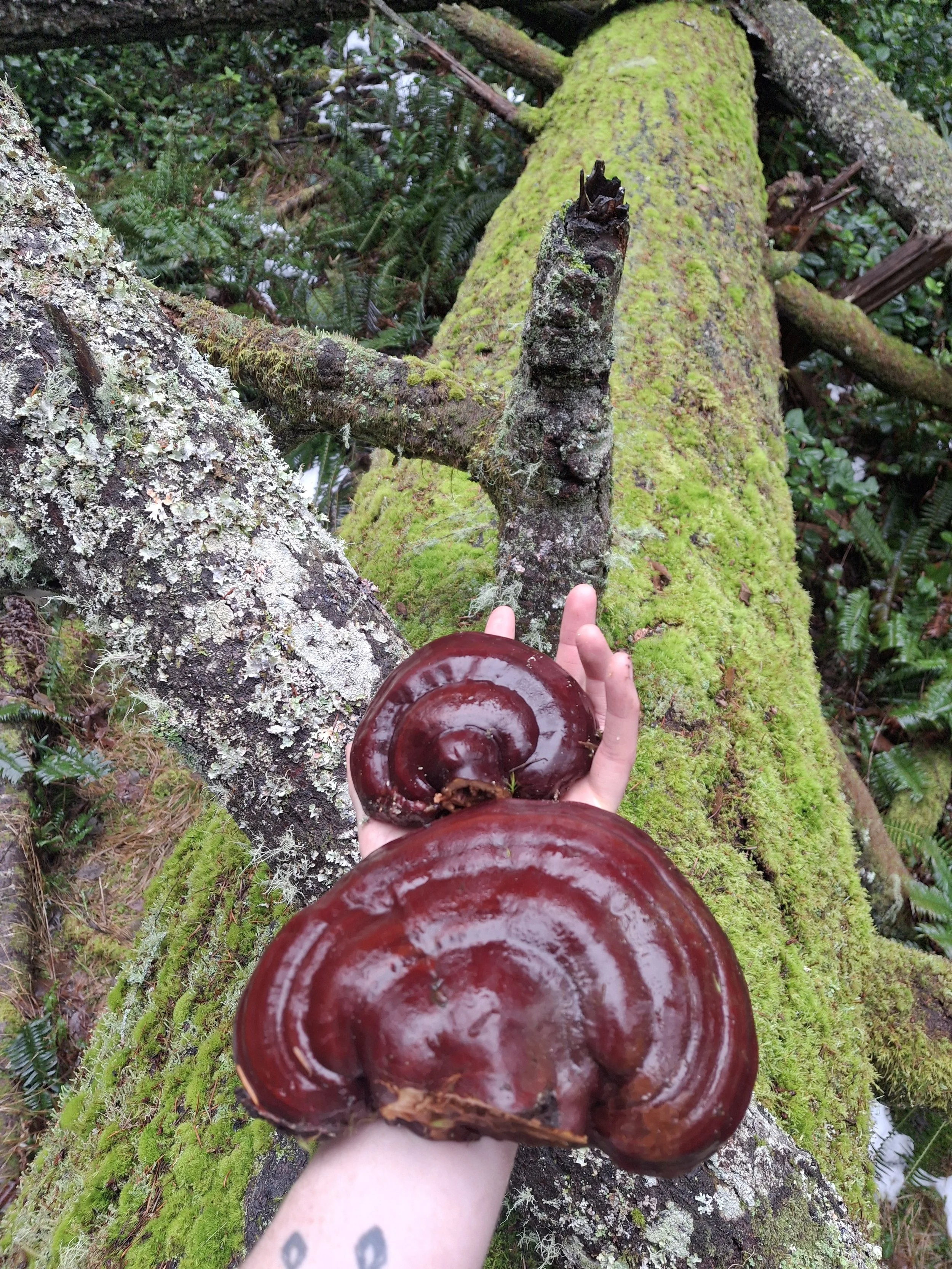
Photo Credits: Flora Lake
