
Lobster Mushroom
Hul'qumi'num: kwumsuli'qw (mushroom)
Latin: Hypomyces lactifluorum
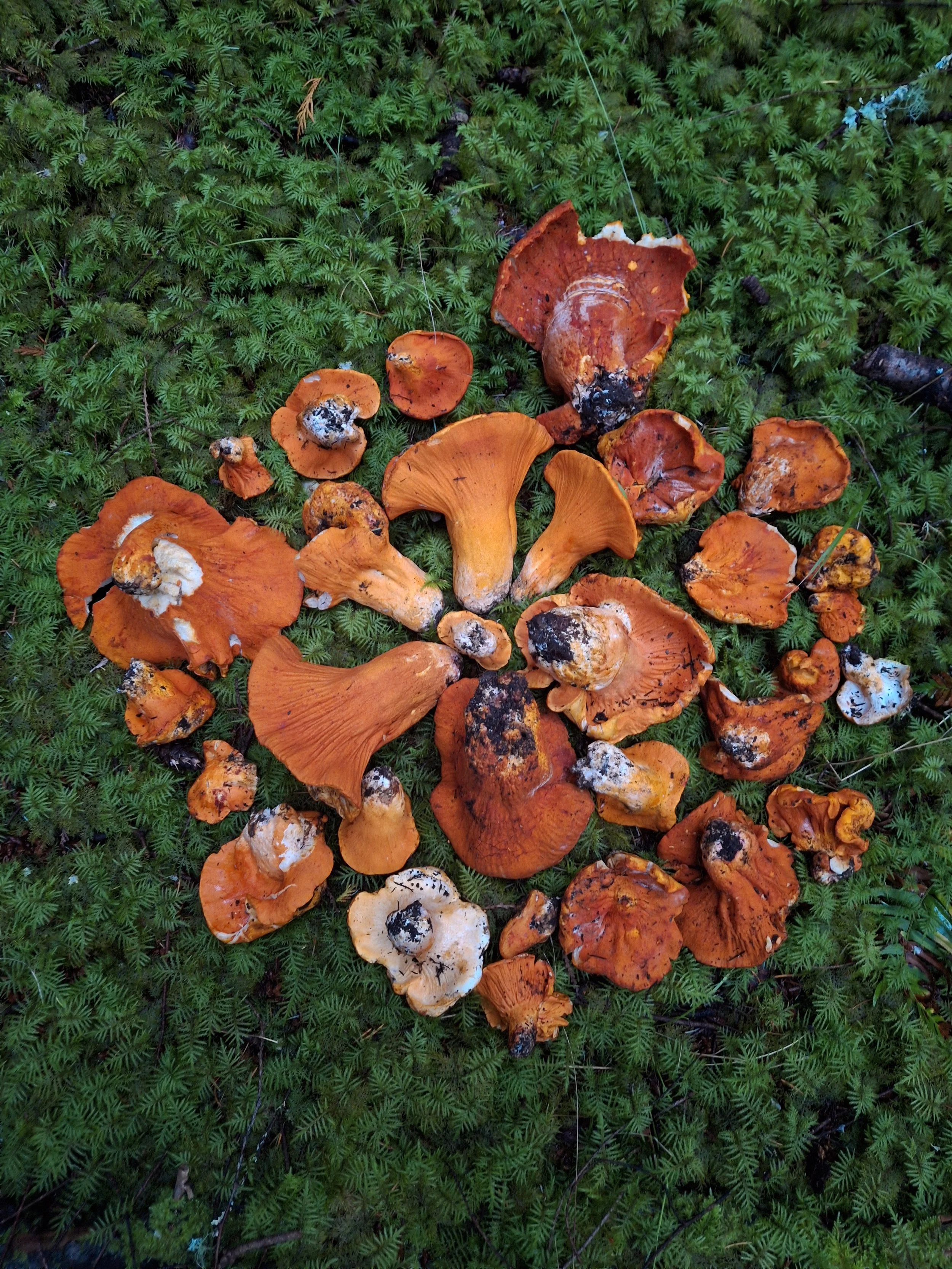
Photo Credits: Flora Lake
Description: The Lobster mushroom is distinct as it is made up of two fungi, a host and a parasite. The favourite host of the parasite (H.lactifluorum) is the short-stemmed russula (Russula brevipes), but it can parasitize other species, mostly Russulas or Lactarius. As how Russulas grow, you will commonly find this mushroom pushing up through the forest floor. The parasite Lobster mushroom uses the structure of the host mushroom; the result makes it look like it has been wrapped in a sheet. It shows no distinct gills or attachment of the cap; you will only see blunt grooves where these features were. Its colour is a brilliant red/orange, like a cooked lobster. Infact the outside of the mushroom has a similar texture to a crustation, it is hard, and slightly rough in texture, but still smooth. This mushroom also has a slightly seafood-like smell. Because the mushroom pushes up the forest floor, the top sometimes holds soil, water, and whatever else it has pushed up, and is usually not as pristine as the underside and stem. Its spore print is white, and often you will find them dusted in a light coat of their spores. The inside of the mushroom is also white.
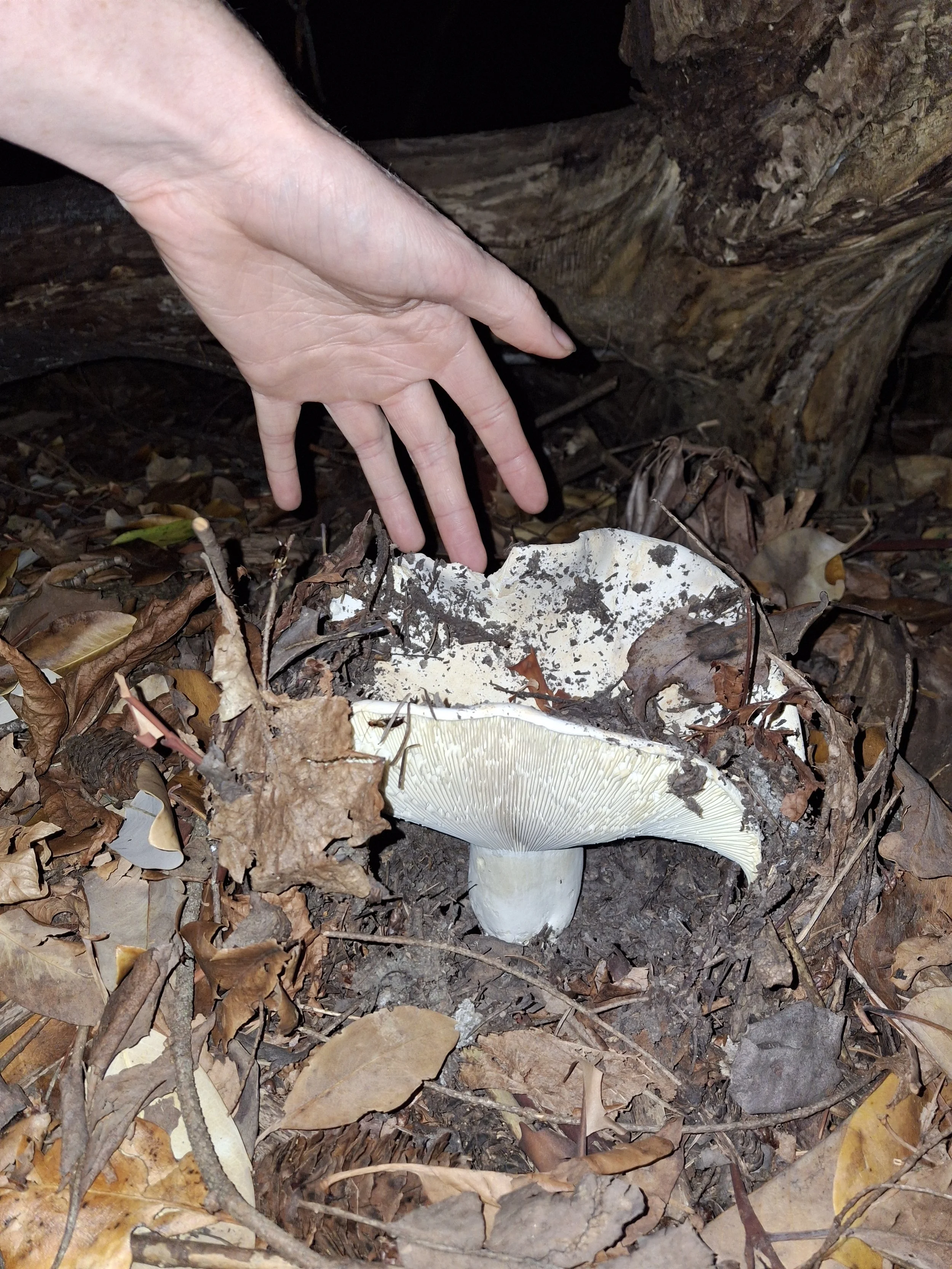
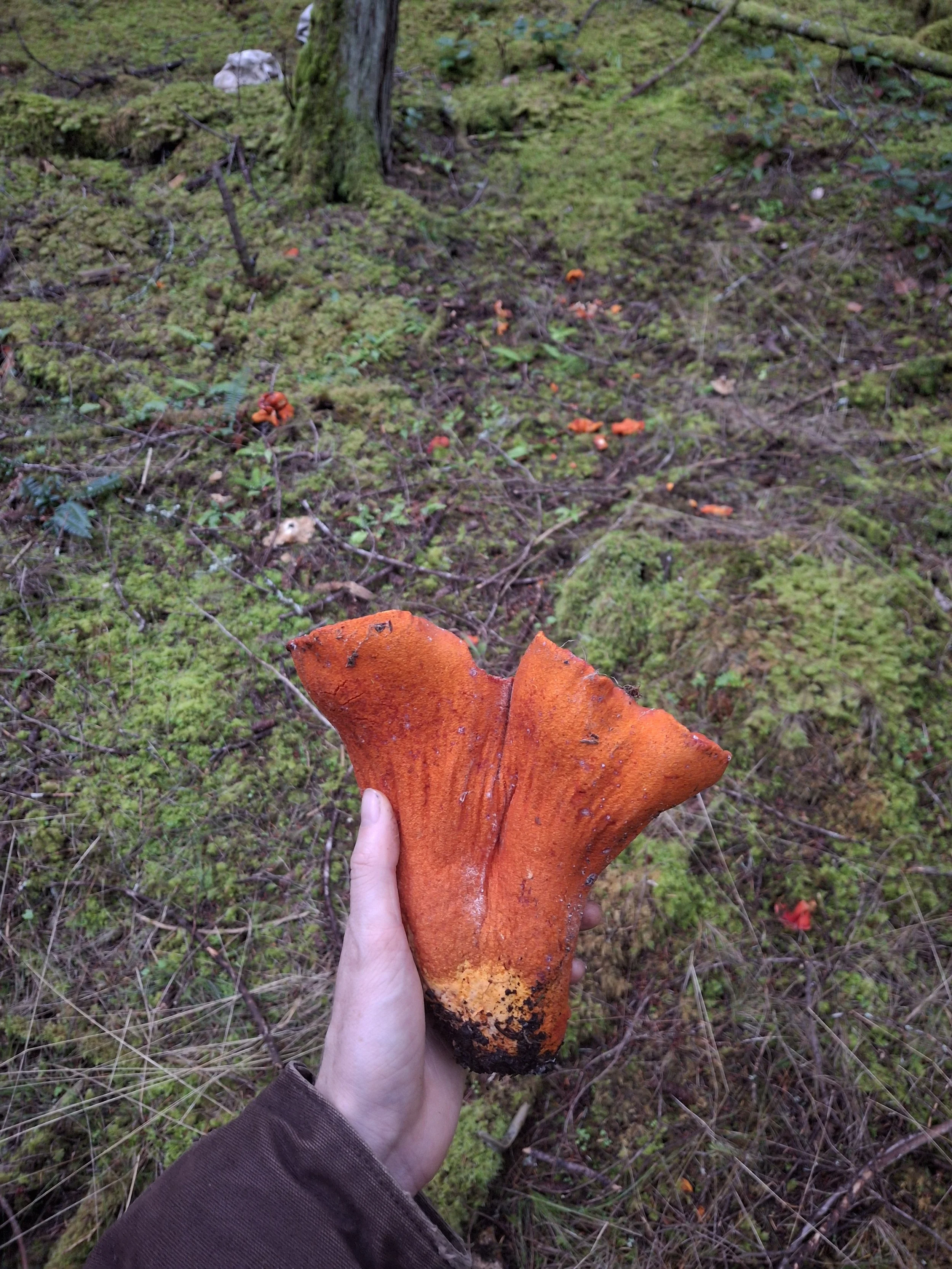
Left: Russula brevipes // Right: Hypomyces lactifluorum
Harvest and Sustainability: You can find Lobsters as early as July and well into the fall, depending on the weather. Lobsters do seem to always be the “first” one I find going into the main harvest season. They do seem to slow down when conditions get too consistently wet. I find them most on flat topography, but they don't seem to care if they grow in the middle of a compact trail or under a patch of untouched moss. As mentioned above, they push up the forest floor as they grow; sometimes it takes spotting “lumps” under a carpet of moss to find them. It is good practice to put back the forest floor if you have uncovered it. They should be hard when you harvest them; if they are soft or smell very fishy, they are past their prime.
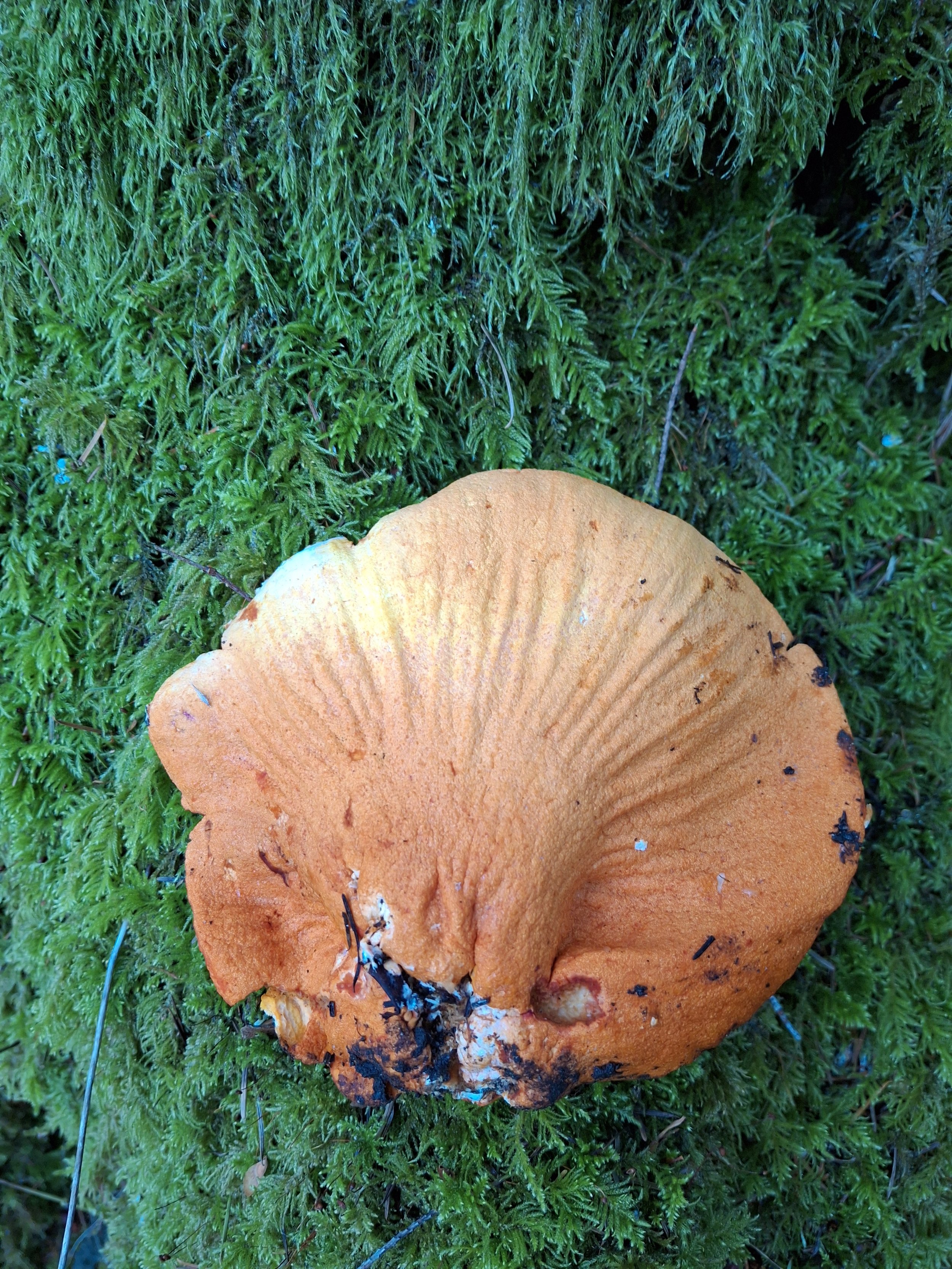
Photo Credits: Flora Lake
Uses: Lobster mushrooms are a meaty mushroom with a light seafood flavor. They can be fried up fresh, but they also do well being dehydrated and ground up to be used as a flavoring for soups or anything you would like to add to. They have an intense pigment that can change the colour of your meal. This pigment can also be used as a dye. If you dry and simmer the skins of the lobsters, with different pH levels and preparation of natural fibers, you can achieve pinks, oranges, and purples!
Sources:
This website gives a more in-depth look at this dying process: https://wildcraftdyeing.com/blog/lobster-mushroom
This website shows the variability in colouring of mushroom dyes with variation in pH, processes, and fibers: https://mushroomcoloratlas.com/mushroom/hypomyces_lactifluorum/
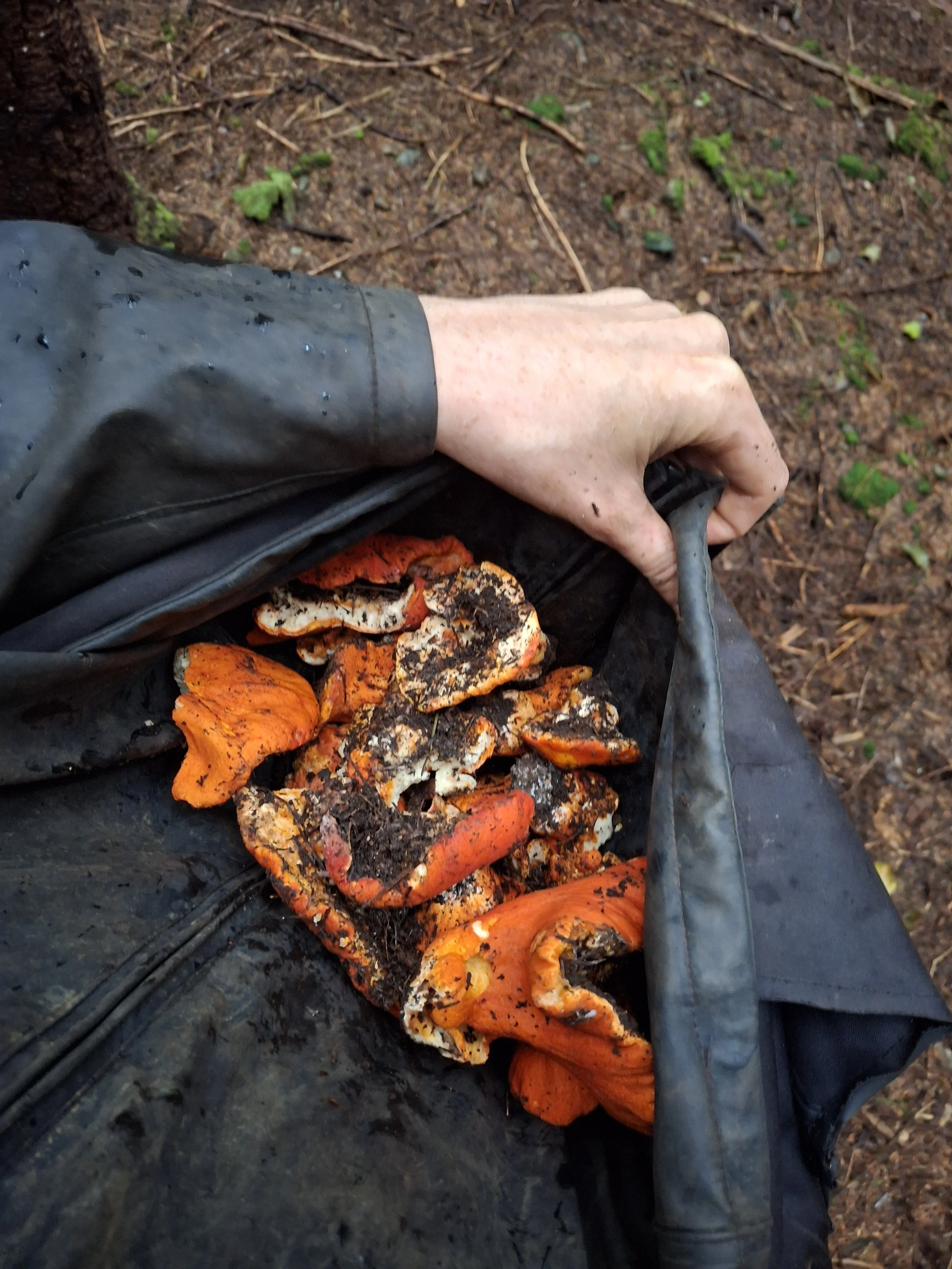
Photo Credits: Flora Lake
No caution: Some of my field guides warn that H.lactifluorum can parasitize toxic mushrooms, but recently it has been confirmed that none of the hosts of H.lactifluorum are toxic. Happy harvesting!
