
Hul'qumi'num: kwumsuli'qw (mushroom)
Latin: Laetiporus sulphureus
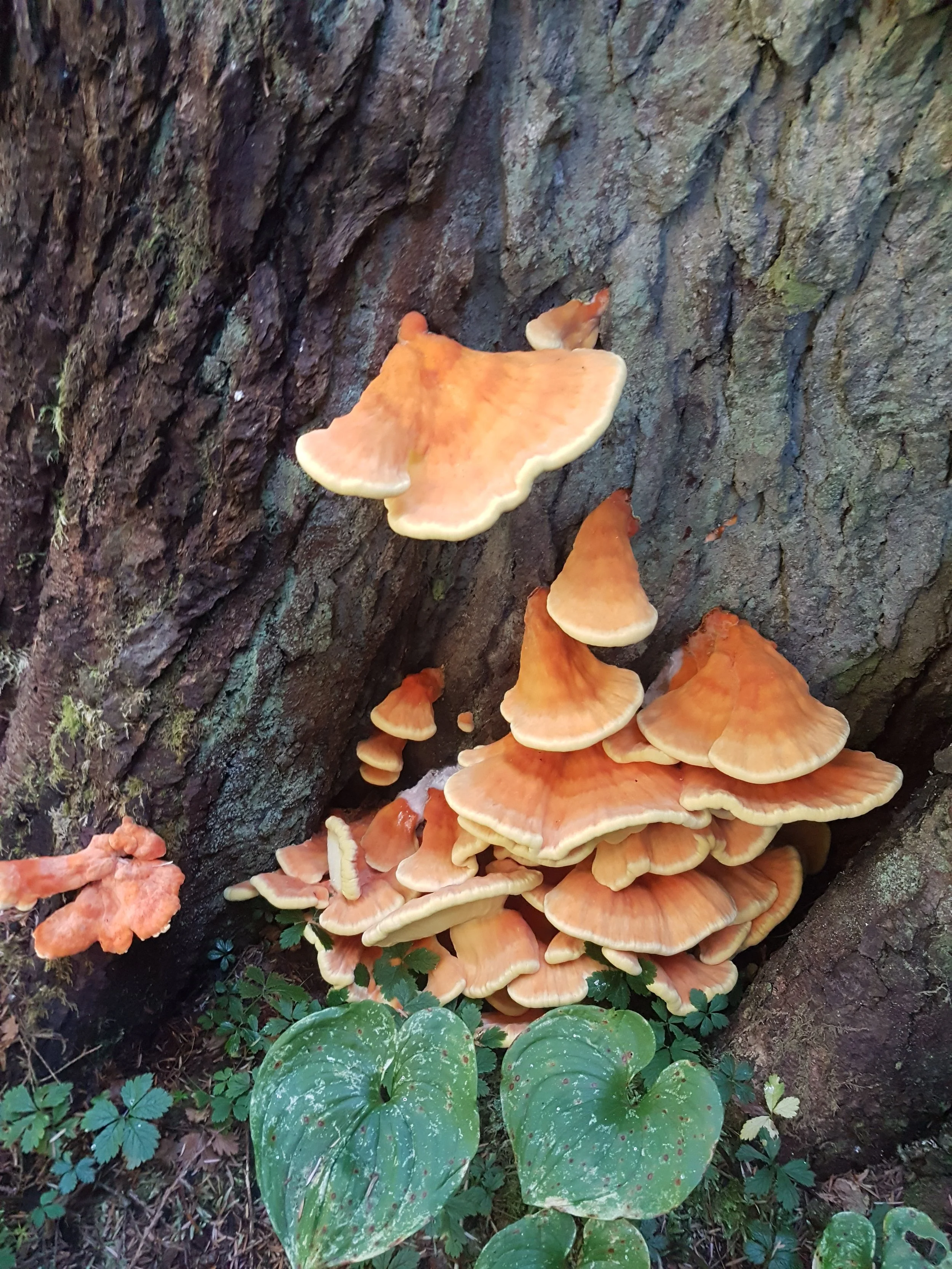
Photo Credits: Flora Lake
Description: Chicken of the Woods is found growing on both deciduous and conifer snags, sometimes on the roots, and sometimes on living trees. I’ve found them on both living cherry trees on the city streets and on decaying old-growth deep in the forest. They grow in shelf-like structures, overlapping in large clusters or standing alone. They do not have any stalk. Their shelves are larger, about 1 inch thick, and vary from about a 2-12 inch radius, and can weigh around a pound. They are fleshy, almost rubbery in texture (when fresh), dense, and smooth, with a rounded edge (margin). On top of their caps, they are coloured brightly with a gradient of yellow to orange to red, or sometimes a bright salmon colour. Underneath, they are solid yellow, porous, and they release colourless spores, leaving a white spore print.
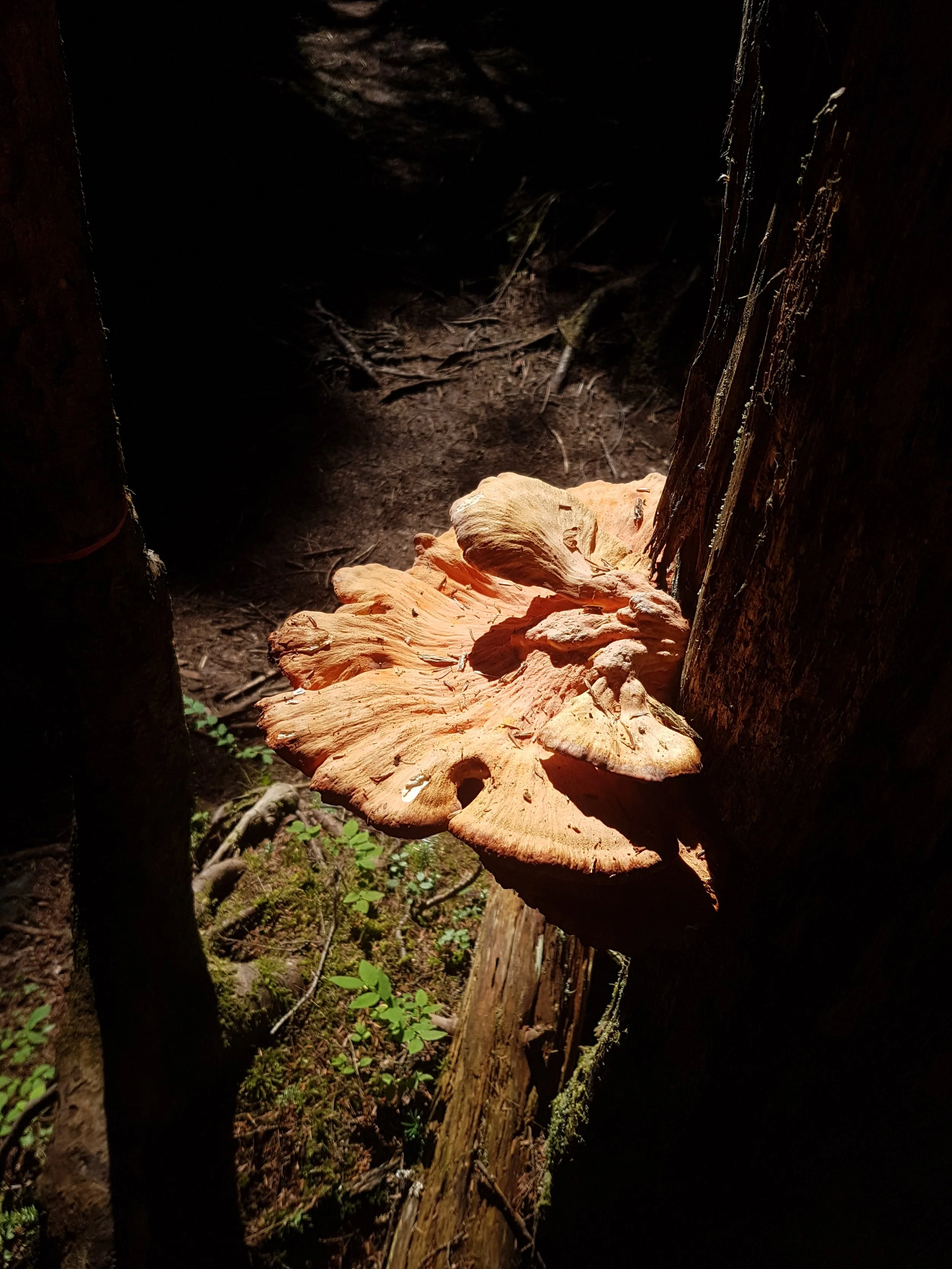
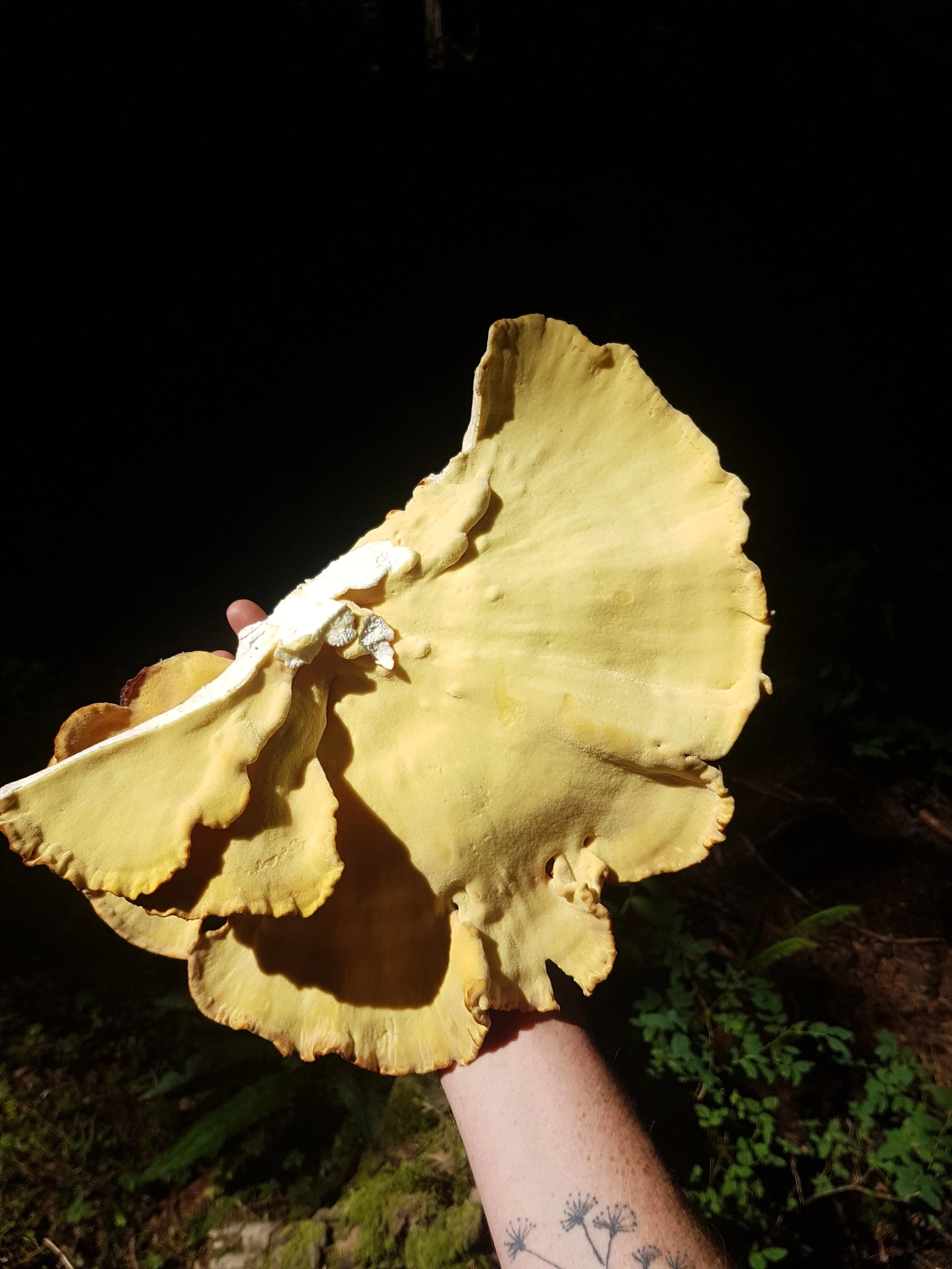
Harvest and Sustainability: Chicken of the Woods fruits from May to November. Depending on the log they grow from, they will need more or less water to fruit. I have found that moisture doesn't matter much for chickens that grow from living trees or very large stumps, compared to those growing from smaller stumps. They will fruit again and again on the same tree through the years, so it is important to mark, map, or remember where and when you have found your mushrooms! I’ve been watching and harvesting the same spot fruit for over 5 years now. As always, it is important not to overharvest and to only take what you need, especially when the organism is fruiting from the same log each year.
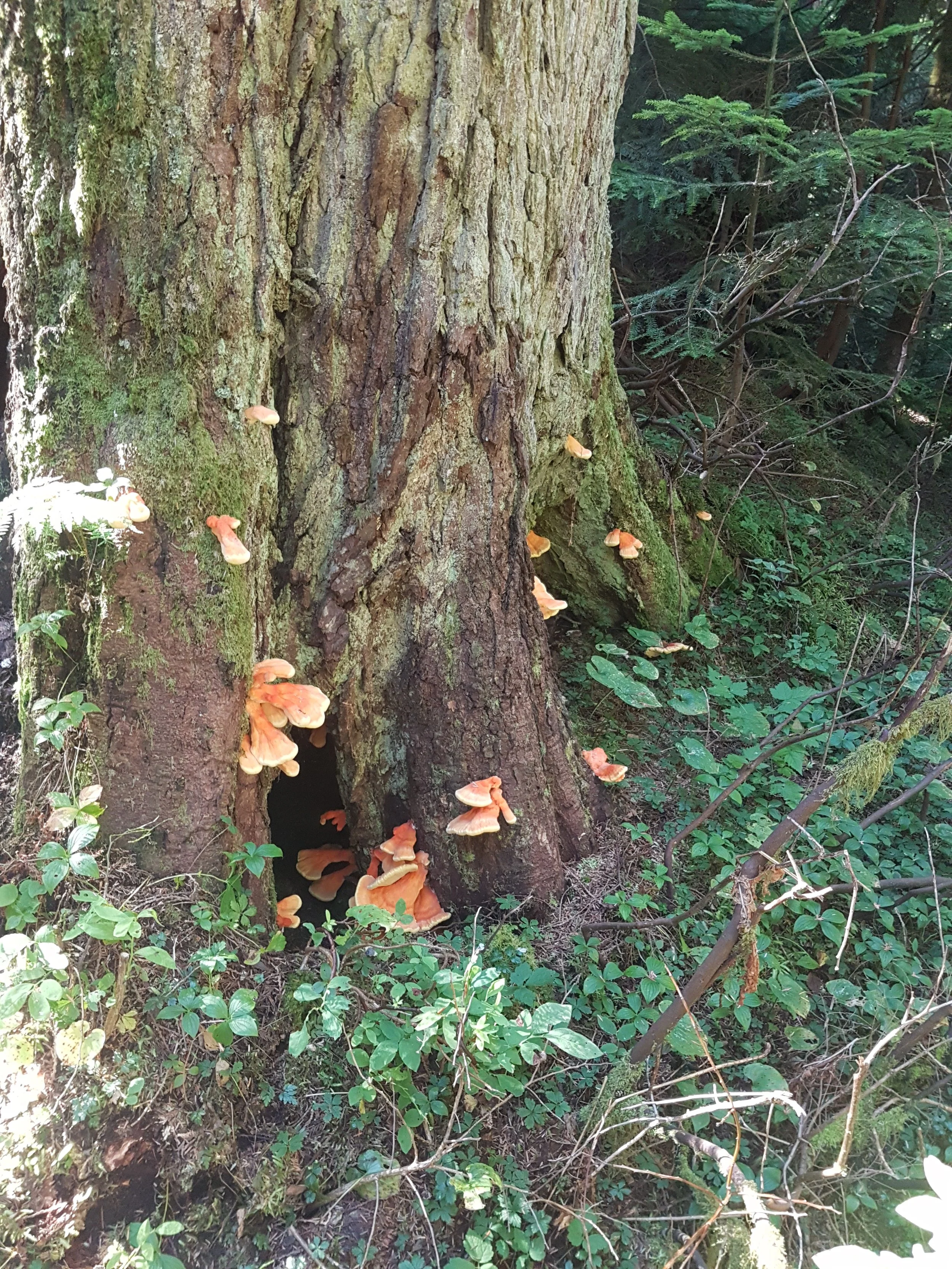
Photo Credits: Flora Lake
Uses: Chicken of the woods is a delicious, dense, and meaty mushroom in its prime. Like many wild mushrooms, this is one that may cause stomach upset. As described below, it is important to know the host tree of the mushroom, and to always make sure it is cooked completely when in use. This is a wild mushroom that is best fresh, and I would recommend using it while it is. Otherwise, it can be dry sauteed and frozen, but you will likely use it up before you get to this point. It can keep in the fridge for a couple of weeks if picked in its prime and stored properly. I recommend storing it in a paper bag in the fridge, ideally in a vegetable drawer, to control moisture. Check on it occasionally to monitor its condition.
CAUTION,
Chicken of the woods can be toxic under certain conditions. The toxicity of this mushroom can be linked to the host tree; many speculate that chickens growing from eucalyptus trees (which are toxic to humans if ingested) may pass on the toxicity of the tree. Eucalyptus is not native to the Salish Sea, so this is unlikely to be a problem, however they are still present in this region as ornamental trees, so use caution. Because of the widespread possibilities of hosts, it is important to know the nature of the host tree for this mushroom, as this transfer of toxicity can be true for other tree species.
