
Red Huckleberry
Hul’q’umi’num: sqw’uqwtsus
SENĆOŦEN: S₭EḰĆES
Diitiidʔaaʔtx̣: ʎixapx
Latin: Vaccinium parvilfolium
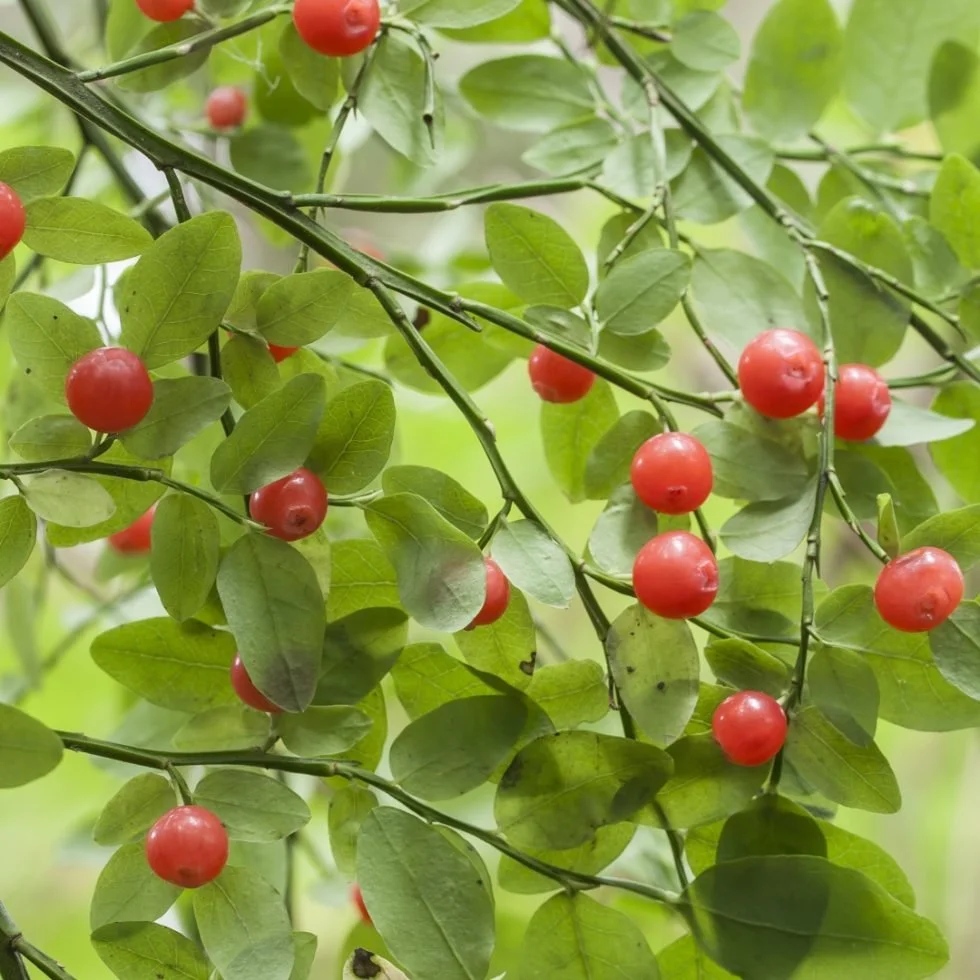
Photo Credits: My Garden Life
Description: This 2–4 metre tall shrub bears dense, bright‑green, pointed oval leaves arranged alternately along its sharply angled branches. The leaves are mostly deciduous, though a few may persist through the winter.
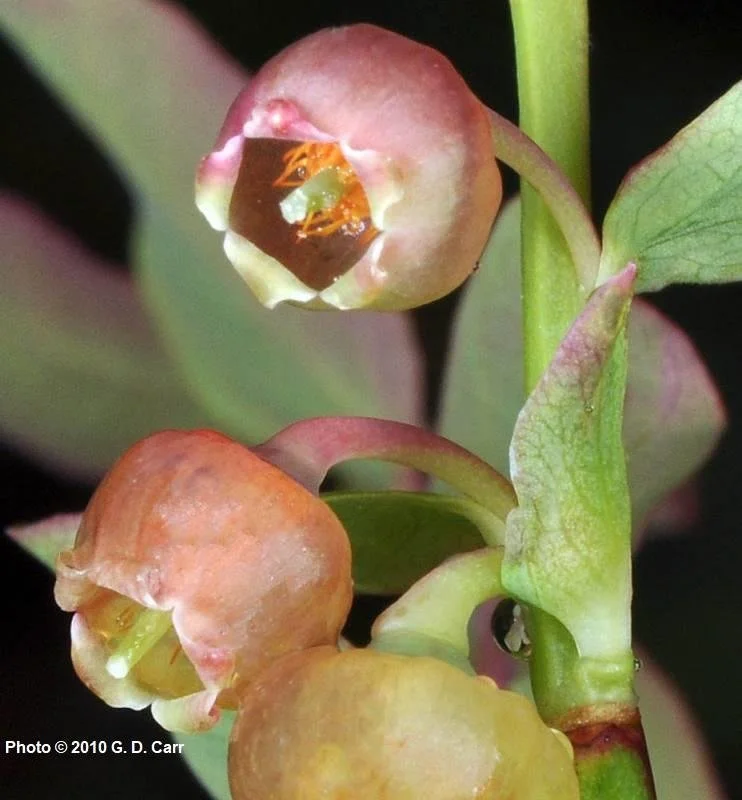
In spring, the shrub produces pinkish, bell‑shaped flowers, which may also appear as greenish‑yellow, urn‑shaped blossoms in some cases.
Its round, bright red berries are scattered throughout the shrub, creating striking colour contrast against the foliage.
Harvest and Sustainability: They are commonly found along forest edges or beneath canopy openings in coniferous forests. These shrubs thrive in rich, organic soils, especially where decaying wood is present, and they often grow directly on old stumps or fallen logs. The berries are typically ready to harvest in late summer through early fall.
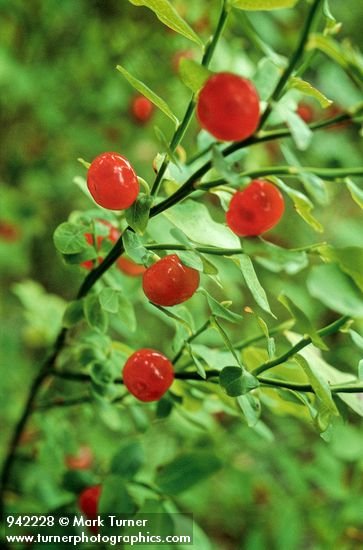
Uses: These popular berries can be eaten raw or dried for winter storage. Traditionally, they were soaked in grease or oil, and the resulting juice was used to stimulate appetite or as a mouthwash. The leaves and bark can be infused to make a gargle for soothing sore throats. The berries were also commonly used as fish bait in streams.
For harvesting, the entire plant was often shaken over a basket to collect the ripe berries, which were then cleaned using a wooden comb—often carved from yew.
