
Cauliflower Mushroom
Hul'qumi'num: kwumsuli'qw (mushroom)
Latin: Sparassis radicata
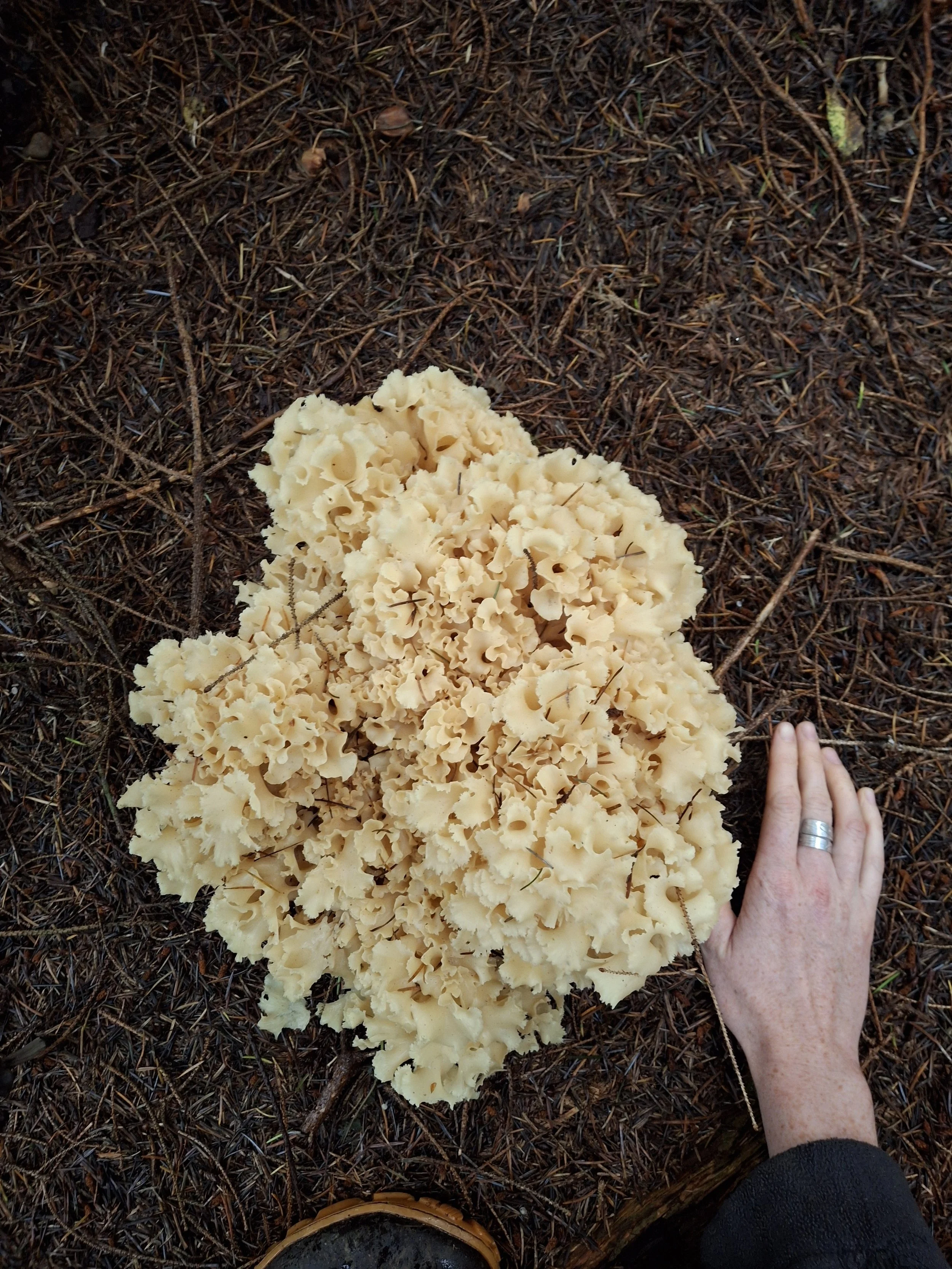
Photo Credits: Flora Lake
Description: Cauliflower Mushroom does not have the typical cap and stem when you think “mushroom”. It grows from the ground, in a somewhat round clump, close or on the base of conifer trees and roots. I typically find it growing alone. It is a perennial with a deep-rooted stalk that branches into many clustered, firm, springy, and lobed flattened branches, which make up the fruiting body. From afar, it looks like a head of cauliflower or a pale head of leafy lettuce; on closer inspection, the outside looks like a cluster of broad egg noodles. Cauliflower mushrooms can get large, growing to about 40cm in diameter and height. It is typically a few pounds, but there are reports of this mushroom weighing up to 50lbs! The mushroom is fragrant, smelling sweet, nutty, and some describe alike apricots, of course, with an underlying mushroom note. It is closer to white/cream when fresh, and fades to yellow/beige with age. Its spore print is white.
Look-a-Like: Sparassis crispa looks very similar to S.radicata and is also edible with a similar texture and flavor. It is more typical to the East, but there have been reports of it growing in the area. It is more dense with shorter lobes, and does not have the deep-rooted stalk that S.radicata has.
Some Coral mushroom species (Ramaria sp.) from a far may also look like a Cauliflower Mushroom as they grow from the ground, in a ball-like cluster. The Coral mushroom, however, has many branching stalks that grow upwards instead of the leafy egg noodle look of a cauliflower mushroom. Some of these Coral Mushroom species are edible, but I have found it quite difficult to identify and differentiate them, as they can look quite similar. I am waiting for someone more knowledgeable to introduce me to these mushrooms, and for now, I only admire them.
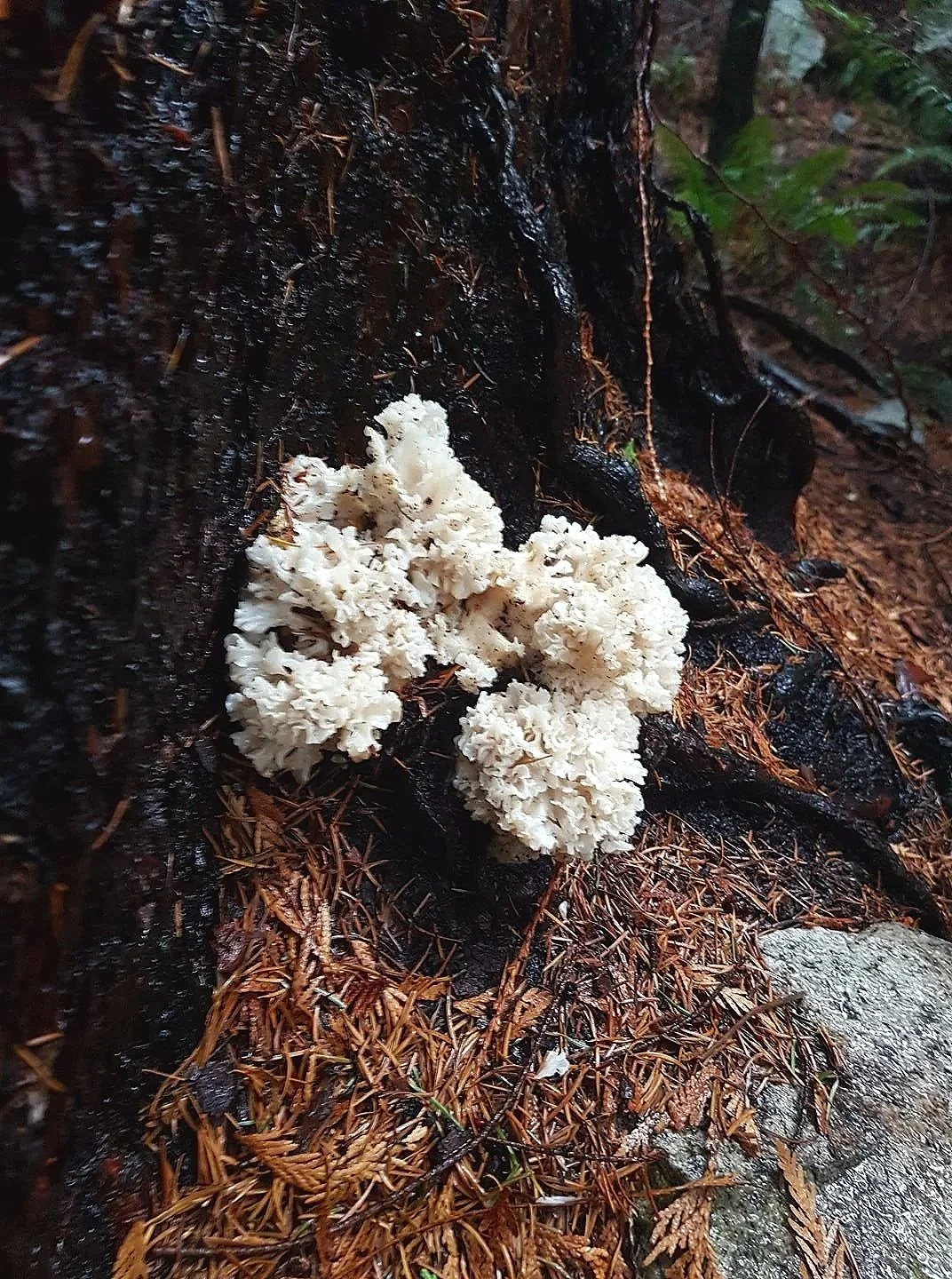
Photo Credit: Flora Lake
Harvest and Sustainability: You will find the Cauliflower Mushroom growing in the fall, September-November. It typically needs moisture, so I check after a good dump of rain (with a buffer for growing time). They will be growing with and on the base and roots of conifers, favoring older, declining hosts. This mushroom is a perennial, so it will fruit in the following years, in and around the same spot. If you find a Cauliflower mushroom, save the location and time of year, and check back in next year! It is always in best practice to respect its habitat and only take what you need. As a cauliflower mushroom grows as a single head, you will harvest the whole thing, but because of its deep-rooted stalk, cut it at its base, so as not to do too much damage to its hyphae network. I have found it to be more rare to forage a Cauliflower as they usually are growing alone, however their size is advantageous as you only need to forage one to have a haul for many dinners’ worth.
Uses: Cauliflower is a delicious choice mushroom! It can be tricky to clean, I find it easiest to sort of tear off lobes and wash it bit by bit. It is meaty and can be tough which requires it to be thoroughly cooked. Once cooked well, it is tender, with a similar texture to egg noodles, and a mild, nutty, and sweet flavor. It goes well in dishes that showcase its qualities.
It will keep in the fridge in a paper bag for around a week, just be cautious of it going buggy. It also does well being dehydrated for longer storage.
