
Blue Chanterelle
Hul'qumi'num: kwumsuli'qw (mushroom)
Latin: Polyozellus multiplex
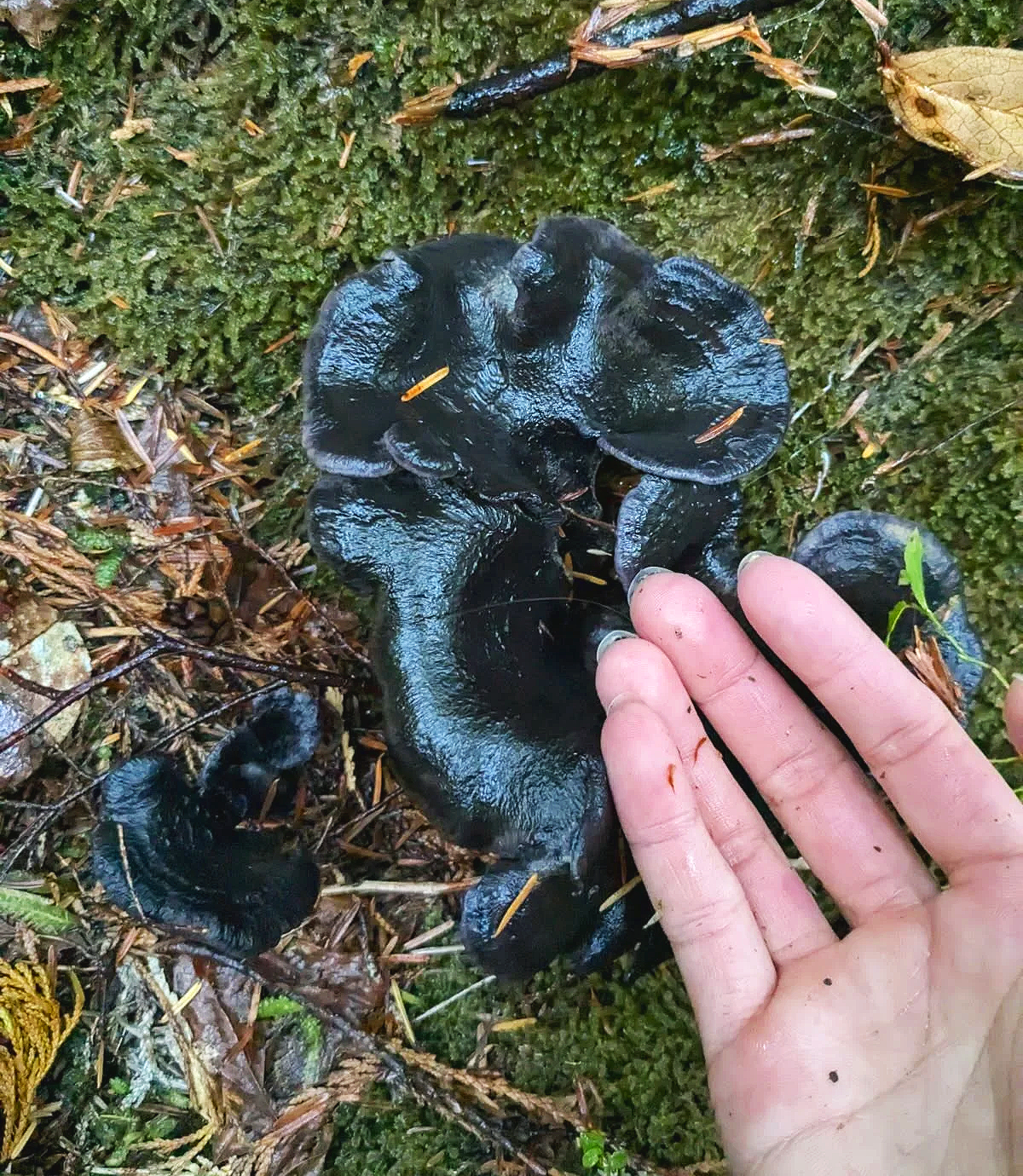
Photo Credits: Brontë Elphick-Miner
Description: Contrary to their common name, the Blue Chanterelle is a very distant relative to the true Chanterelles. Their name holds true to their appearance, which very much resembles a Chanterelle. The Blue Chanterelle typically grows in clumps on the forest floor. Their cap is fan-shaped, with many lobes that funnel towards its center. Alike the Chanterells we know, this mushroom does not have true gills but wrinkles that funnel down, closely attached to the stem. The most striking element of this mushroom is, of course, its colour which can range from a very dark blue to black or even violet-black. I have not had the pleasure of foraging this mushroom, but when my friend sent me a picture of what she found, I didn’t need to see much more than its deep and brilliant colour to know what it was. Its spores are colourless but will show white on a spore print. Fun fact: It was the shape and structure of their spores that determined that this Chanterelle look-a-like was not in the Chanterelle family.
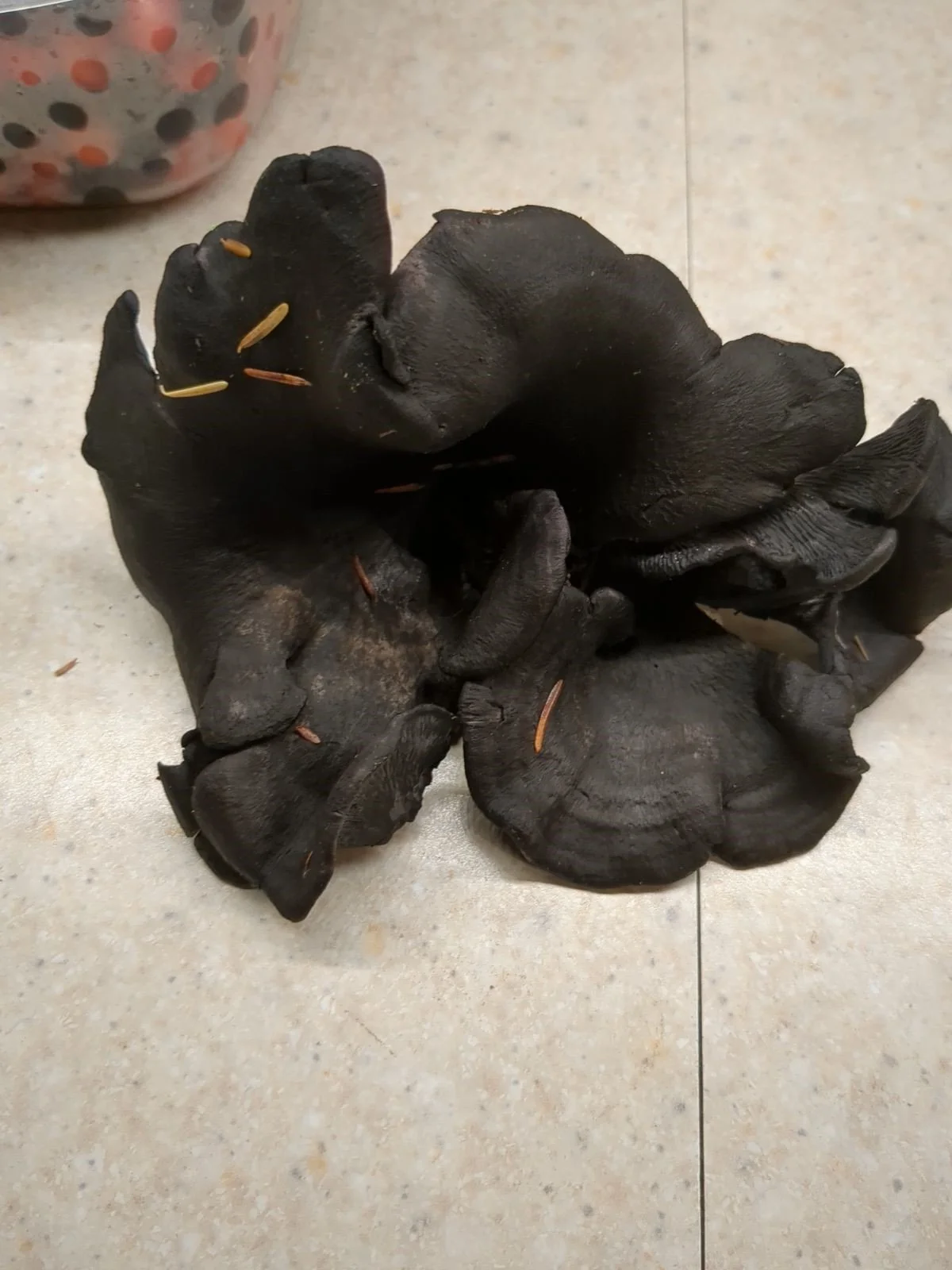
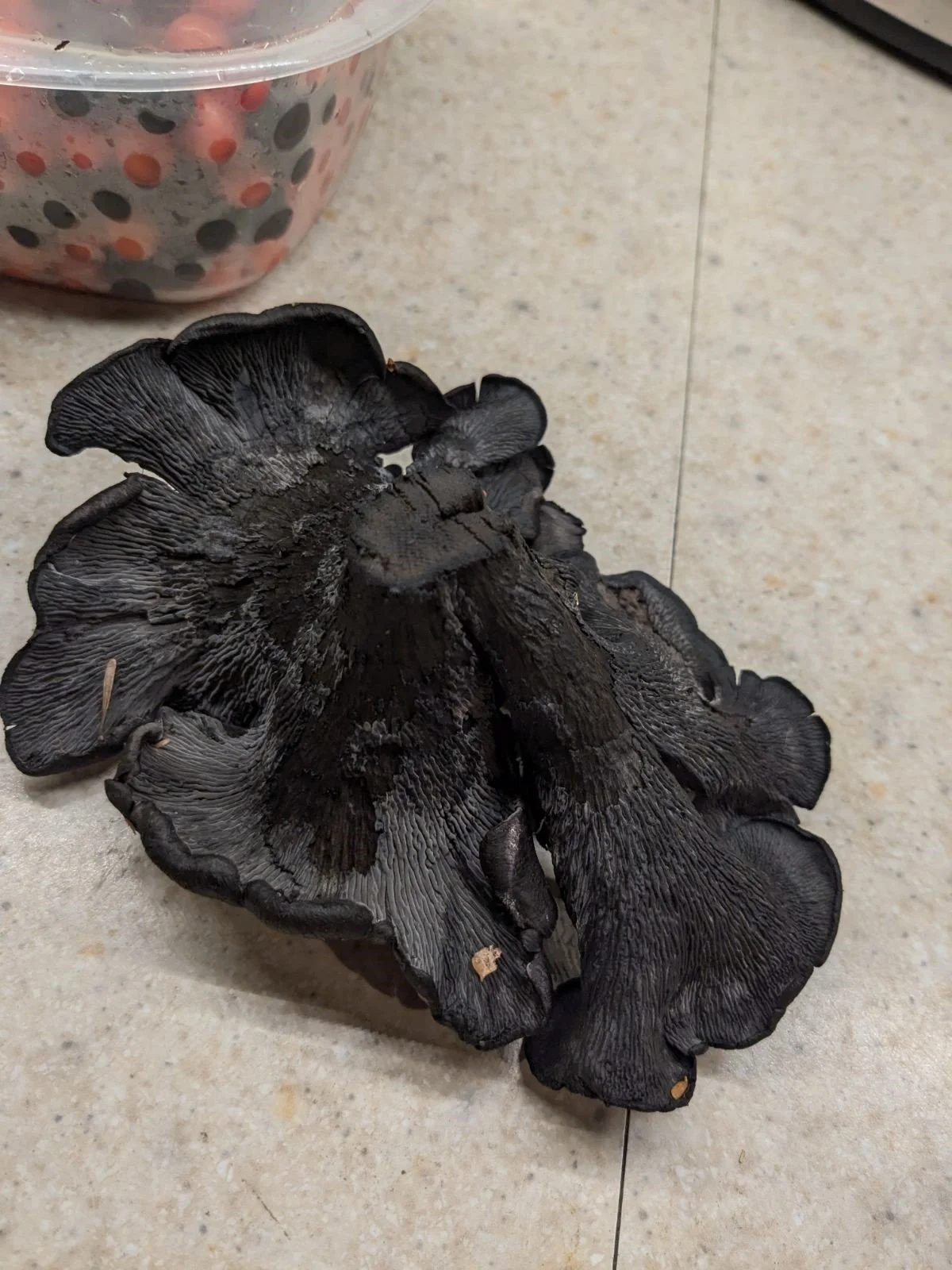
Harvest and Sustainability: The Blue Chanterelle can be found in June through October. Like Chanterelles, they have mutually beneficial associations with trees and prefer conifer forests, but they seem to prefer higher elevations than the common Chanterelles. They may also be particular to old-growth forests, whereas the true chanterelles will also grow in middle-aged forests. I was also told they were found growing close to a patch of red and blue huckleberries, which are indicators of a moderate soil moisture regime and a poor soil nutrient regime. If you can recognise these plants, or learn others that prefer these conditions, you may be able to better recognise the forests when it has these nutrient and moisture regimes that the Blue Chanterelle likes. They are quite rare to find, but they will fruit in the same area, so if you’ve found yourself the elusive Blue Chanterelle, save its location, time of year, and check back in the following years. It is always best practice to respect its habitat and only take what you need, especially with mushrooms you don’t often come by.
Uses: The Blue Chanterelle is a choice mushroom. It becomes completely black when cooked and has been described to me as tasting like a Chanterelle, but with a more tender texture.
If you are not tempted to eat this mushroom, its deep colour is, of course, also good for dye:
This beautiful website showcases many different species of mushrooms and their possible pigmentations with different treatments and pH. It does not have P.multiplex, but it does show dyes of its cousin P.atrolazulinus: https://mushroomcoloratlas.com/mushroom/polyozellus_atrolazulinus/
This blog shows the process of dying with P.multiplex: https://wildcraftdyeing.com/blog/polyozellus-multipass-err-multiplex
Big thank you to my dear friend Brontë, who has shared these useful images and insight from her experience foraging this rarity.
