
Lungwort Lichen
Hul'qumi'num: S-mux-t’ul’us
Latin: Lobaria pulmonaria
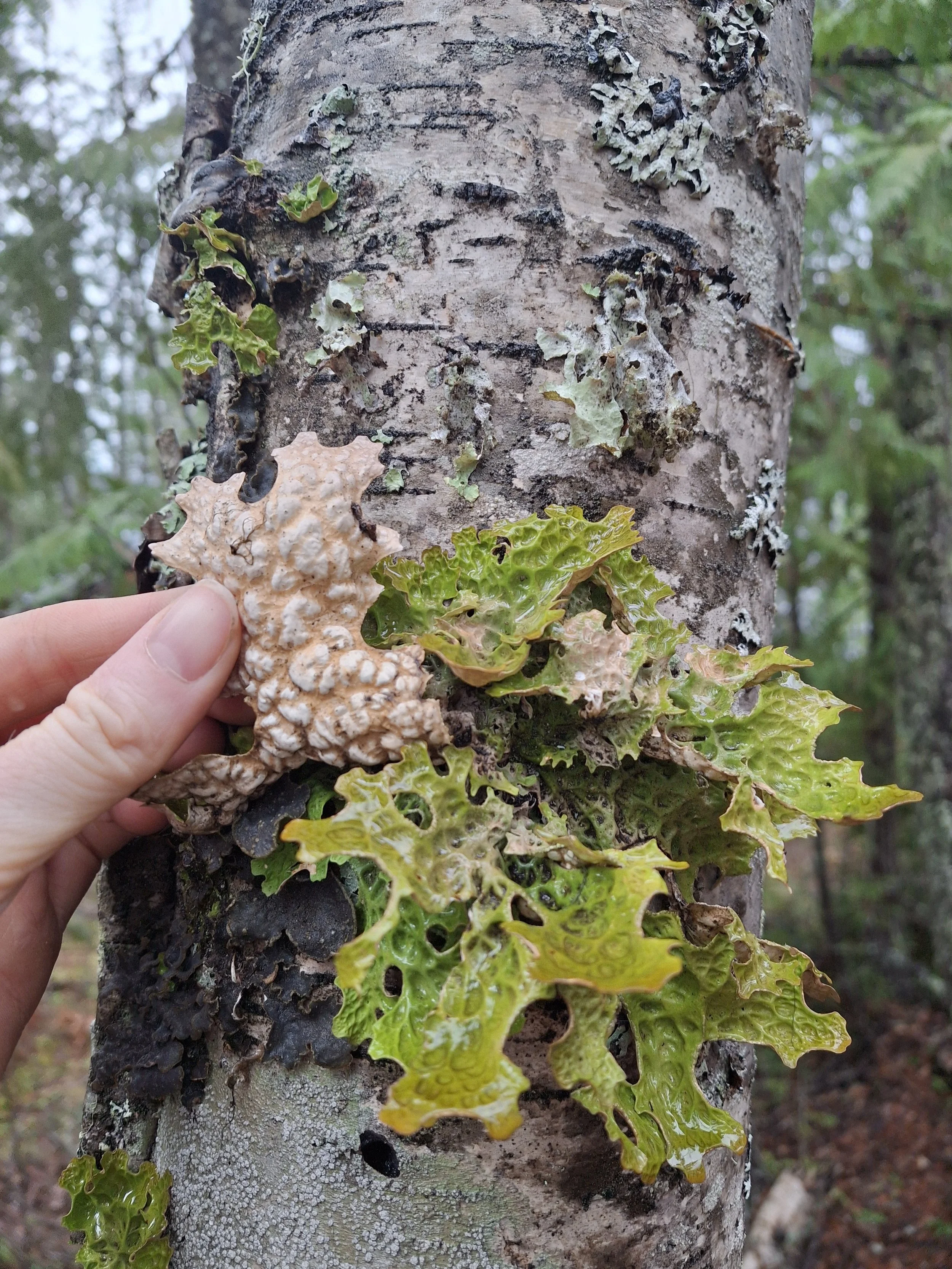
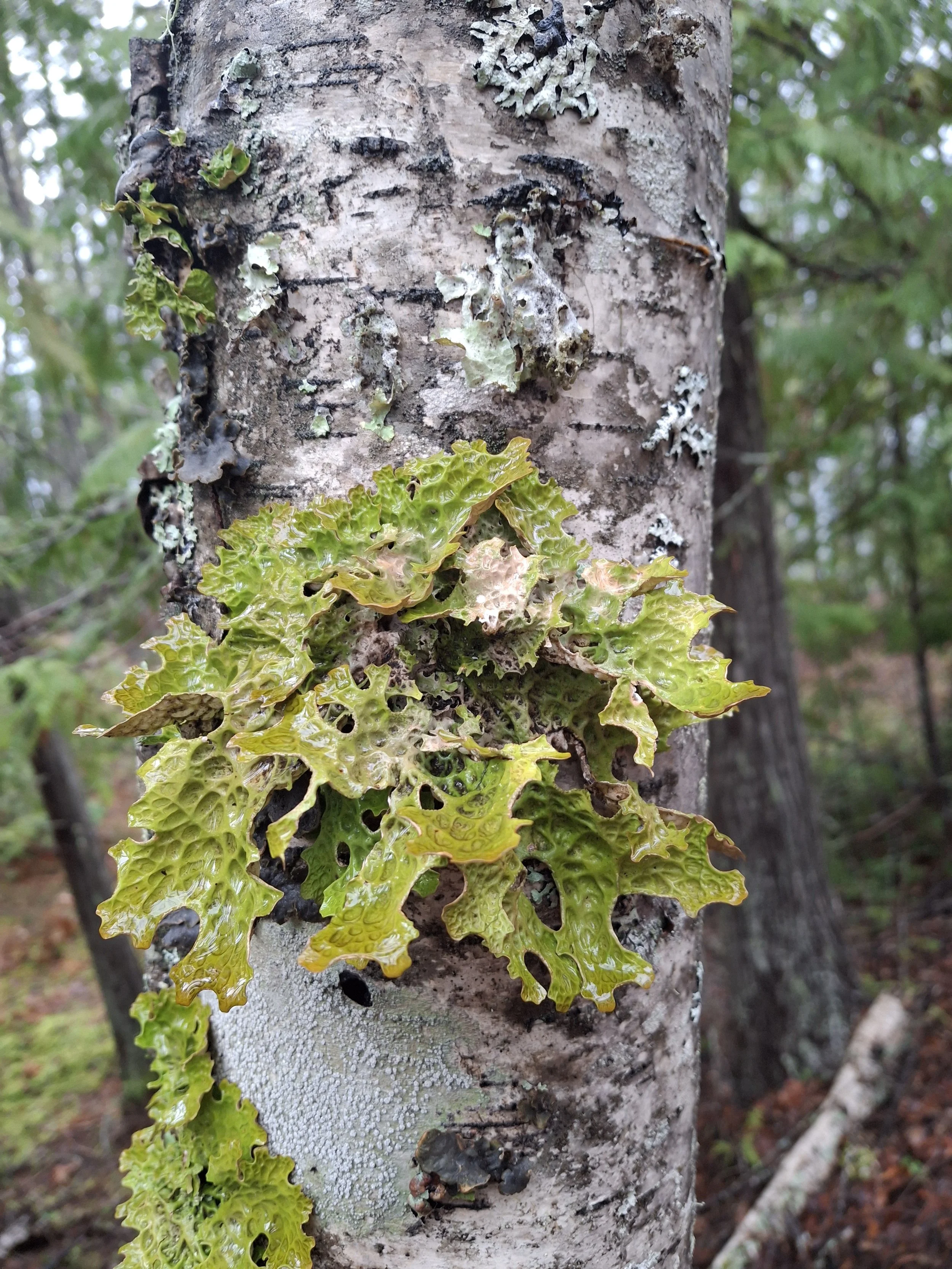
Description: Lungwort is a leafy (foliose) lichen you will find growing in groups on trees. On average, single “leaves” or thallus are about the size of your palm, but I have seen single pieces bigger than my entire hand! The lichen is branching in irregular shapes, with moderately deep lobes. The lichen is smooth but with many small cupped indents, usually 0.5-1cm in diameter. The top side of their thallus is bright green when in ideal (wet) conditions, which may fade to a rust colour at its edges. In less ideal (dry) conditions, the top side will appear more dusty green/brown or even grey. The underside of the lichen is white, with a cream colour usually collecting in the depressions of the indents. When wet, the lichen is flexible and resilient, and becoming papery when dry. The lichen attaches to the tree by a small holdfast, with a fuzzy root system.
Look-a-Like: Frekle Pelt Lichen (Peltigera aphthosa) does bear a resemblance to Lungwort. Frekle Pelt has the same bright green on top and whiteish underneath, with a branching and lobed shape, growing in groups. Opposite to Lungwort, Frekle pelt usually grows from the ground; however, this may not be obvious if you are harvesting fallen Lungwort from the ground. It is important to note if what you are harvesting is actually rooted to the ground! Frekle Pelt also lacks the many small cupped indents present on Lungwort; it is also more rounded and not as irregular in shape. Frekle Pelt Lichen will also have cephalodia (small black wart-like dots) over its surface.
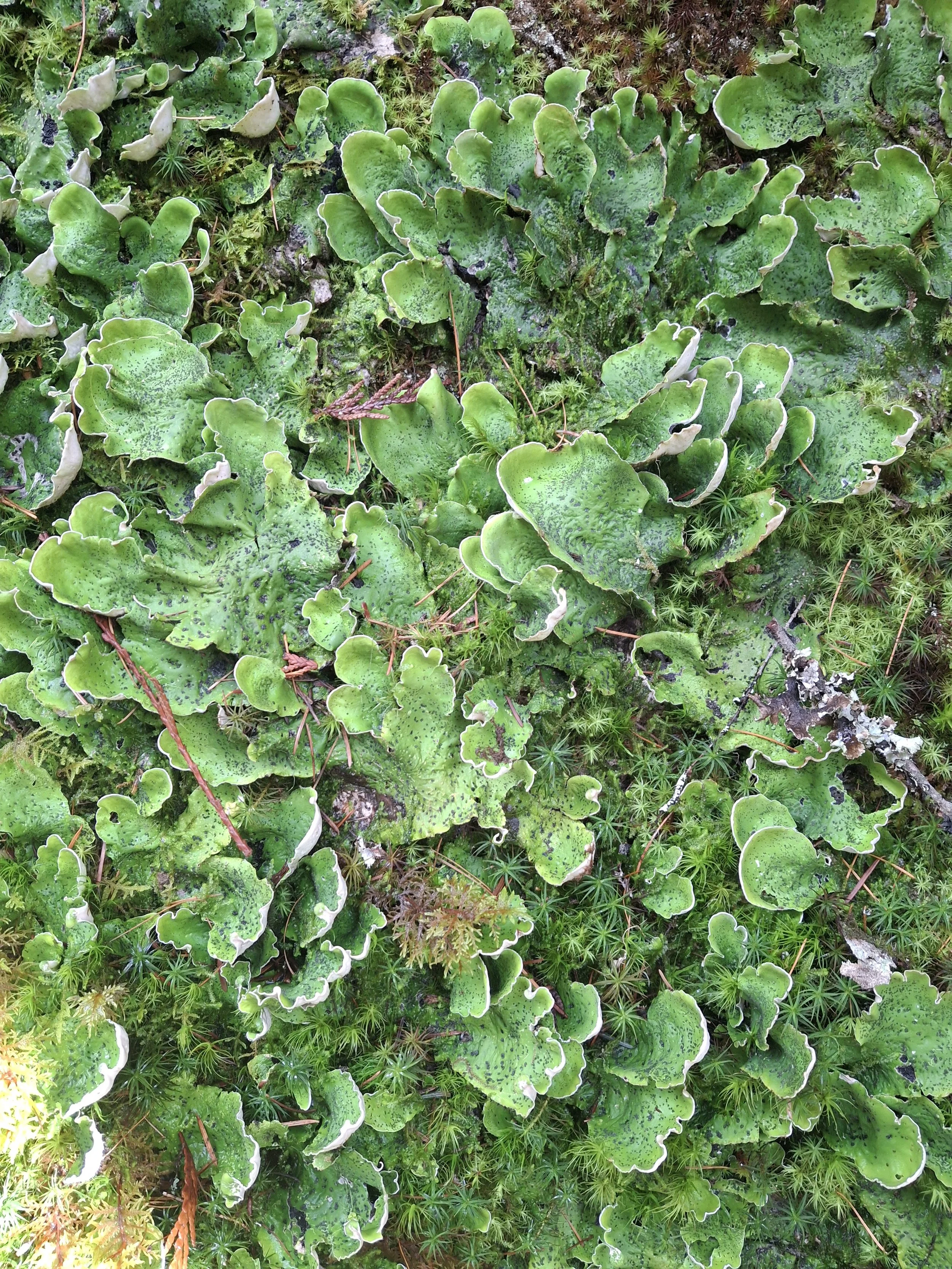
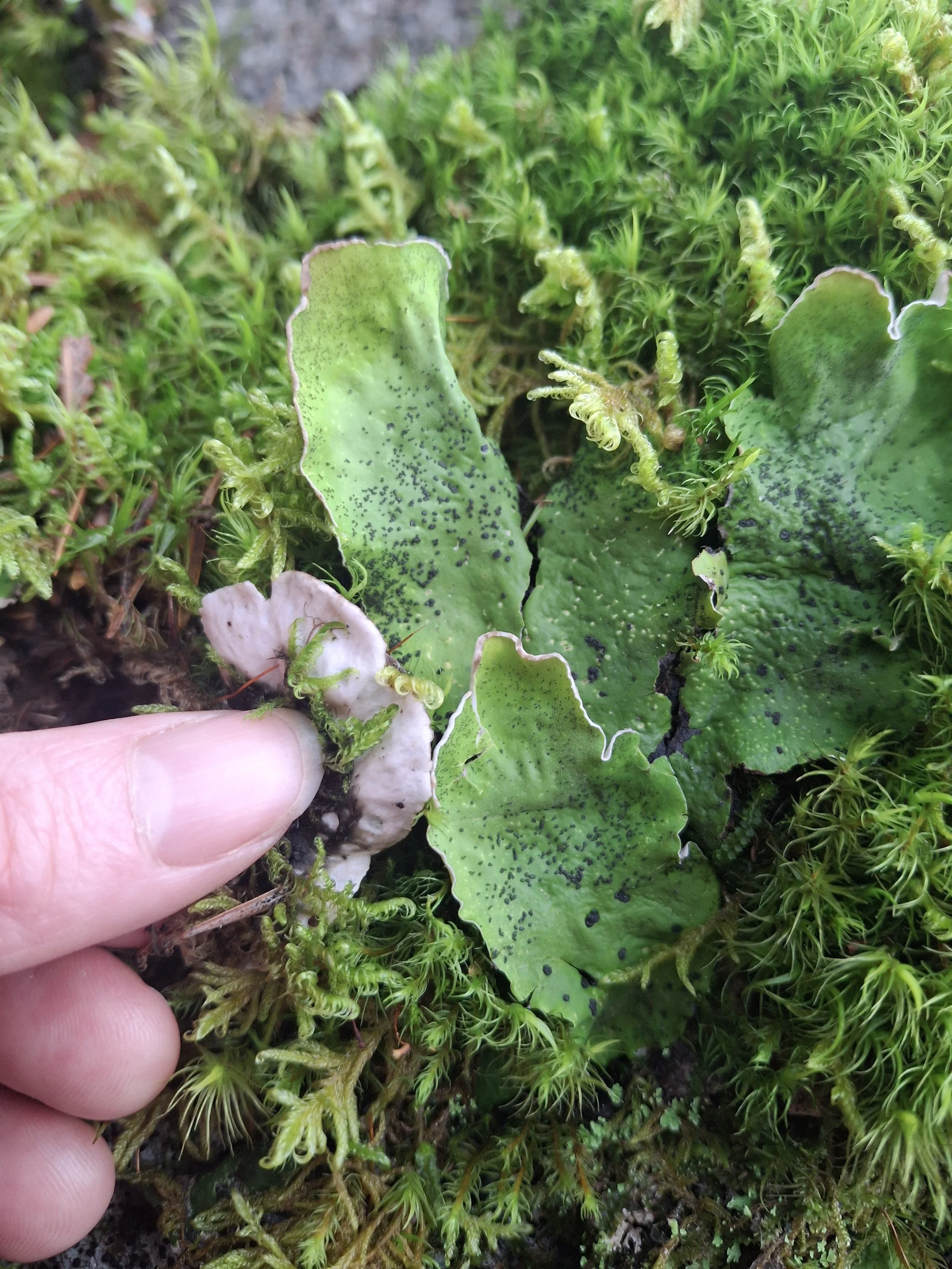
Above: Frekle Pelt Lichen (Peltigera aphthosa)
Harvest and Sustainability: Lungwort is most commonly found growing on Big Leaf Maple (Acer macrophyllum), but will also grow on other deciduous and conifer tree species. It can even be found growing on some shrubs. Lungwort is a nitrogen fixer, and as it rains, nitrogen will leech from the lichen down to the soil around its host. This is a significant symbiotic relationship, as forest ecosystems are generally nutrient-poor; having a consistent source of nitrogen will contribute to resilience. In return, the host tree or shrub provides a safe habitat closer to available sunlight for the Lungwort. For this reason, mindful harvest is important. If you are in a pinch, you can harvest Lungwort from the canopy of the trees (if you can reach). It is best practice to only take what you need, to cut, and to leave behind the root system of the lichen. Lungwort will regenerate by 30% of its mass annually, so as long as you harvest less than that, the lichen can maintain net growth. Ideally, and most sustainably, you harvest Lungwort from the ground. This canopy-dwelling species is often thrown from the canopy in high winds and can be collected from the forest floor following a good windstorm. There is no limit to harvesting Lungwort this way, as it won't last long unrooted on the forest floor. When you are harvesting, be sure you are taking this lichen while it is green and flexible; this is it in its best quality.
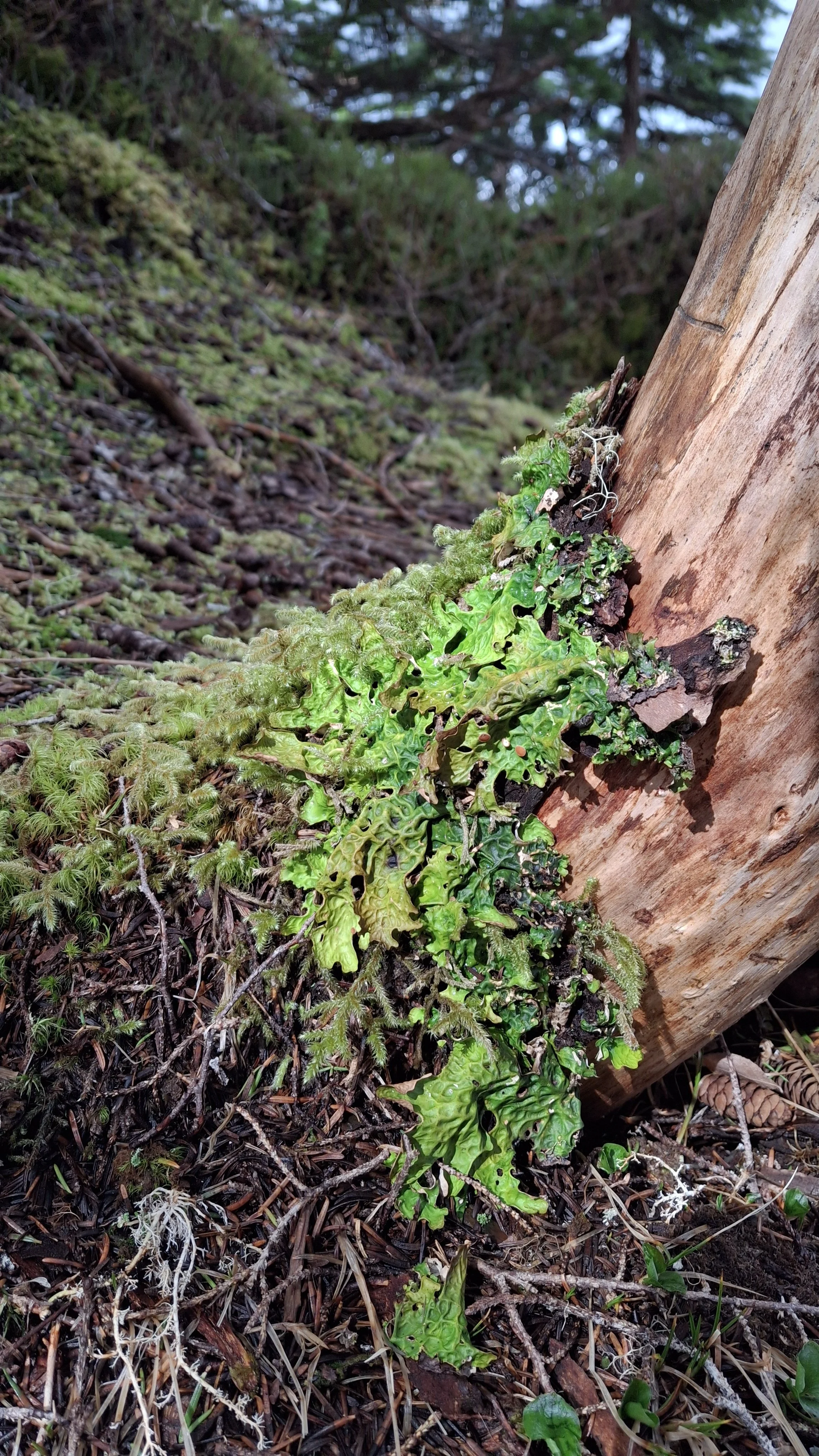
Photo Credits: Flora Lake
Uses: If you have harvested Lungwort from the ground, it is a good idea to give it a little wash, and overall, you may need to trim off bits that look off (discoloured and falling apart). Lungwort can be made into tincture or tea. It only takes leaving it in a well-ventilated area for it to dry out to a storable quality.
Lungwort has antibiotic, antiviral, vulnerary, and immune-stimulating properties. As its name suggests, it supports many ailments surrounding the respiratory system, such as:
Whooping cough
Asthma, bronchitis
Pneumonia
Colds & flus
Also:
Urinary tract infections
Stomach ulcers
Inflamation
Tea: Fresh or dried. Pour boiling water over Lungwort and steep for 3-5 minutes.
Tincture: Pack a jar with cut-up Lungwort, and cover completely with 80 proof or higher alcohol. Close and let steep for 1-2months, shaking occasionally. Strain and bottle. Add tincture to water or tea and take as needed.
Lungwort can also be used in a double extraction tincture. This is a source on the general process of making it: https://modern-forager.com/making-medicinal-mushroom-tincture/
Dye: Lungwort can also be used to dye! Here is a blog showing details on the process and colour: https://wildcraftdyeing.com/blog/frog-blanket-aka-lungwort
