
Turkish Towel
Hul'qumi'num: Q'am' (Kelp)
Latin: Chondracanthus exasperatus
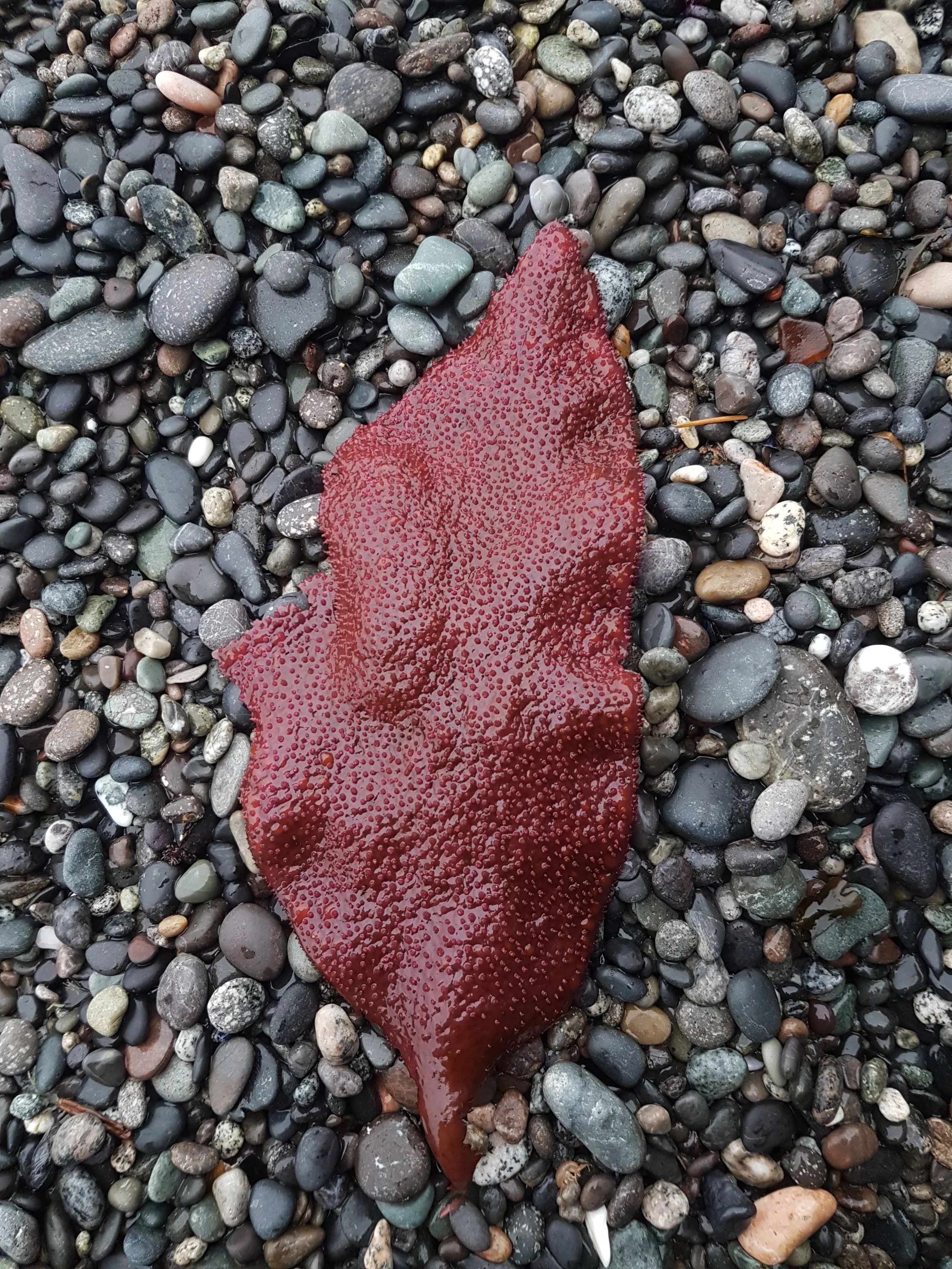
Photo Credits: Flora Lake
Description: Turkish Towel is a perennial red algae that mainly grows in the intertidal-subtidal zone. The seaweed usually grows as a single blade attached to a rocky substrate. Occasionally, the single blade is accompanied by more blades attached at the same point. Its blade is thick, oval in shape, tapering at each end (lanceolate), and grows to be 30-50cm long. It has been recorded to grow to 100cm. Blade shape and thickness may vary depending on growing conditions: light, currents, and temperature. Its margins are smooth and slightly furled, but grow to be toothed and jagged in warmer waters. Its colour is a deep burgundy colour, sometimes closer to purple or almost brown. The faces of its blade have many small spiny teeth called papillae growing from them. Running your hand along this kelp feels rough like a cat’s tongue.
Look-a-Like: Mastocarpus papillatus, known as Turkish Washcloth, has similar qualities and properties to Turkish Towel. As the name suggests, the washcloth is much smaller than the towel, about 15cm max. Its blades are branching, and many are attached to one anchor. Its colour can be much darker and deeper. They have the same rough texture of the papillae, but some blades are smooth and don’t. This seaweed has the same gelling quality as Turkish Towel, but it is smaller and more tender, making it edible.
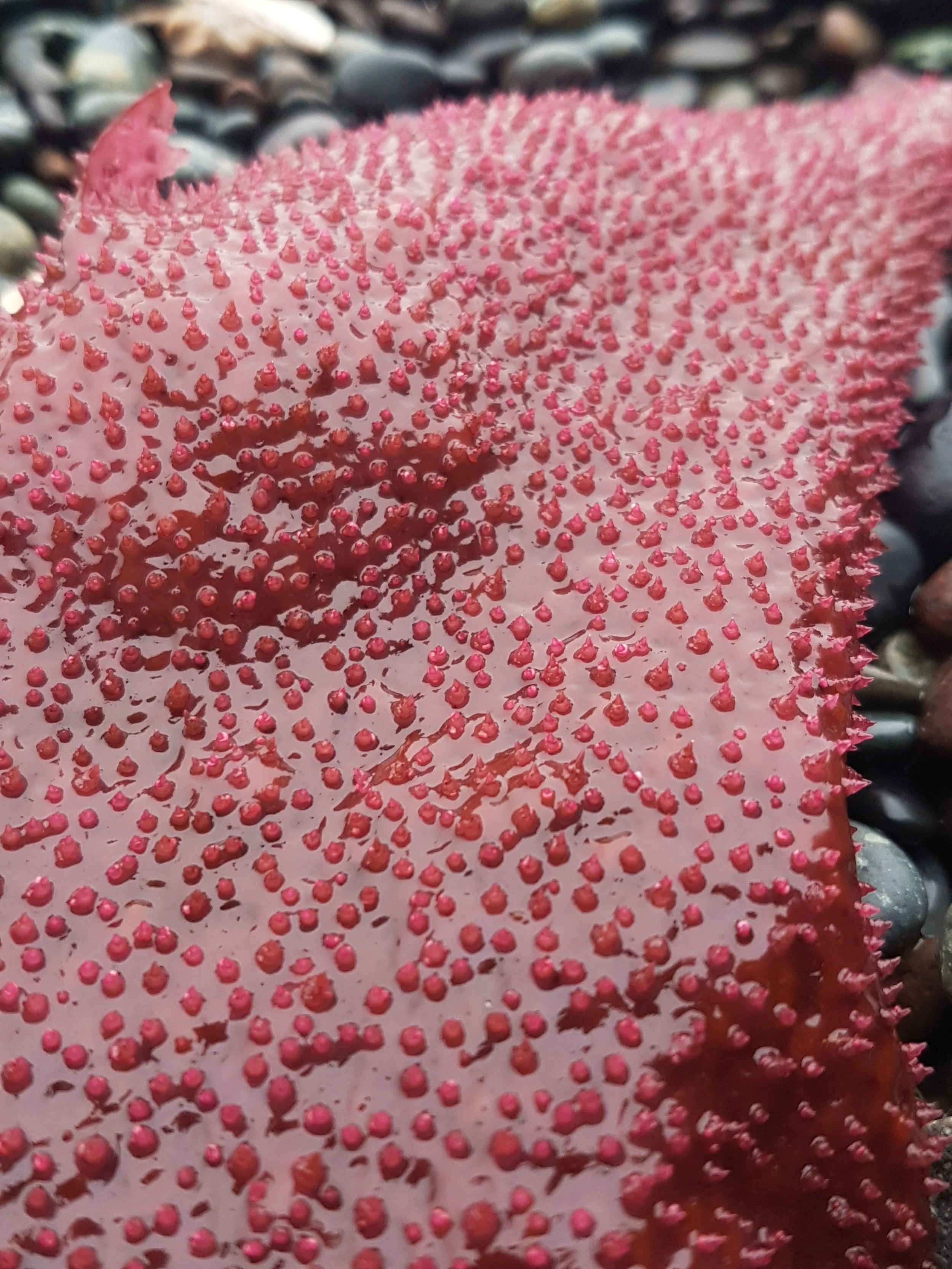
Photo Credit: Flora Lake
Harvest and Sustainability: Turkish Towel thrives the most in rocky, semi-protected areas, in the intertidal-subtidal zone (optimally at 3m). It grows all seasons (perennial), but the most around the summer solstice, and least around the winter solstice (as many plants do). It is generally abundant and is only limited by available substrate.
Turkish Towel decomposes quickly and is important for nutrient cycling in the ocean. For this reason, you will not find it too often washed up for harvesting and will need to harvest the kelp while it's attached to its anchor. When collecting Turkish Towel, cut from the bottom of the stipe, as picking may damage other kelps attached to the same anchor.
*** Always be mindful of where you harvest. Avoid populated inlets, shipyards, and paper mills as algae are susceptible to absorbing harmful toxins from their surrounding environment.
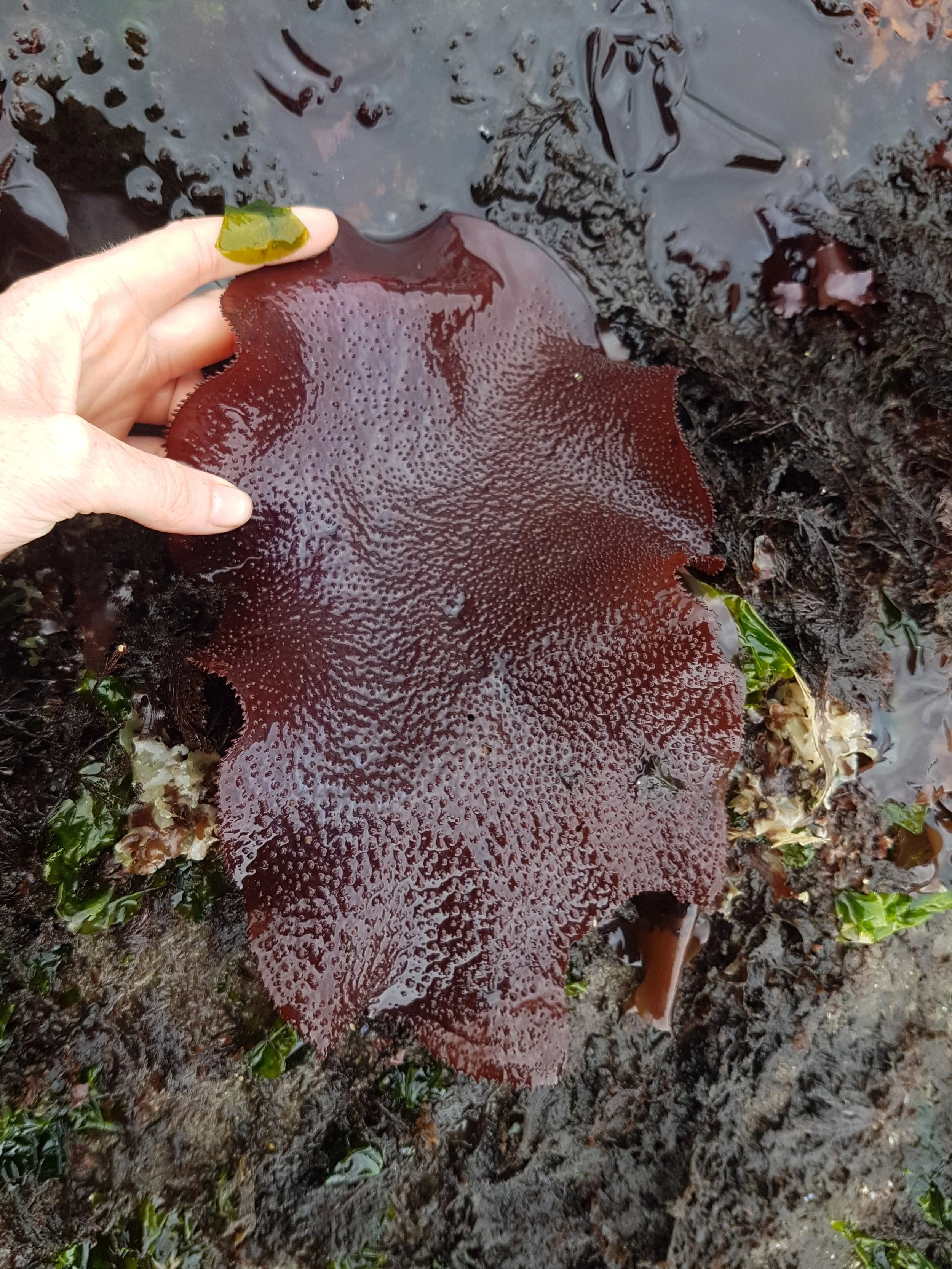
Photo Credit: Flora Lake
Uses: Turkish Towel itself is not toxic, but it is not really edible due to its rough and tough texture. It is often used as a gelling agent due to its high carrageenan content. If placed in a bowl of fresh water or boiled, it will release this carrageenan, thickening the liquid as gelatin would. It can be used as a vegan alternative to gelatin.
The rough texture of Turkish Towel is also used on the skin as an exfoliant, in baths, and for thalassotherapy. Bathing with seaweeds can draw out toxins from the body, while providing some essential minerals for the skin to absorb, specifically potassium, calcium, iodine, and magnesium. The carrageenan in Turkish Towel also hydrates the skin, while its texture is perfect for scrubbing.
Dehydrating: Because it is quick to decompose, Turkish Towel is best dehydrated to preserve for future use. When drying seaweeds, it is important to avoid drying in direct sun. The intensity of the sun can cause them to lose their beneficial qualities. Use a dehydrator or hang dry in a well-ventilated area with ambient heat. Also, avoid hanging the seaweed on metal as they can absorb harmful compounds.
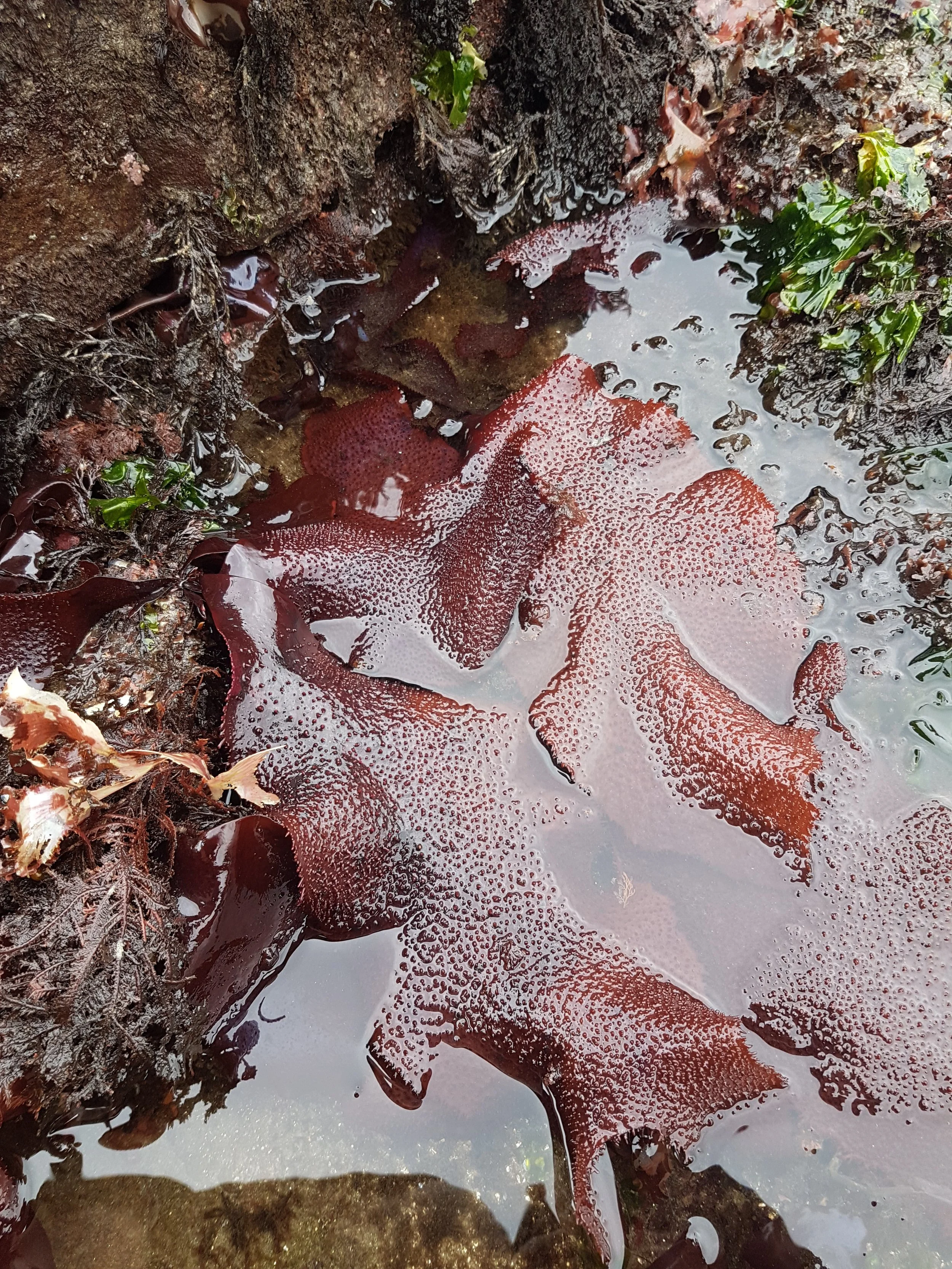
Photo Credit: Flora Lake
Resource: I learned everything I know about seaweeds from Amanda Swinimer, who hosted a sustainable seaweed workshop with the Galiano food program. She is a passionate source of knowledge and wisdom when it comes to seaweeds, ethical harvest, and their uses. Please check out her website https://www.dakinitidalwilds.com/
