
Hul'qumi'num: kwumsuli'qw (mushroom)
Latin: Cantharellus tubaeformis
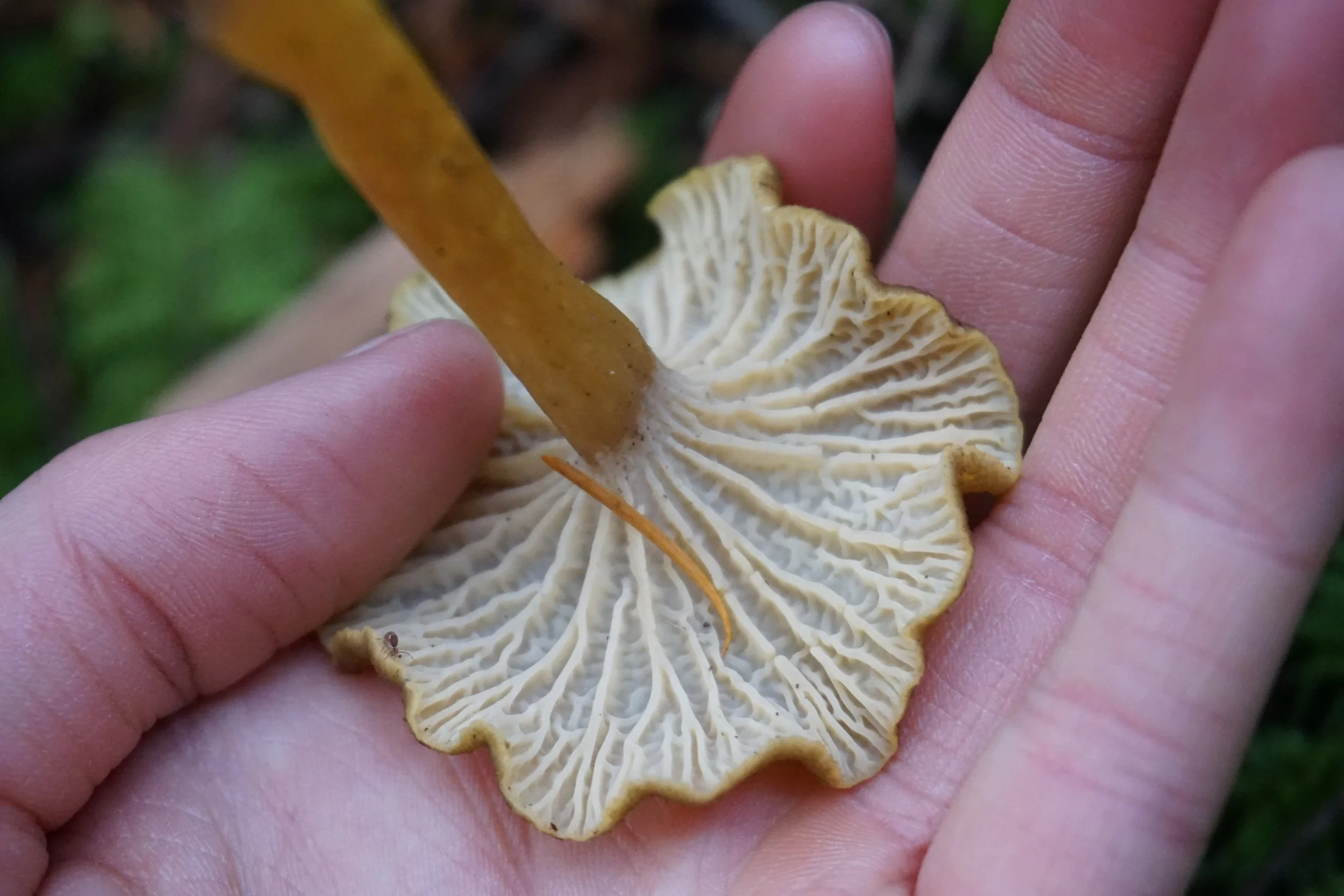
Photo Credits: Flora Lake
Description: The Yellow Foot Chantrelle is a smaller, late-season sister to the Chantrelle we know and love. Like all in the Chantrelle family, this mushroom has ridges and wrinkles instead of true defined gills, which makes them easy to recognise. Their cap is funnel- or bellybutton-shaped towards its center, and it tends to curve downward towards the edges. The margins can also be sort of furled or overlapping, similar to Chanterelle. The top of the cap is brown in colour, and the underside of the cap is much lighter and a cream-grey colour. There is an abrupt ending to the colour of the underside of the cap when it reaches its stem. The stem is hollow at maturity and bright, golden yellow, almost orange at times. These mushrooms sometimes grow in close clusters or can be more spaced out on the forest floor. They typically grow to 10cm in height, and their caps are around 5cm in diameter, often smaller, but I have also seen them larger. Their spores show white to yellowish.
Look-a-Like: There is a very close look-a-like to C.tubaeformis, and that is C.lutescens. They are both commonly referred to as “Yellow Foot”, and look almost identical, having a lot of the same qualities of size, colour scheme, and texture. The main difference is that C.lutescens is brighter in colour, perhaps closer to orange on its stem. While you are foraging its unlikely that these mushrooms are going to be growing side by side for you to compare, but C.lutescens is also an edible and choice mushroom, so you do not have to worry which Chantharellus you have! Just be sure that you have wrinkles and no true gills to assure you are harvesting a Chantharellus.
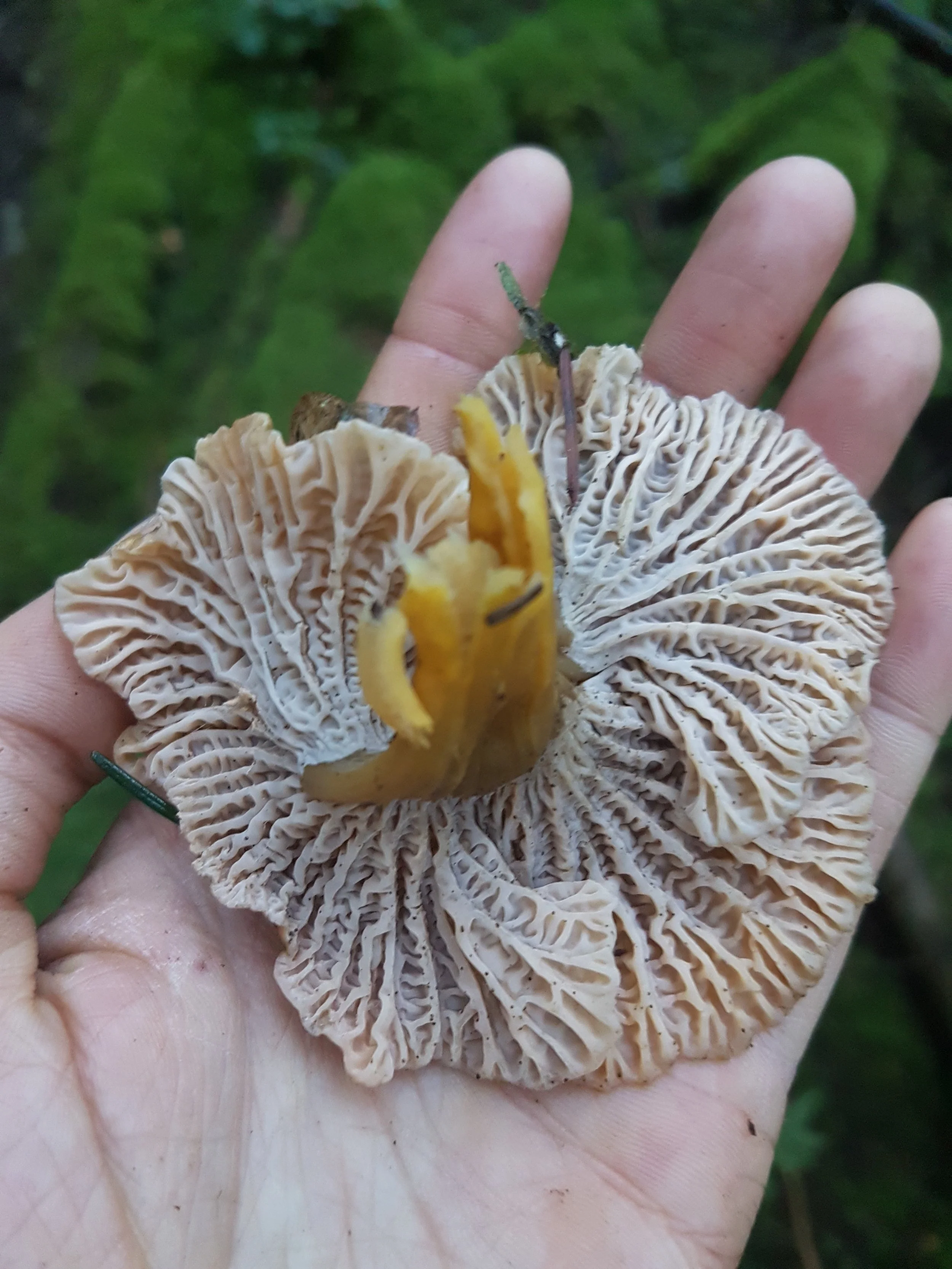
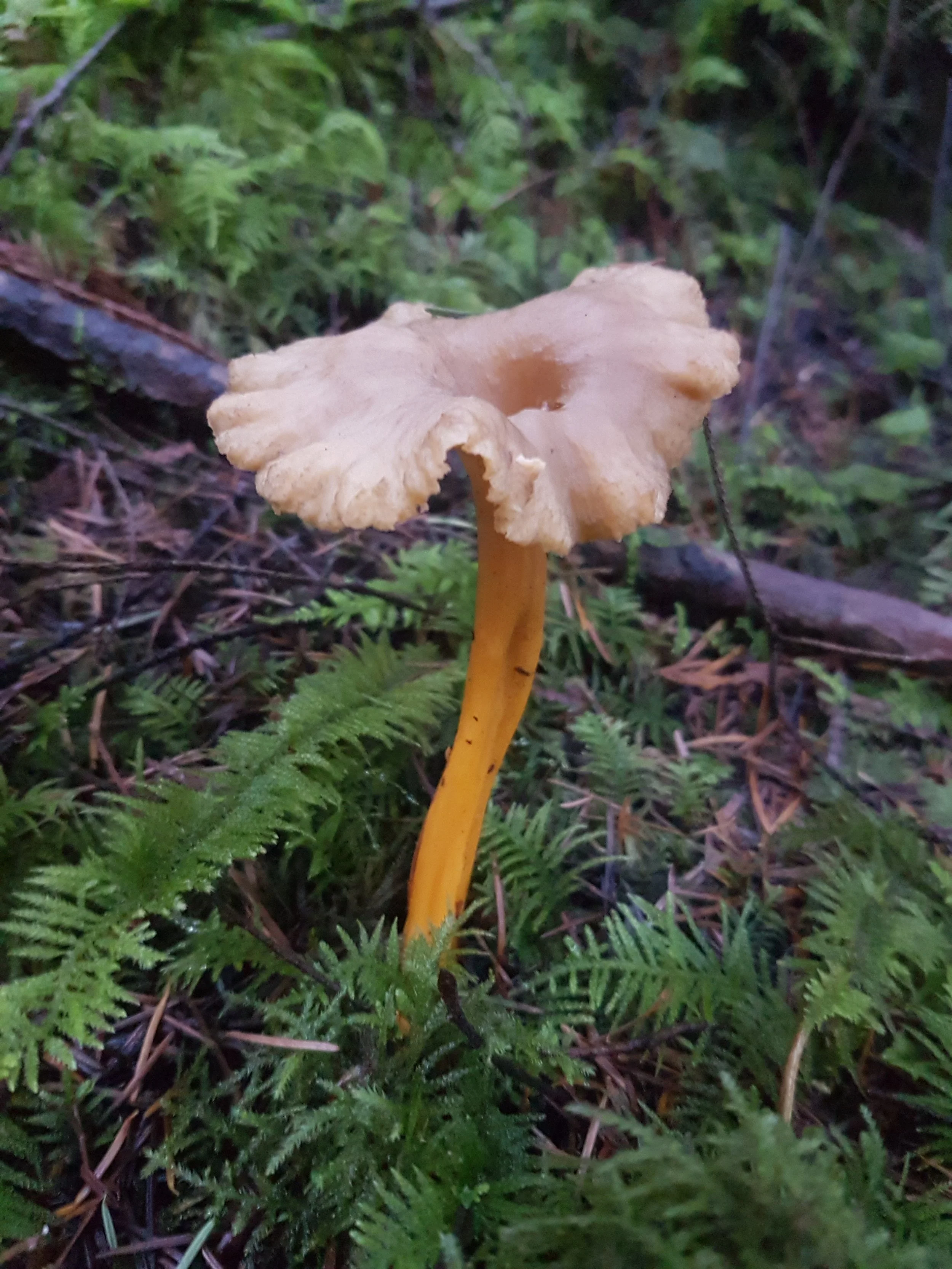
Harvest and Sustainability: You will find the peak for Winter Chanterelles is late in the season, usually late fall and into the winter. You can find them outside of either end of this window, depending on the climate. They are able to freeze, thaw, and still grow! I also often find them growing with and around hedgehog mushrooms. You can find Yellow Foot in the same middle-aged, mossy understory forest you would find your typical Chanterelles. They also thrive in very dark, very dense younger forests. Forests with no understory, but lots of fine woody debris. I have read that you can also find them growing in bogs, a wide range of habitats for this late-season mushroom. I have found that I either harvest a handful of Yellow Foot Chantrelles or bags full. Where you find them growing prolifically, I recommend revisiting that spot throughout that season, as they tend to keep fruiting regardless of temperature. I have had little luck, however, coming back to these prolific spots in the following years. They require you to find them in new spots each year.
Mushrooms are releasing spores as soon as their underside is exposed. It is in good practice to collect in vessels, such as woven baskets and fabric bags, that will allow more spores to spread as you walk through the forest. This is in your best interest! Of course, always respect the habitat and only take what you need. We are sharing the forest and its resources.
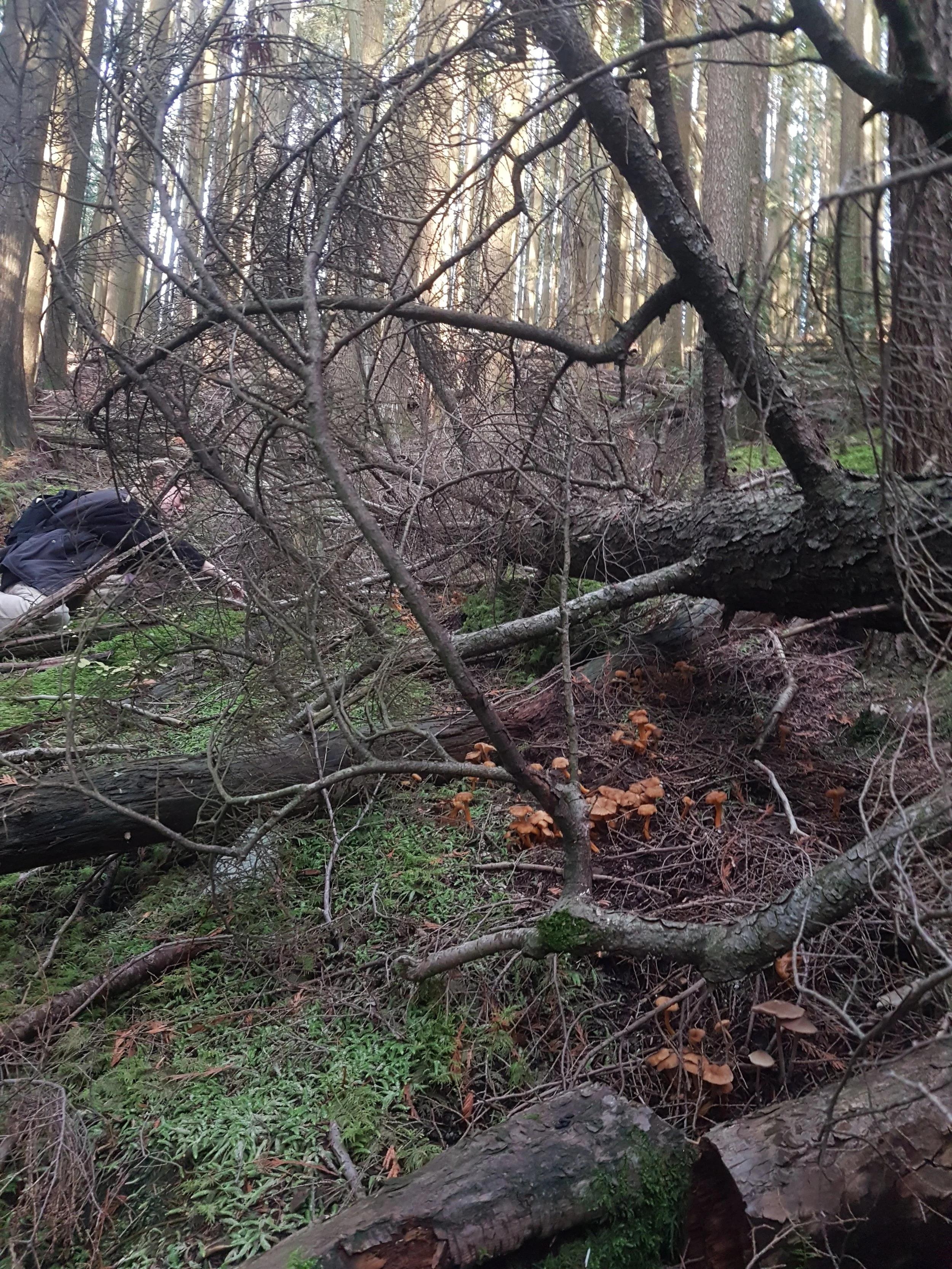
Photo Credits: Flora Lake
Uses: The Yellow Foot mushroom is a delicious late-season mushroom. It has a forest flavor, similar to Chanterelle, but it is less meaty and more tender. They keep well in a paper bag in the fridge for around a week, but it’s important to keep an eye on them as they can get buggy. They also do well dry sauteed and frozen if you happen to forage a lot. I’ve also heard of people drying and powdering them to add to dishes for flavor.
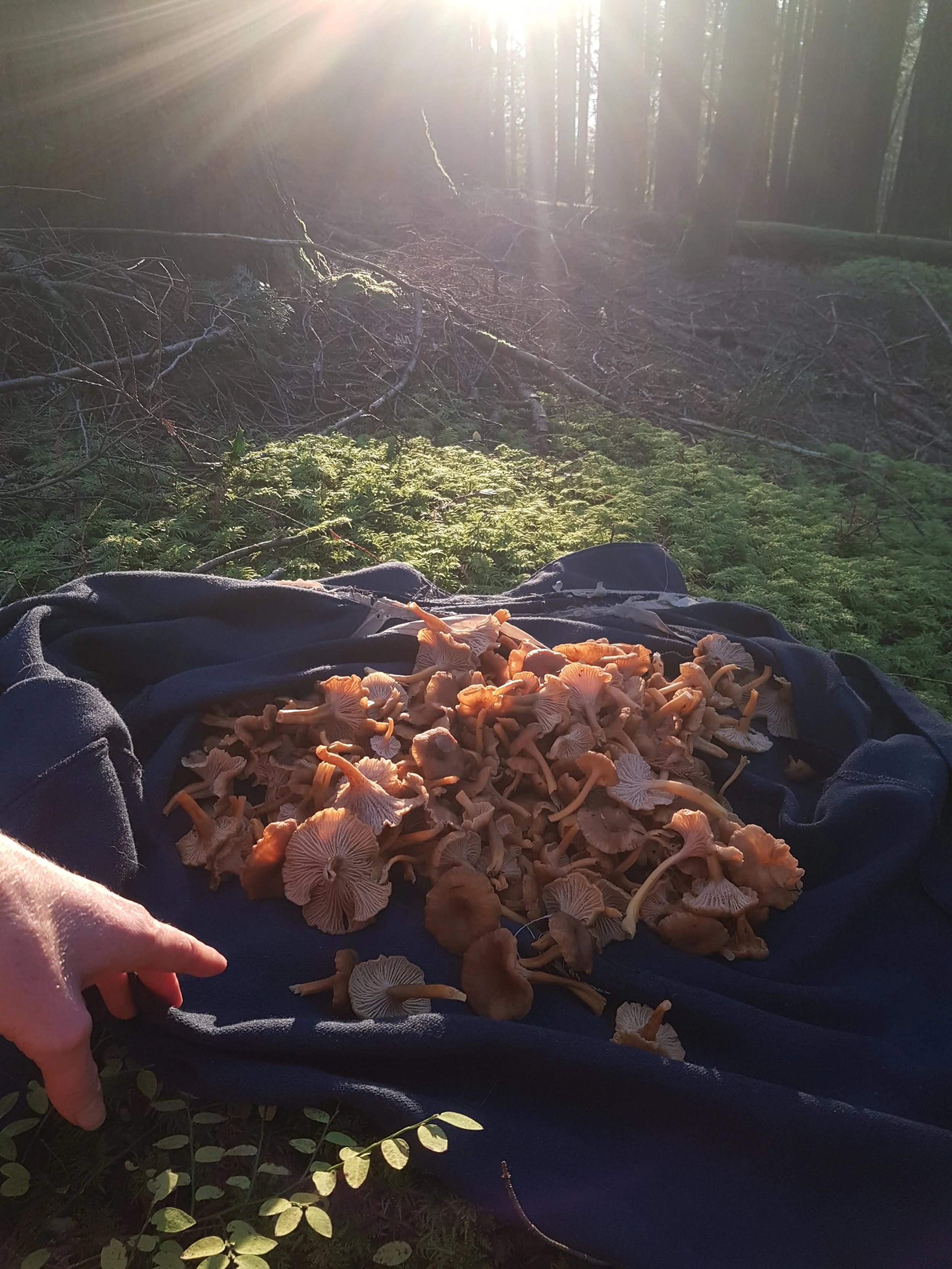
Photo Credits: Flora Lake
Often, my shirt becomes my bag when I’m not expecting to forage but come across a great flush of mushrooms.
