
Red Elderberry
Diitiidʔaaʔtx̣: ciysaptaq
Latin: Sambucus cerulea
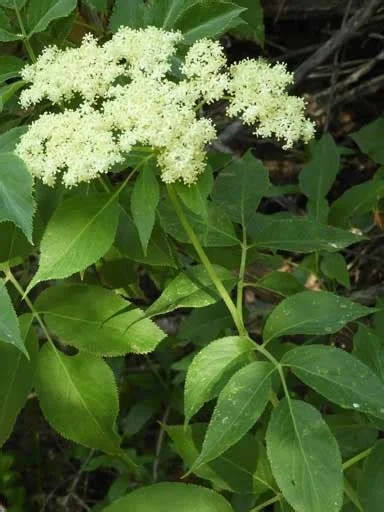
Description: Elderberry shrubs can grow up to 6 metres tall. They have large, compound leaves composed of pointed, oval-shaped, 5-7 leaflets arranged oppositely on pithy twigs. The leaf undersides are hairy, and the edges are sharply toothed. Creamy white flowers form in uneven clusters that grow upward. Depending on the species, berries may be red, purple-black, or blue. Blue elderberries (Sambucus racemosa) produce flowerheads in flat-topped clusters and have 5-9 leaflets.
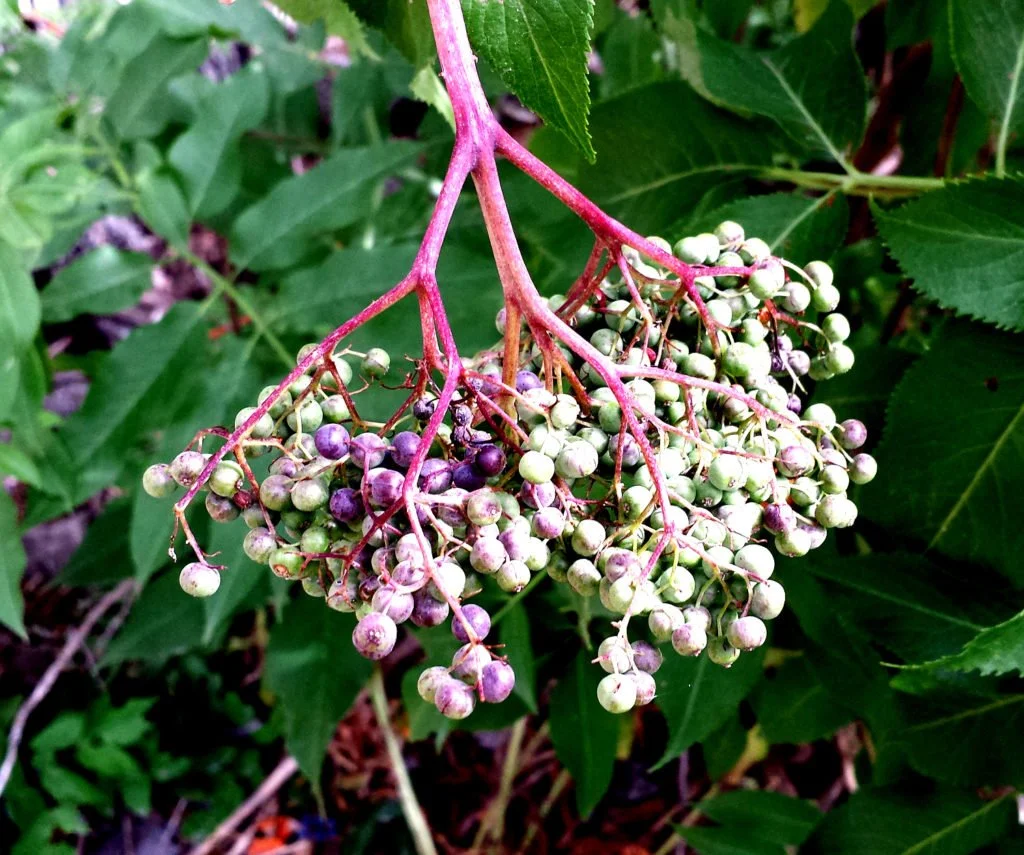
Harvest and Sustainability: Red elderberries are found in swampy thickets or moist forest clearings mid to low elevations. Blue elderberries are often found in drier forest clearings in lower elevation sites.
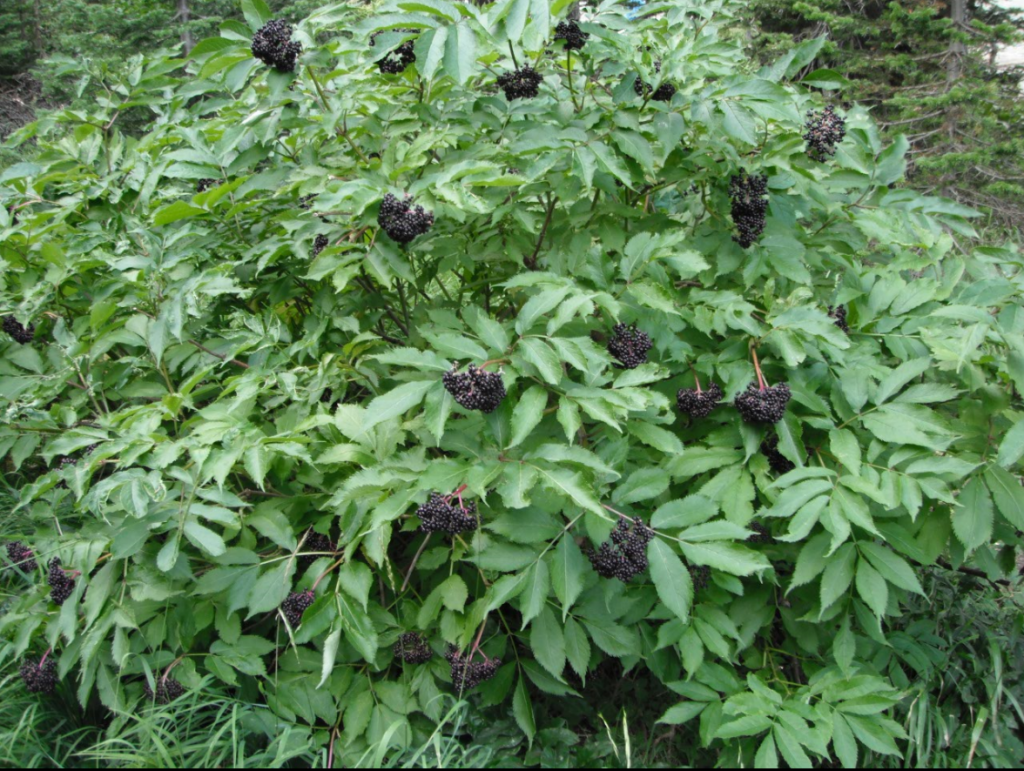
Photo Credits: Steven Katovich
Uses: Blue elderberries can be eaten raw, but still suggested to cook first. Red elderberries should always be cooked before eating. The seed should also be removed before processing. The berries are popular for making jams, jellies, pies, and wines.
Flowers can be used to make tea and wine.
*Warning* Unripe berries and the rest of the plant contain toxic alkaloid and cyanogenic glycoside and may cause vomiting, nausea, and diarrhea.
