
Pacific Crabapple
Hul’q’umi’num: qwa’up
SENĆOŦEN: ḴÁ¸EW̱
Diitiidʔaaʔtx̣: cixapx
Latin: Malus fusca
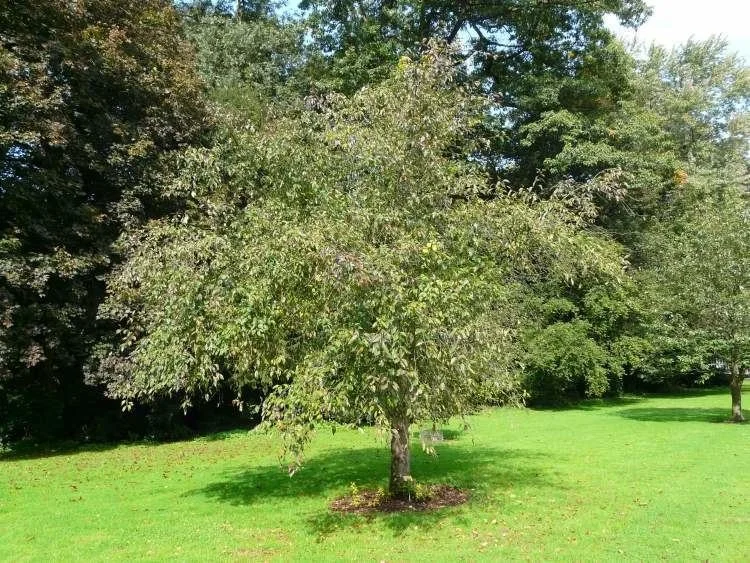
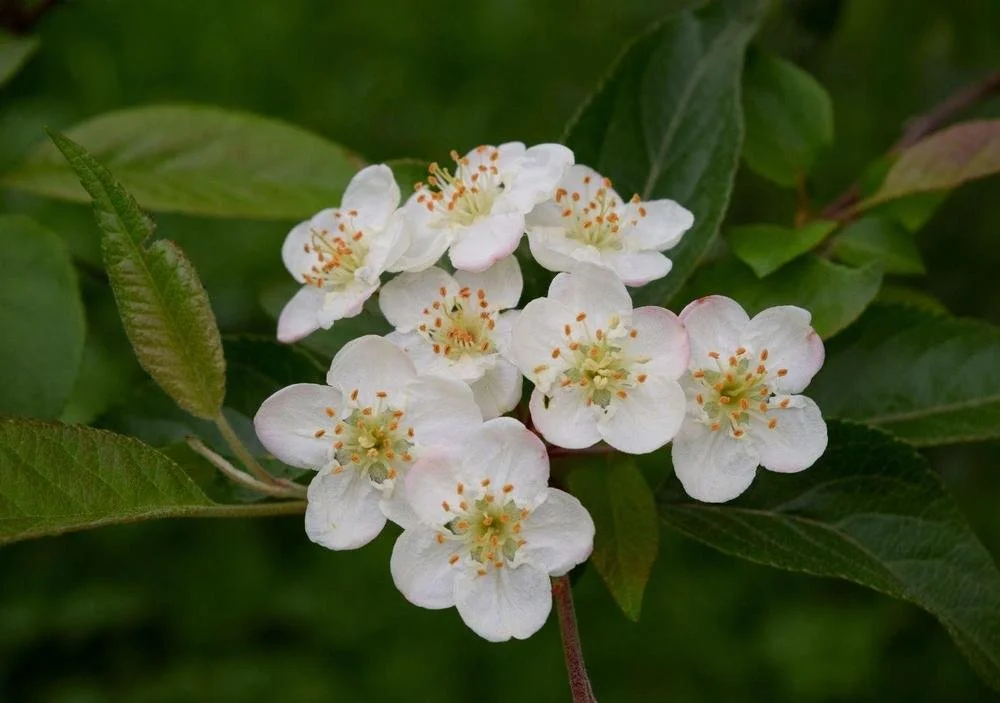
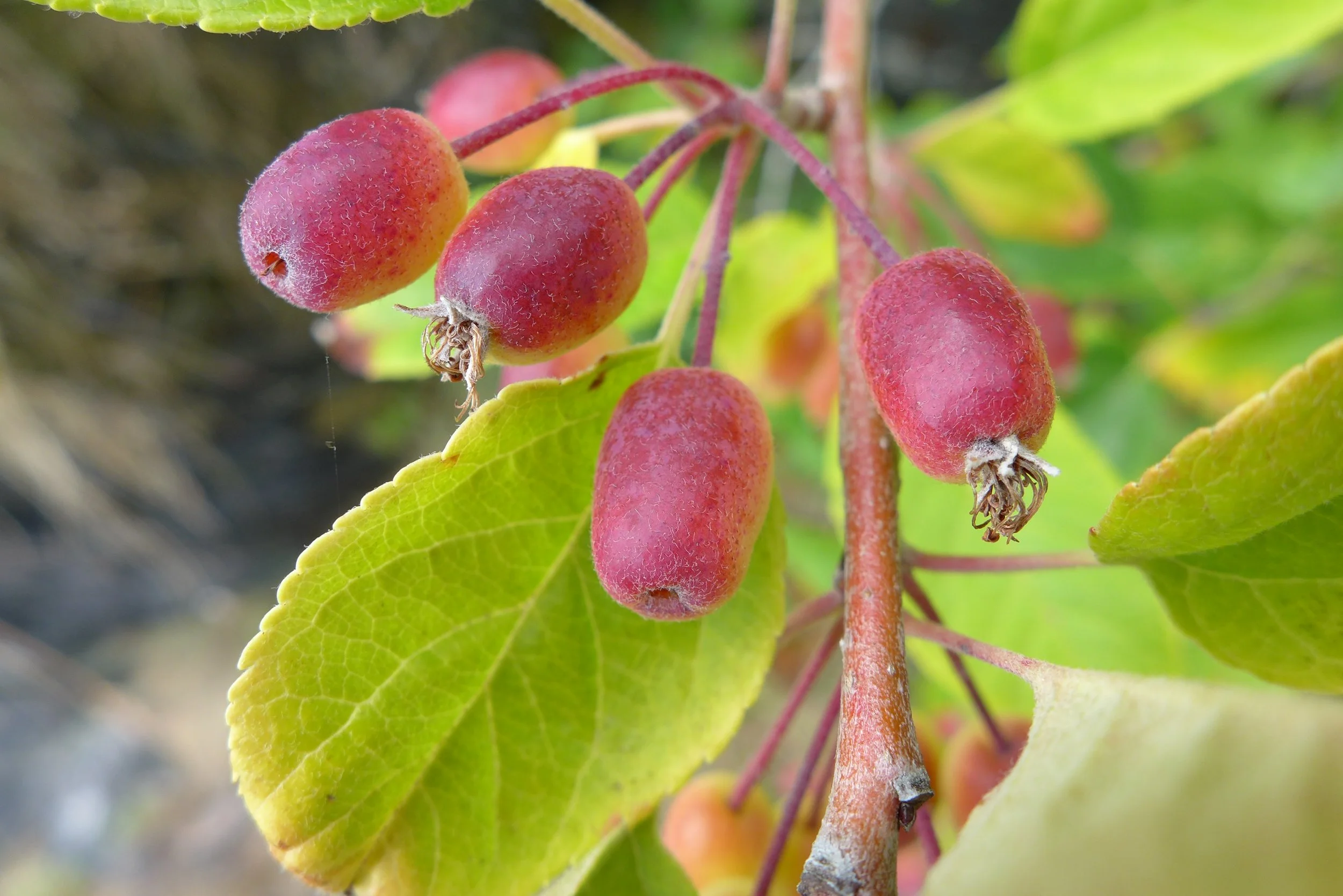
Description: This small tree can grow up to 12 metres tall and features thorny shoots. Its deep-green, egg-shaped leaves alternate along the stems and have irregular lobes with toothed edges. Fragrant white flowers appear in flat-topped clusters of 5–12 blossoms. After flowering, clusters of fruit develop, starting green when unripe and turning yellow to purple-red as they ripen.
Harvest and Sustainability: Apples are typically ready for harvest in late summer. They can be picked while still green and allowed to ripen within a day, or left to ripen on the tree. However, leaving them on the tree may mean competing with wildlife and insects for the fruit.
Uses: The apples are very tart, but excellent to use for jellies. The fruit may also be kept frozen to keep for later use.
Crabapple bark can be boiled to make a cure-all tonic for colds or treat symptoms of tuberculosis, colds and the flu.
