
Trailing Blackberry
Hul’q’umi’num: sqw’lil’muhw
SENĆOŦEN: S₭ELÁLEṈEW̱IȽĆ
Diitiidʔaaʔtx̣: xi.xi.ʔukws
Latin: Rubus ursinus
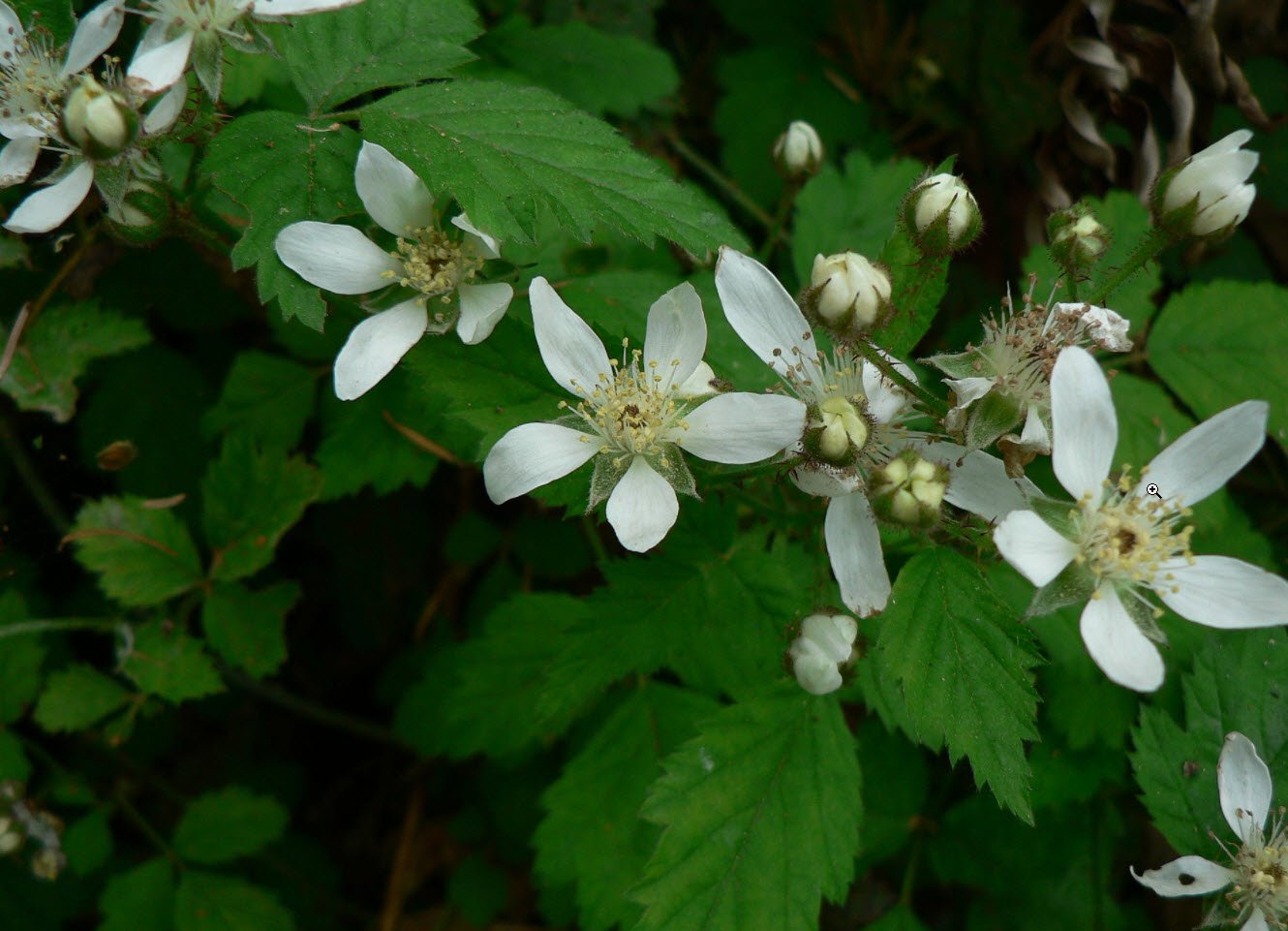
Photo Credits: PlantMaster
Description: It is a trailing vine with small prickles along the stems. The leaves are toothed and always arranged in sets of three leaflets alternating up the vine (unlike non-native species such as Himalayan blackberry, which typically have five leaflets).
Male and female flowers grow on separate plants and begin producing in their second year. Female plants have more rounded leaves and larger flowers. The blossoms range from white to pink (up to 4 cm across), with long, thin, spreading petals surrounding a central cluster of stamens. The elongated berries grow to about 1 cm across, ripening to a deep, bluish-purple.
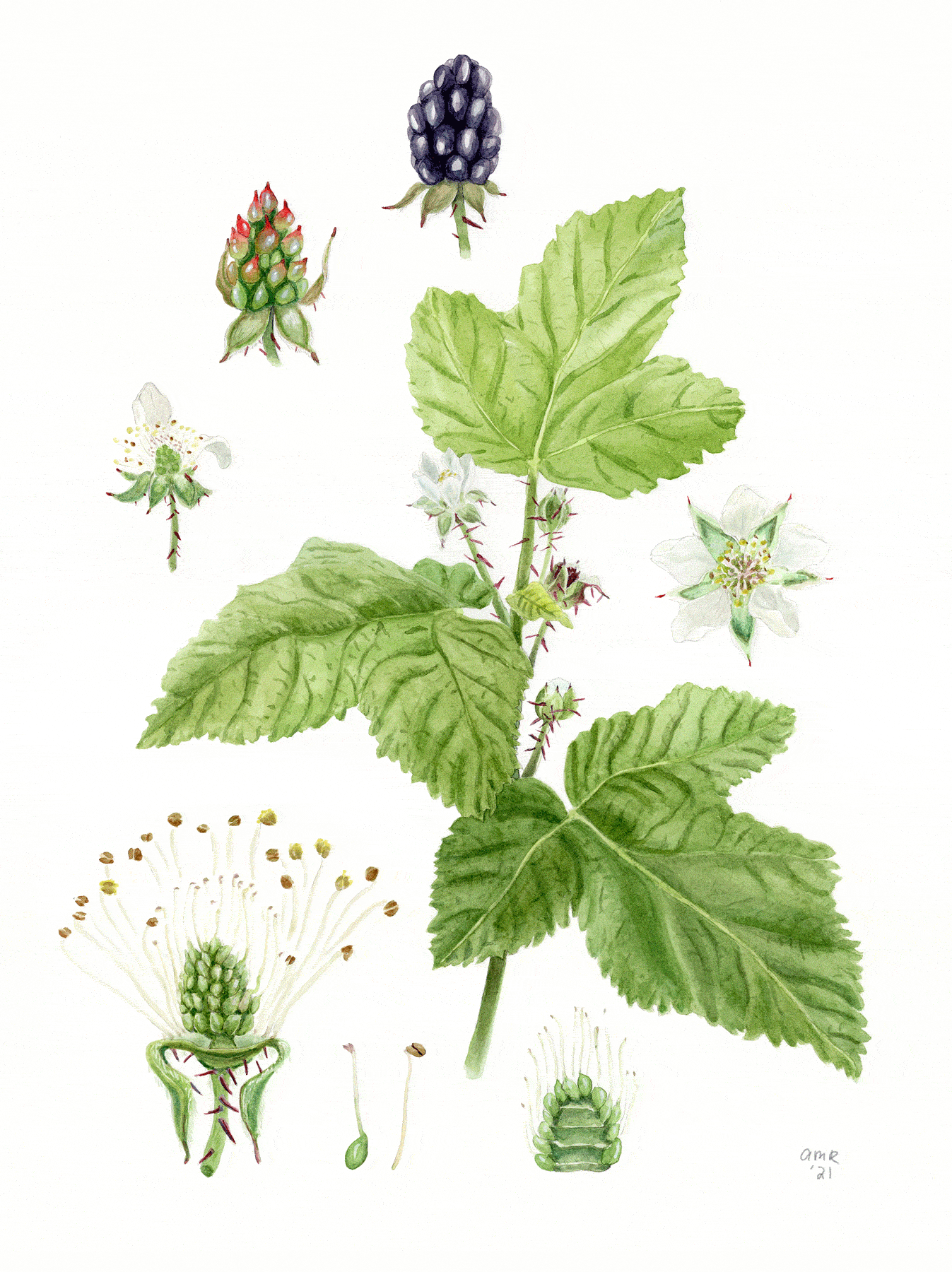
Photo Credits: Amanda Riley
Harvest and Sustainability: Trailing blackberries are typically found in disturbed areas, thickets, and dry, open forests.
The berries are ready for harvest in early to mid-summer, while the leaves are best collected from mid to late fall.
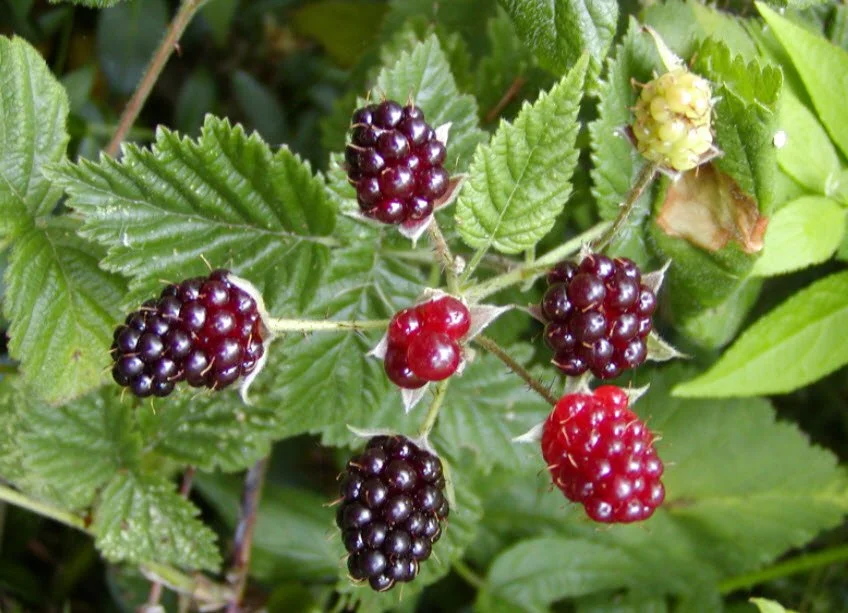
Photo Credits: Animalia-Life.club
Uses: The leaves can be harvested to make tea, with purplish-red leaves being the best choice. They are often added to bitter medicines to sweeten the flavour. The berries can also be harvested and eaten fresh.
Traditionally, the leaves and roots were used to treat diarrhea, dysentery, cholera, excessive menstruation, fevers, hemorrhoids, and mouth sores.
According to Coast Salish origin stories, trailing blackberry grew where a woman's blood fell from a tree while she was being chased by a jealous husband. As part of a Coast Salish purification rite, the stems were scrubbed across the body before spirit dancing.
