
Springbank Clover
Diitiidʔaaʔtx̣: naxu.
Latin: Trifolium wormskjoldii
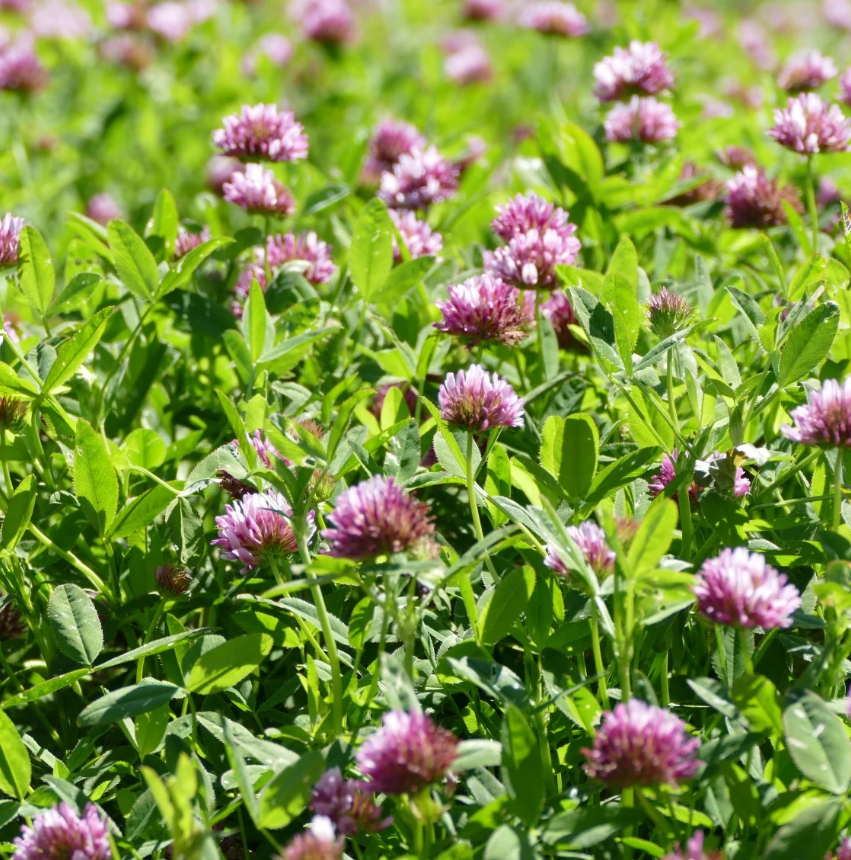
Photo Credits: Satinflower Nurseries
Description: This herb reproduces from a taproot as well as creeping rhizomes. Its stems grow up to 30 cm long, bearing sets of three oval-shaped, finely toothed leaves that reach up to 3 cm in length. The flowers range from red to purple and occasionally tipped with white. They measure over 1 cm wide.
It is often confused with Thimble Clover (Trifolium microdon), which has smaller (under 1 cm wide), lighter pink flowers and is also edible.
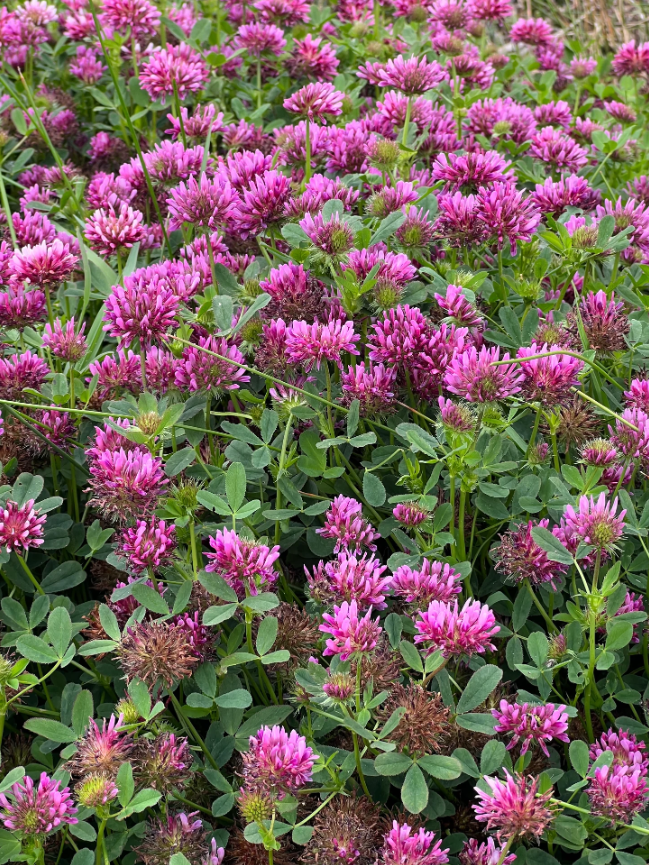
Photo Credits: Dr. Mark S. Brunell
Harvest and Sustainability: Naxu. grow in moist to wet open places. Running roots is harvested in early spring whereas the tap root is harvested in late summer.
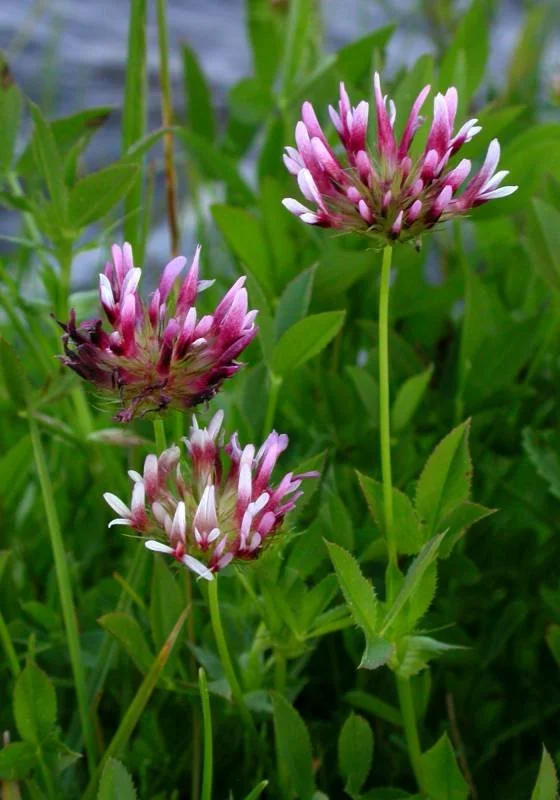
Photo Credits: Ben Legler
Uses: The roots are prepared by steaming or boiling before consumption. Though naturally bitter, they can be eaten alone or alongside the roots and shoots of other native plants. Running roots can be enjoyed either raw or cooked and are traditionally dipped in ooligan oil and deer or elk fat, or dried to preserve them for the winter.
Additionally, the leaves and stems make a fresh addition to salads, while the dried flower heads can be brewed into tea.
