
Osoberry
Hul’q’umi’num: tth’uxwun’
SENĆOŦEN: ȾEX̱EN¸IȽĆ
Diitiidʔaaʔtx̣: titidićqʎ
Latin: Oemleria cerasiformis
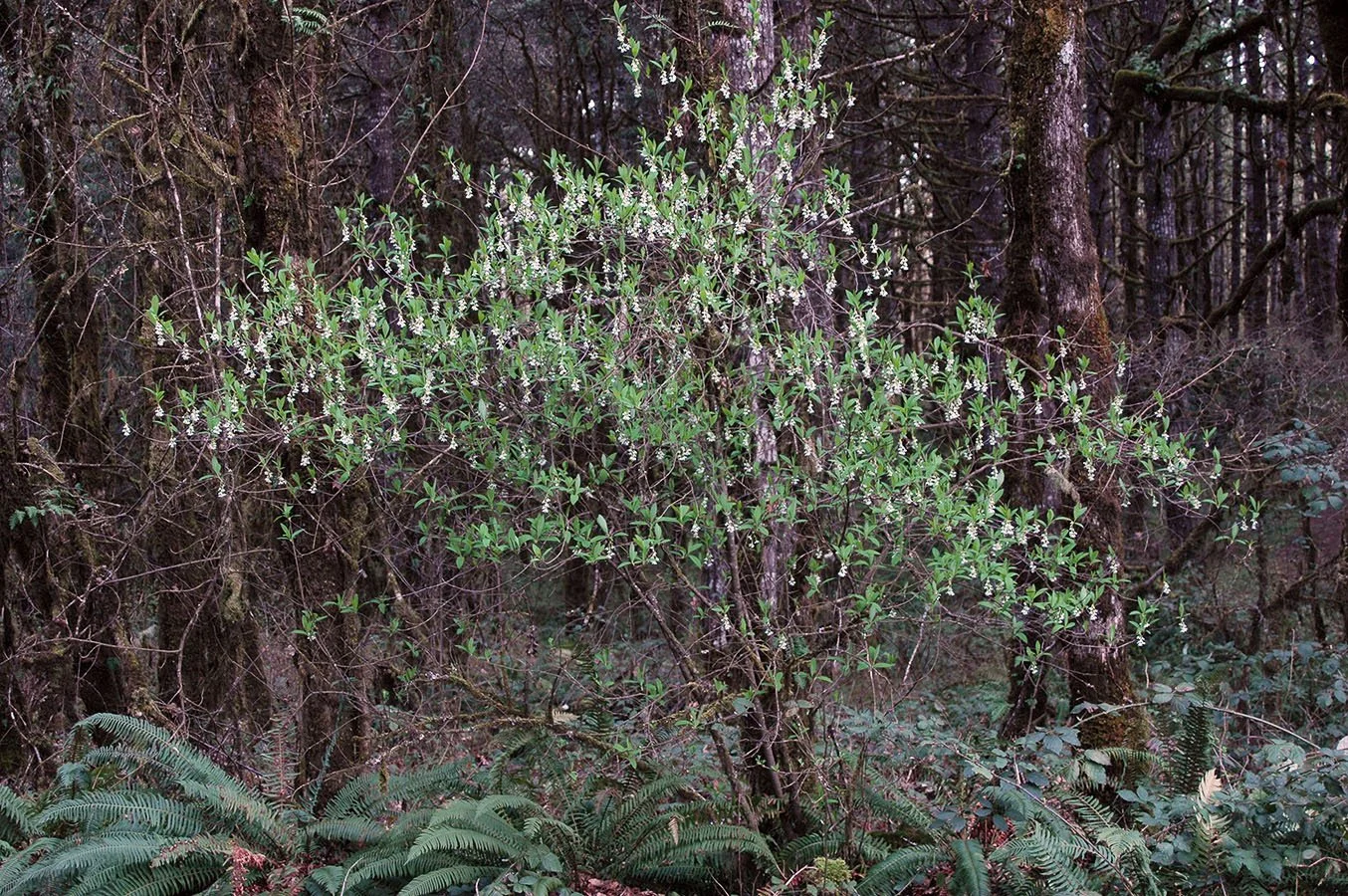
Photo Credits: Oregon State University College of Agricultural Sciences Department of Horticulture
Description: Also known as Indian plum, chokecherry, and june plum.
It is a 1.5 to 5-metre-tall shrub with brown to grey bark and is one of the first flowering plants to bloom in the spring. The flowers hang down from the stem in cascading clusters and appear before the leaves. The pale green, lance-shaped leaves grow alternately along the branch. The tiny fruits are plum-like and ripen from a peach hue to blackish-blue.
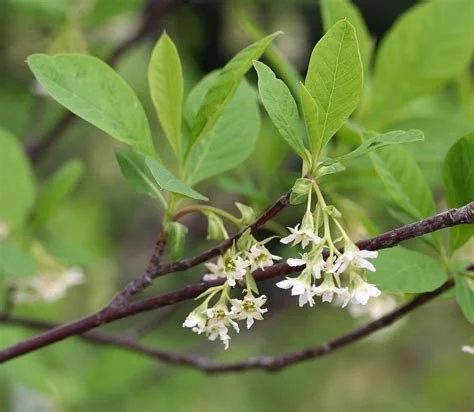
Photo Credits: Michael Wolf
Harvest and Sustainability: Tth’uxwun’ is found nearby streambeds, open woods, and disturbed sites. It thrives on forest edges, sunny thickets, and roadsides.
This species is an indicator for the length of the berry season of other berry-producing shrubs. It is the first native plant to flower yet the last fruit to ripen.
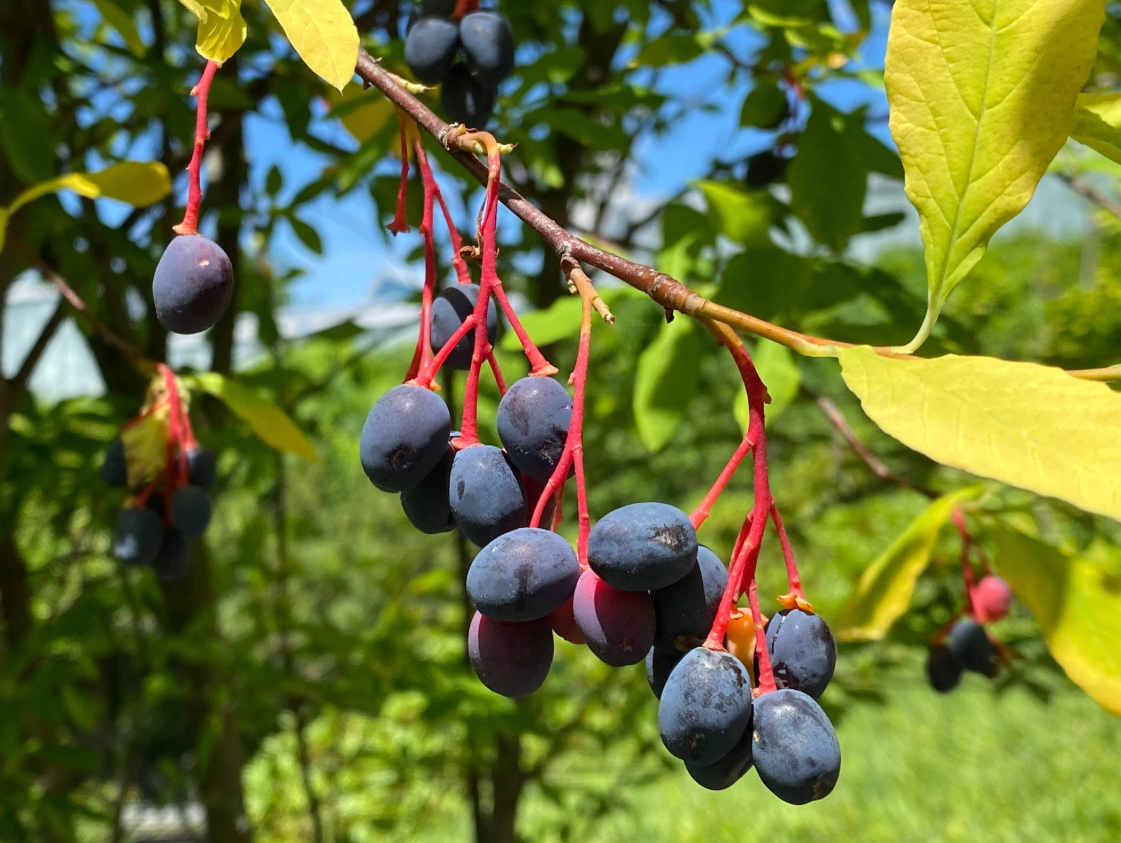
Photo Credits: Seedville USA
Uses: The leaves taste like cucumber skin, while the berries taste like cucumber flesh with a slightly bitter edge. Both can be eaten raw and added to salads. When cooked, the bitterness dissipates. The fruit can be used in jams, sauces, and baked goods, similar to a plum.
Note that the large pits need to be removed before cooking.
