
White Fawn Lily
Diitiidʔaaʔtx̣: ca.ca.waʔsc.
Latin: Erythronium oregonum
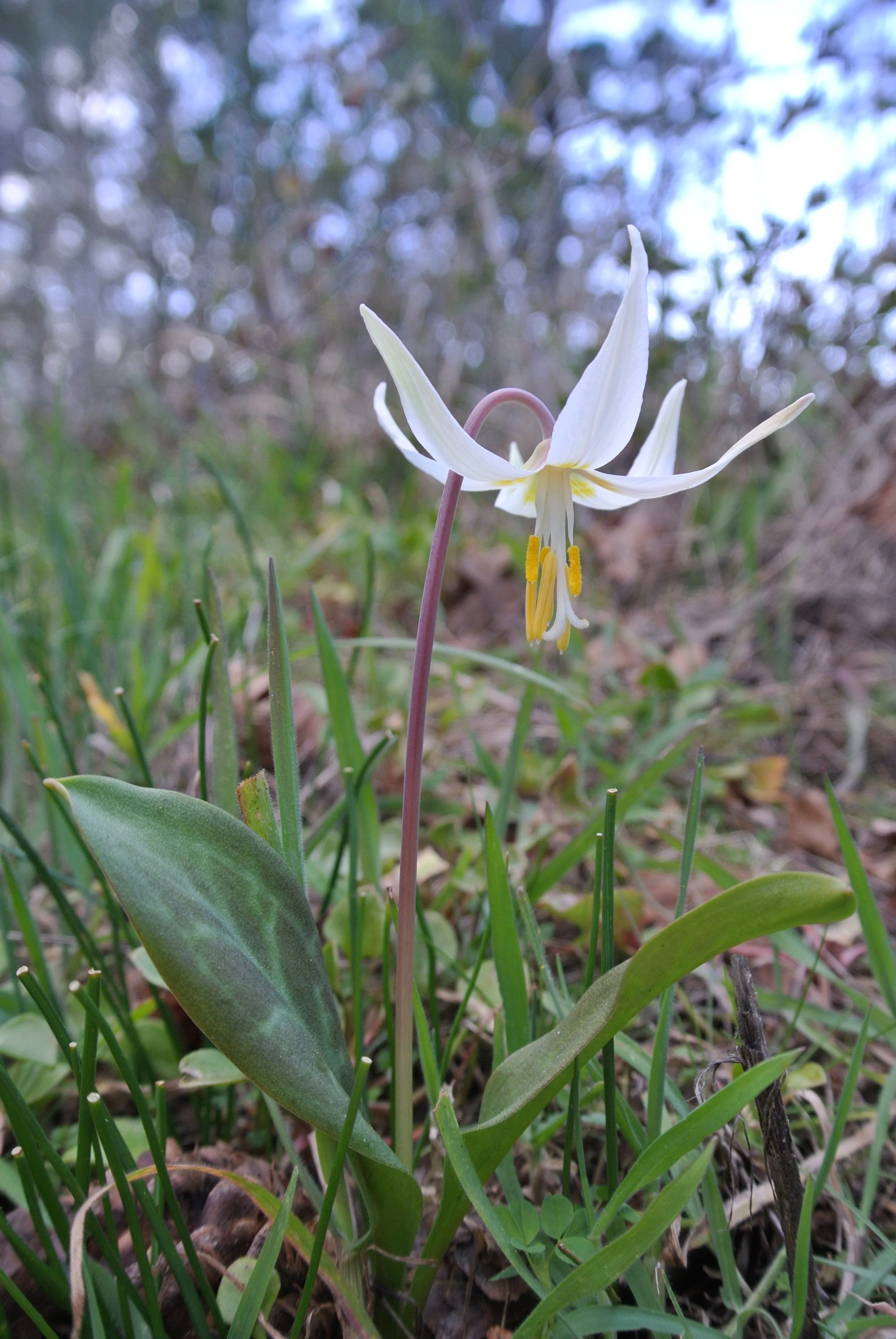
Photo Credits: Kendall McLaughlin
Description: A white, nodding flower head—sometimes featuring an orange-yellow throat at its center—with six long, thin petals that bend sharply backward.
A thin stem up to 30 cm tall rises straight up from a basal rosette of leaves. The leaves are lance to oblong-shaped, growing up to 20 cm long, and are strikingly mottled with a pale green and dark brown pattern.
Underground, the plant grows from a segmented, hairy, bark-like corm.
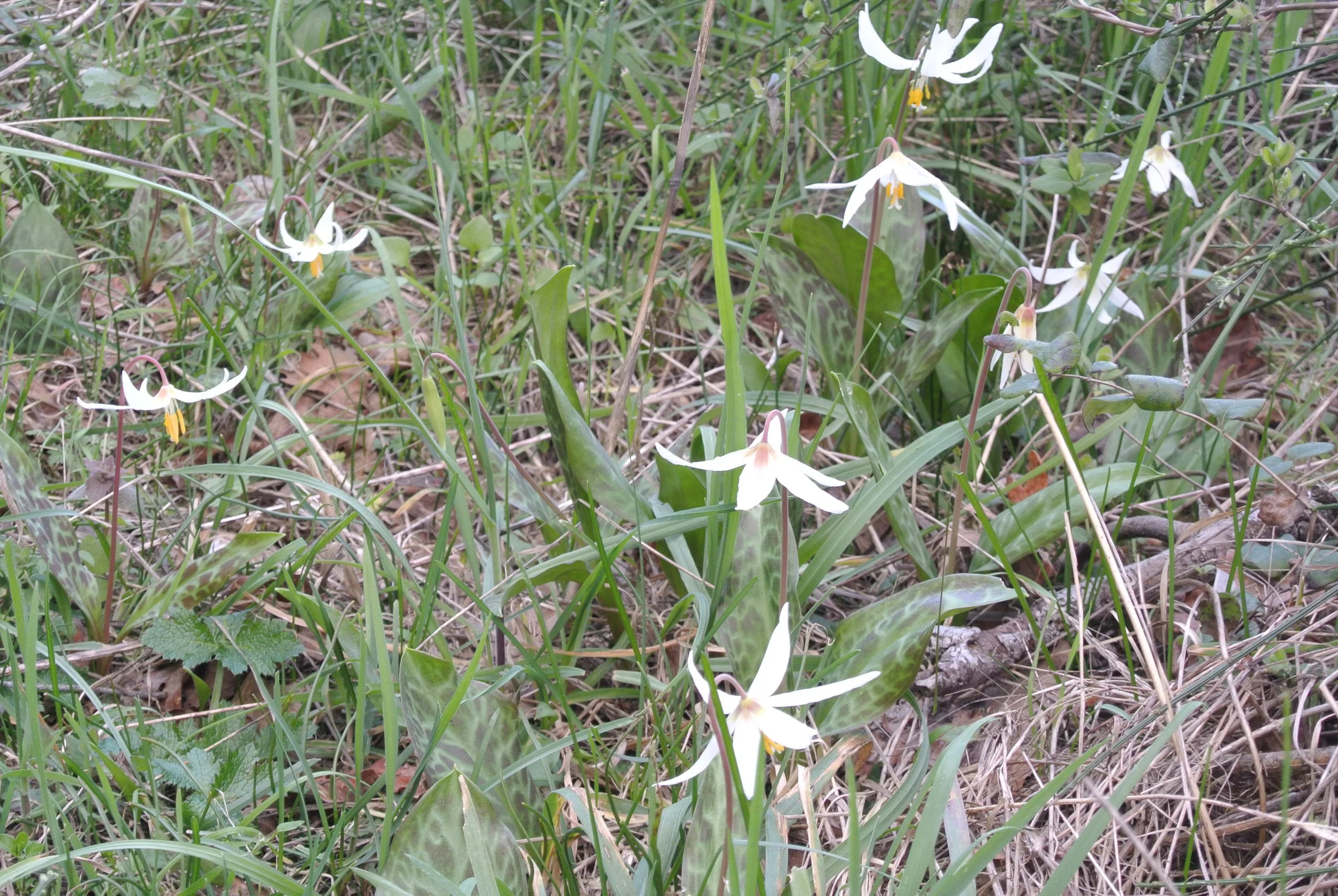
Photo Credits: Kendall McLaughlin
Harvest and Sustainability: They are found in well-drained meadows and rocky woodlands. The harvest season occurs in the spring, right before the plant flowers.
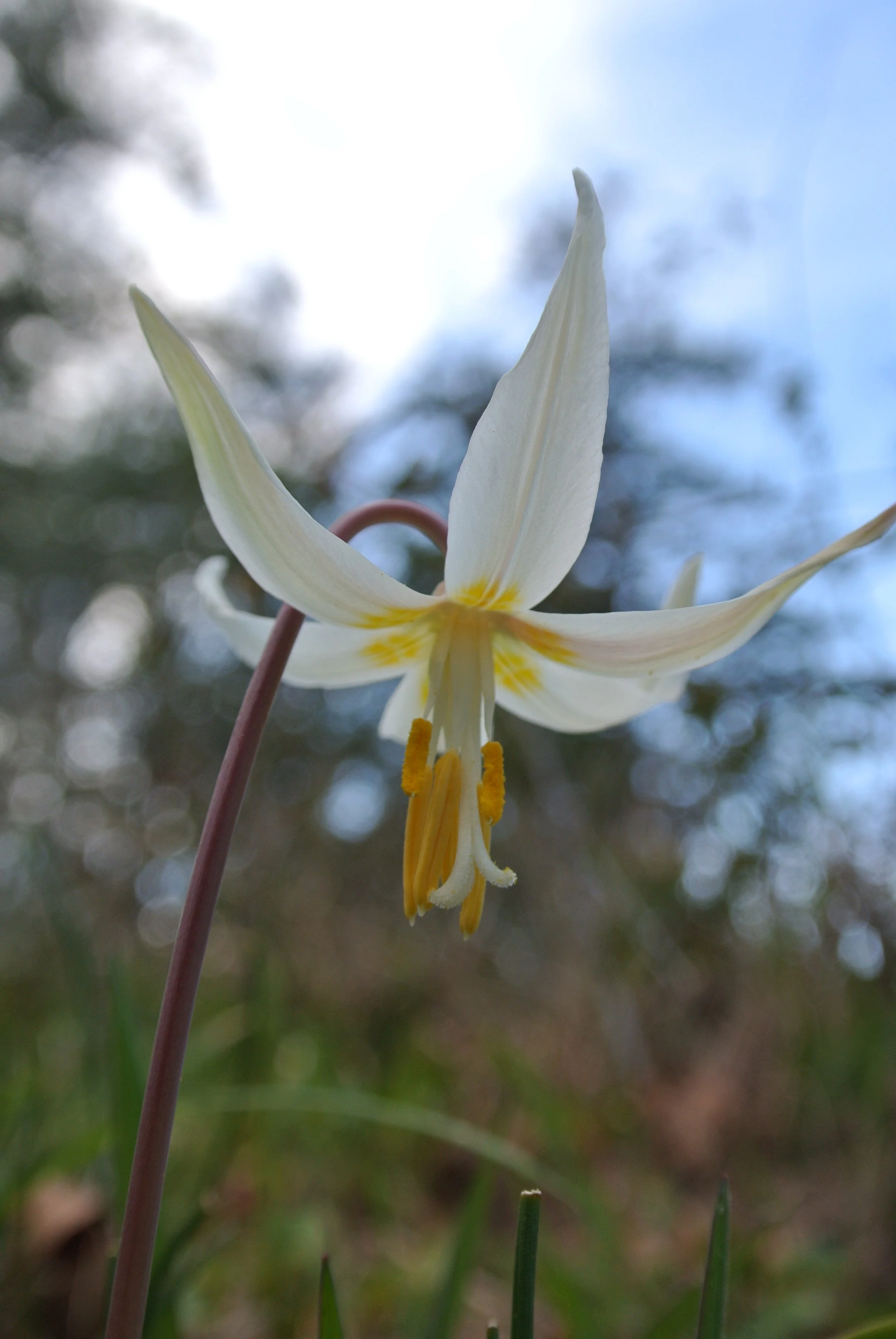
Photo Credits: Kendall McLaughlin
Uses: The corms were traditionally eaten as a famine food and must be steamed or roasted, though they are generally not considered palatable. By contrast, pink fawn lilies are palatable and edible, but they are extremely rare.
*Warning*
Avoid consuming large amounts, as the corms contain an indigestible starch. Additionally, some Elders consider the white fawn lily to be toxic, and it is not consumed at all in certain communities.
