
Snowberry
Hul’q’umi’num: p’up’q’iyaas
SENĆOŦEN : PEPKIYOS
Diitiidʔaaʔtx̣: ʎiċisaxsapt
Latin: Symporicarpos albus
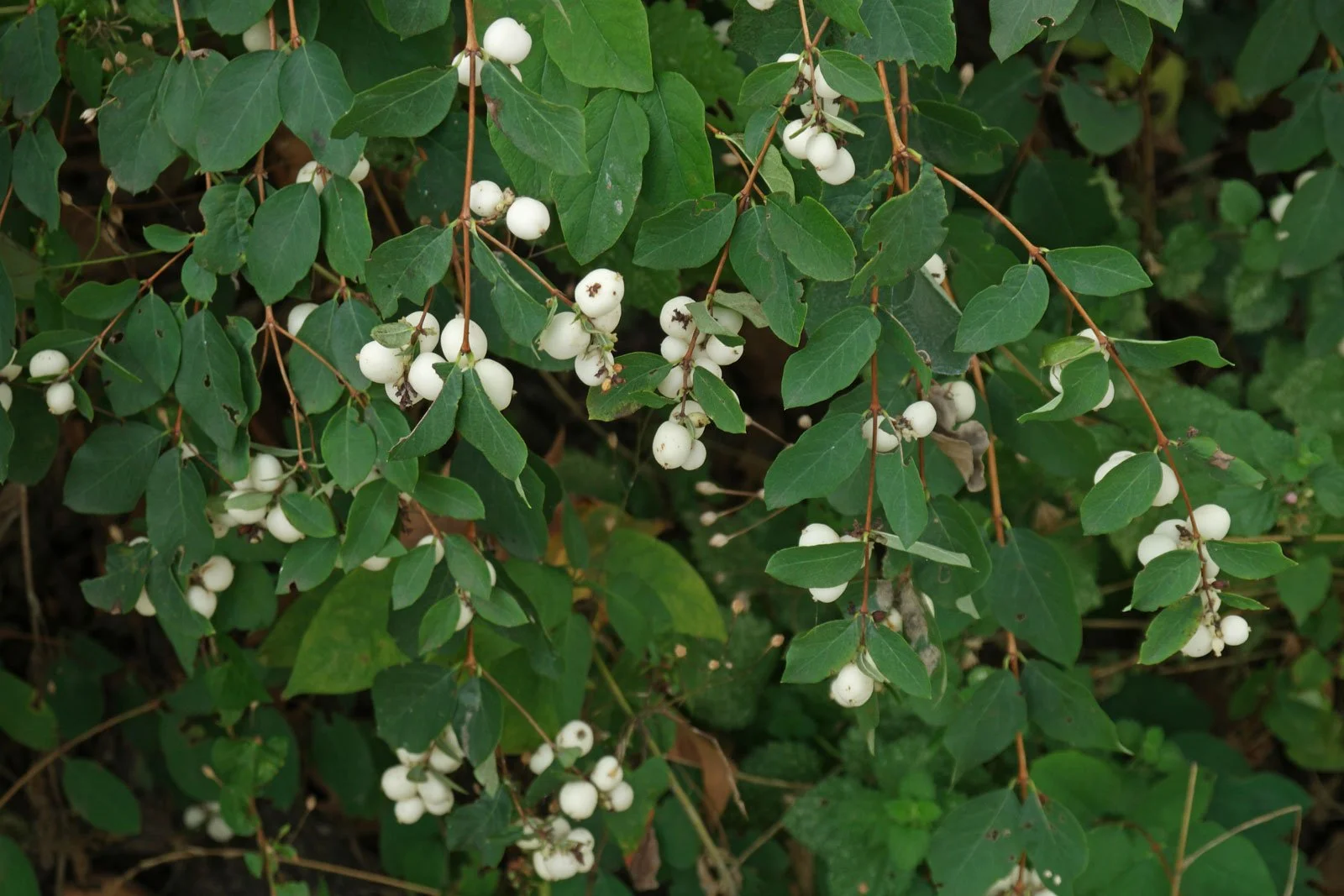
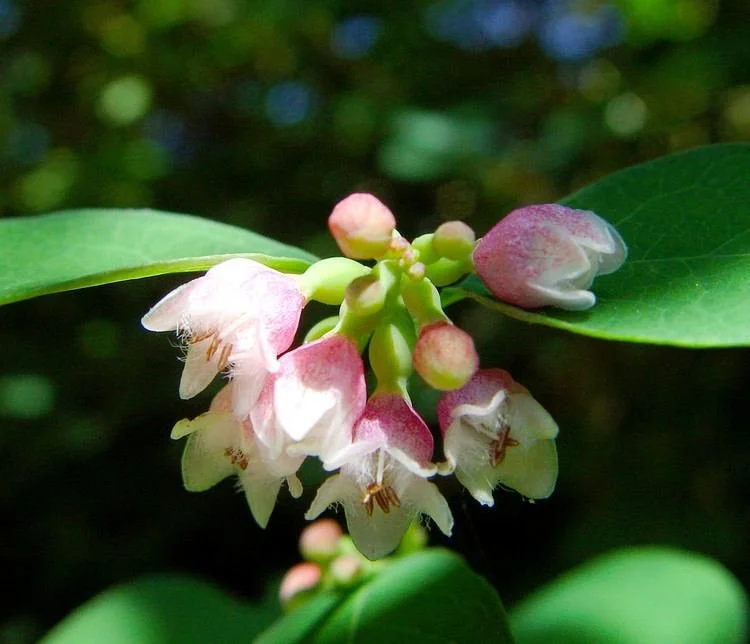
Description: This shrub can grow up to 2 meters tall and often forms dense thickets. Its bark is reddish-brown and shredded in texture. Young leaves may appear in irregular shapes, but mature leaves become elliptic to oval and grow in opposite pairs. In summer, clusters of pink to white, bell-shaped flowers bloom, later transforming into drooping white berries that persist throughout the winter.
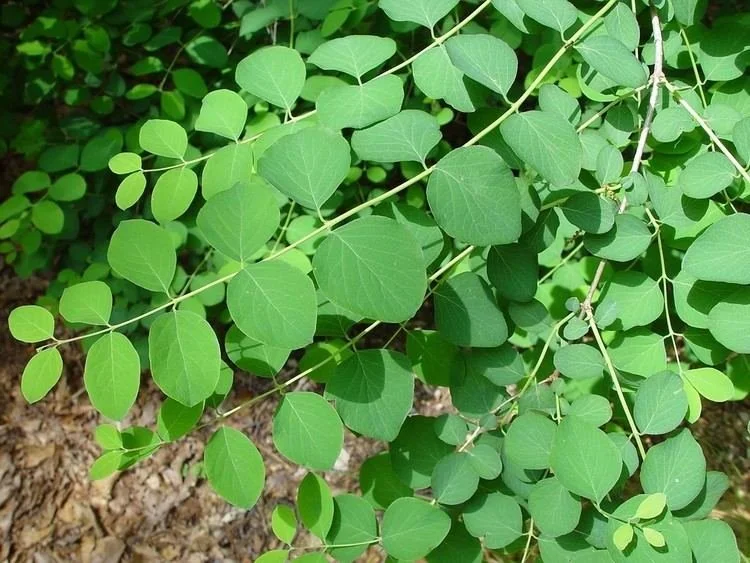
Harvest and Sustainability: Found in open forests. It is an important winter food for birds.
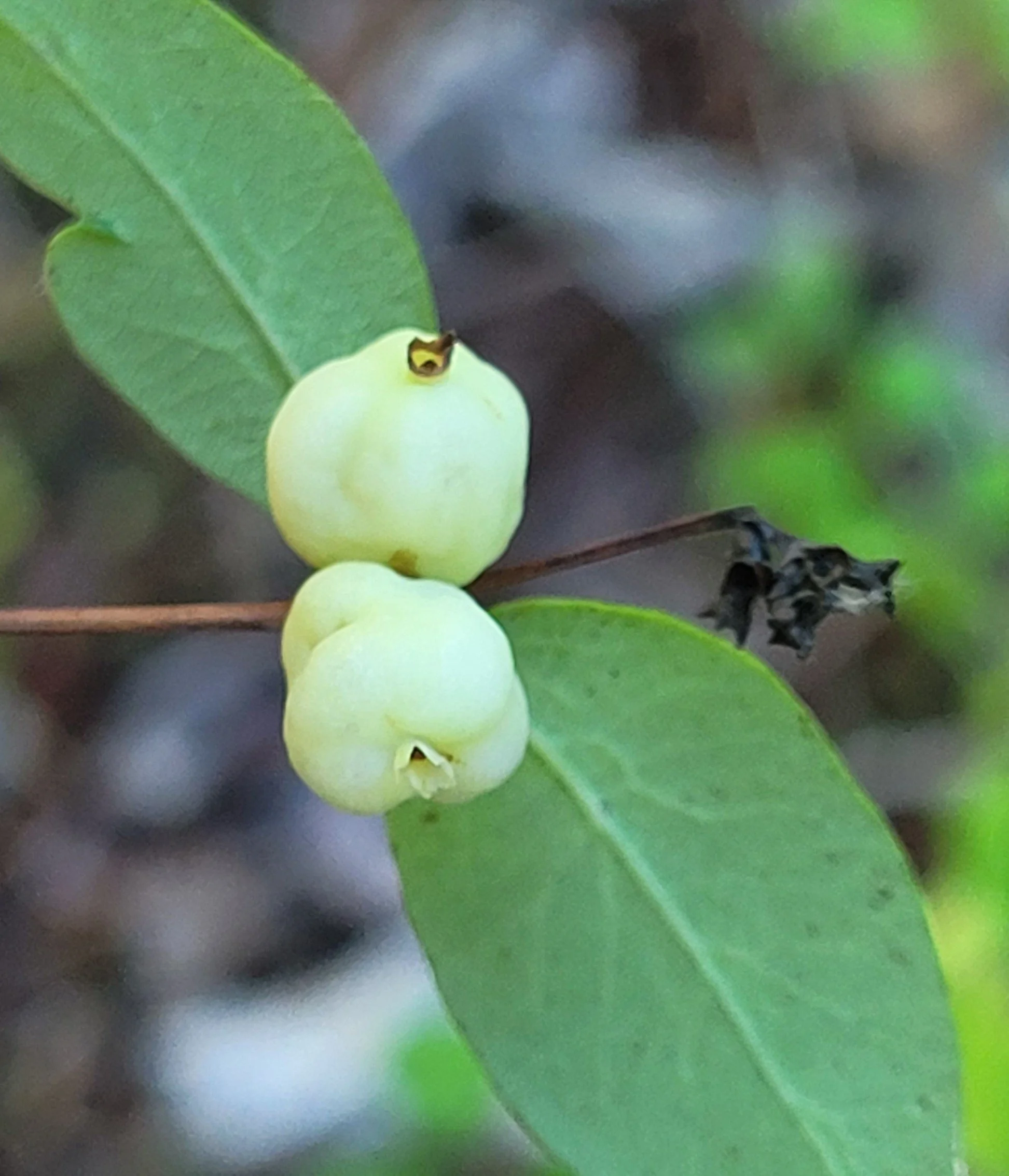
Uses: The bark and berries of this shrub have been traditionally used for various medicinal purposes. Bark shavings soaked in bathwater are believed to help treat swimmer’s itch, while adding berries to a bath may assist in alleviating impetigo. Salves made from both bark and berries have been applied to areas of nerve damage to support recovery from burns or paralysis caused by strokes.
Beyond medicinal uses, the stems can be tied together to create durable brooms.
*Warning* The berries are poisonous.
