
Bigleaf Maple
Hul’q’umi’num: q’umum’ulhp
SENĆOŦEN: ȾȽÁ¸EȽĆ
Latin: Acer macrophyllum
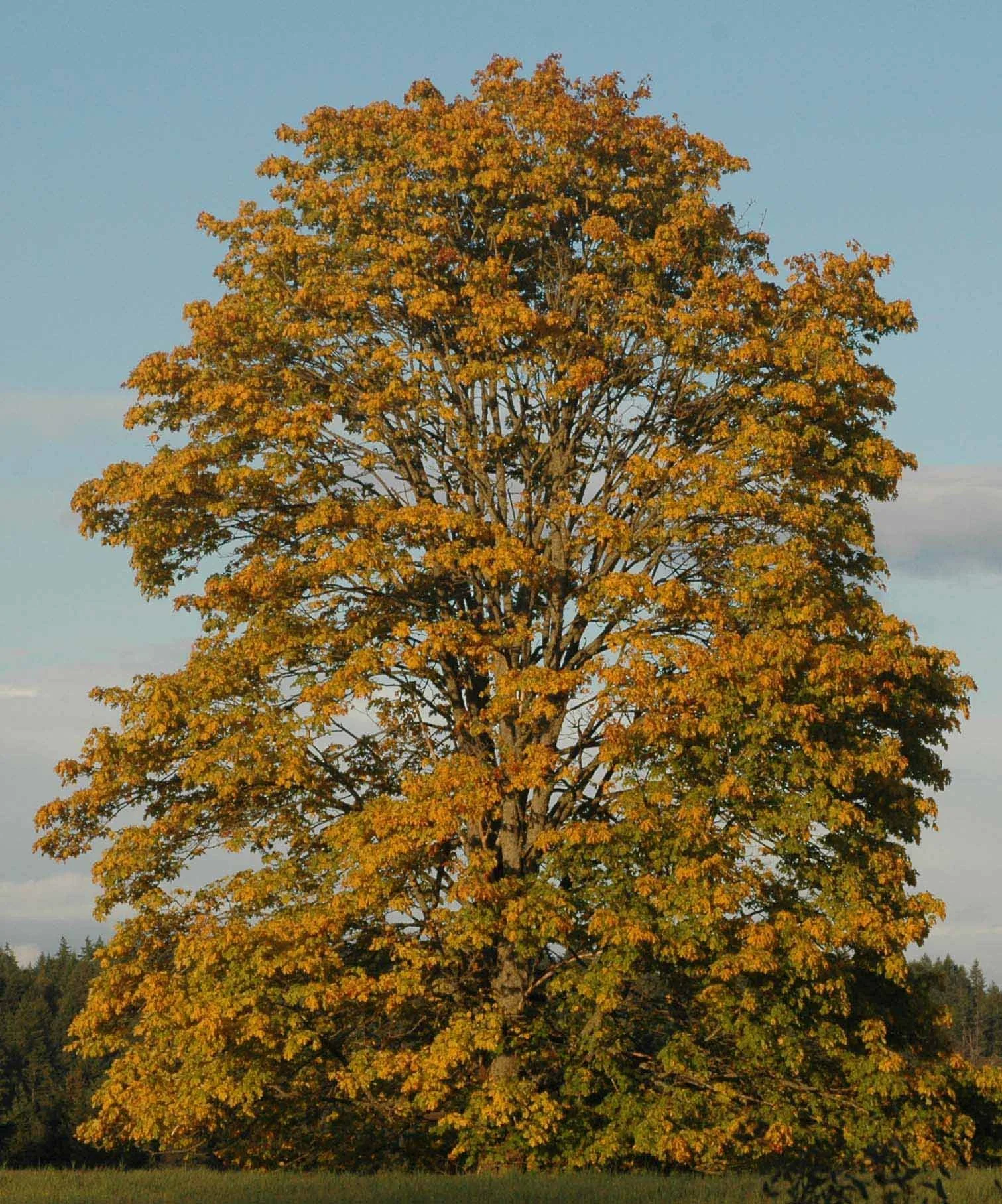
Photo Credits: Woodbrook Native Plant Nursery
Description: A multi-branched tree that grows up to 35 metres tall. Young trees have smooth, green bark, while older trees have rough, greyish-brown bark. The leaves are large, maple-shaped, and up to 30 centimetres across with three to five deep lobes. The buds develop over winter, and in early spring, greenish-yellow flower clusters emerge.
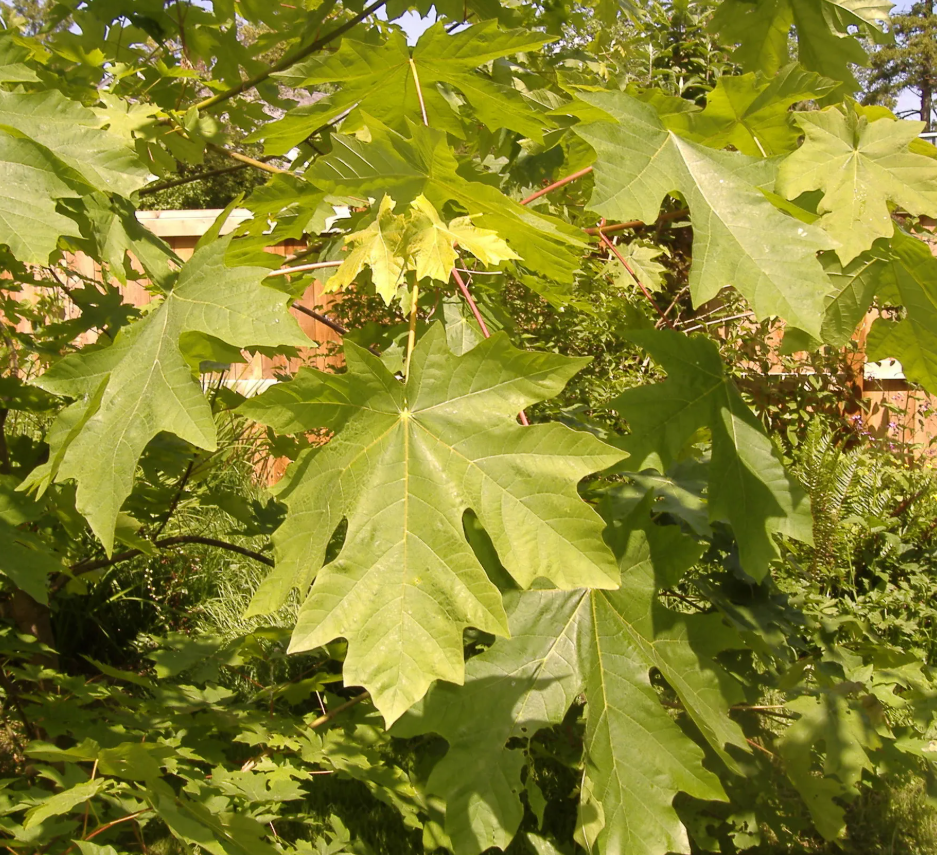
Photo Credits: Chris Welch
Harvest and Sustainability: Q’umum’ulhp are found in douglas-fir forests in dry to moist sites. Can be found in disturbed sites from fires or logging.
The flowers are harvested in early spring.
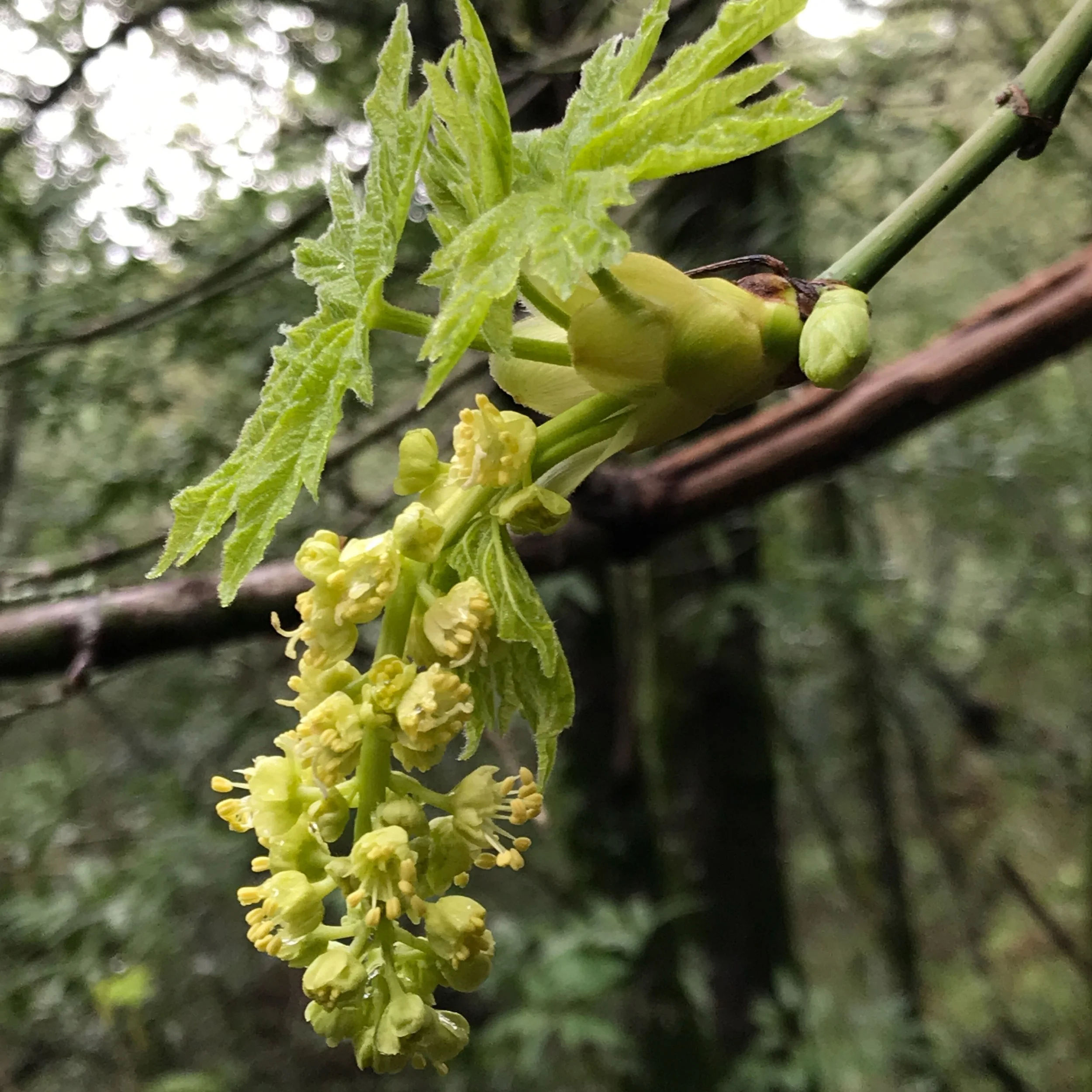
Photo Credits: Homestead Valley Land Trust
Uses: The blossoms can be eaten fresh by themselves or in a salad. They have a mild, sweet flavour.
The innermost bark (phloem) can be eaten with oil.
Leaves are used to flavour pit cooks. The leaves were also traditionally used to rub on boys' faces at puberty to discourage facial hair growth.
Sap from the burls is mixed with kexmin seeds or leaves to make a poultice to treat open tuberculosis sores. It can also be made into tea to treat tuberculosis symptoms. The raw sap is watery and can be boiled to thicken into syrup.
