
Douglas-Fir
Hul’q’umi’num: ts’sey’
SENĆOŦEN: JSȺ¸IȽĆ
Latin: Pseudotsuga menziesii
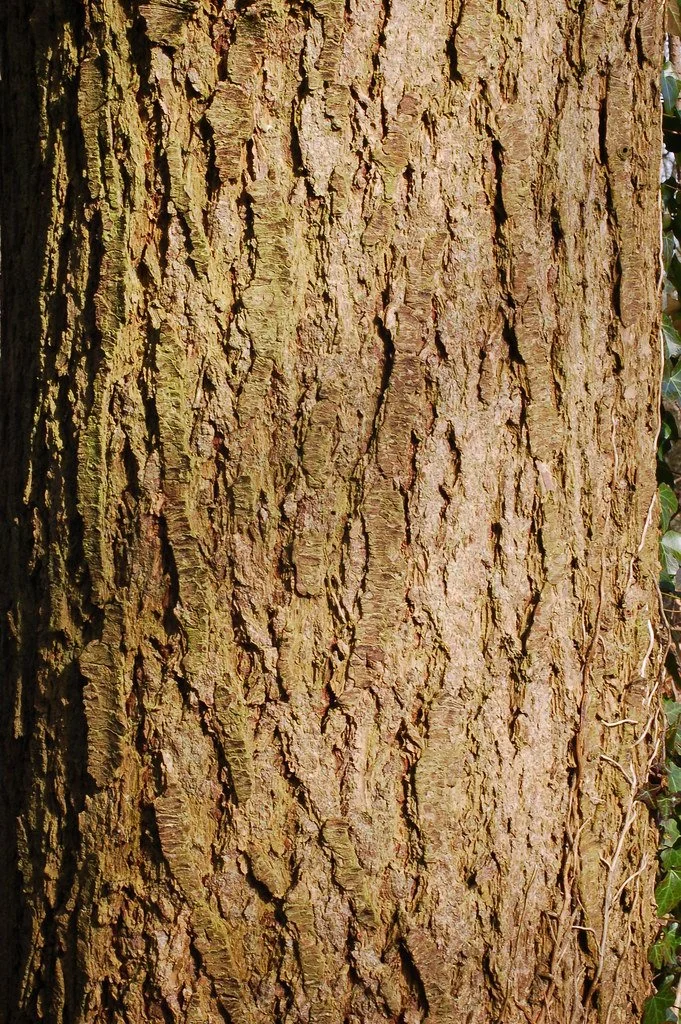
Photo Credits: Bob Osborn
Description: Ts’sey’ are massive trees reaching up to 70 metres tall with thick, rough, dark brown bark with deep ridges.
Its flat, yellowish-green needles measure 2–3 cm long, end in pointed tips, and spiral around the branches. The end of branches are met with sharp pointed buds.
The cones transition from green during flowering to reddish-brown or grey at maturity. They feature papery scales accompanied by prominent, three-forked bracts that extend outward, resembling the hind legs and tail of a mouse.
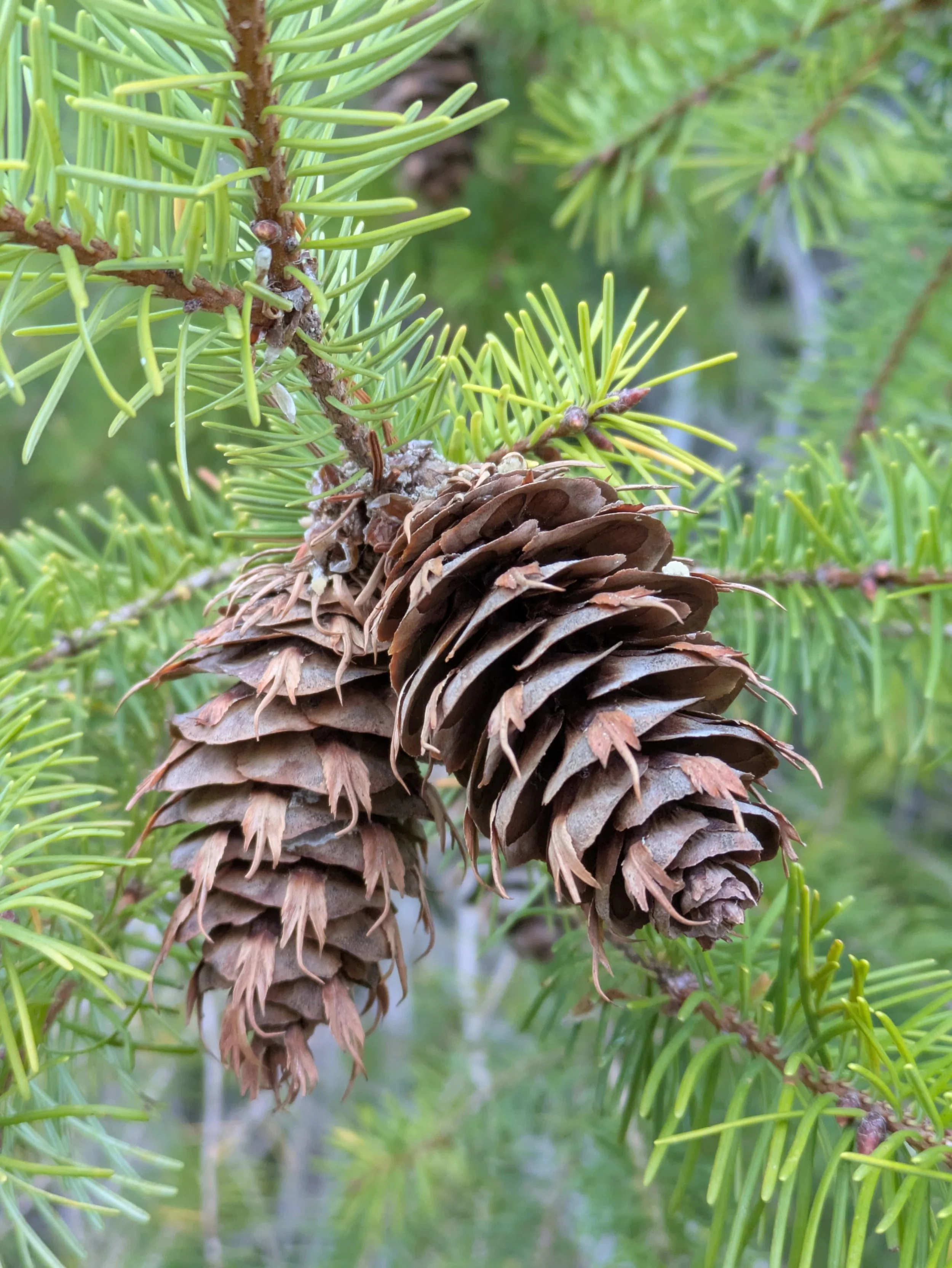
Photo Credits: Kendall McLaughlin
Harvest and Sustainability: JSȺ¸IȽĆ grows across a wide range of habitats, from extremely dry, low-elevation sites to moist montane regions. Often the first tree species to regenerate naturally after a wildfire, it can grow to become among the largest and oldest trees in the forest. Its thick, fire-resistant bark helps it survive low-to-moderate intensity fires, leaving visible fire scars on the trunks of ancient old-growth trees.
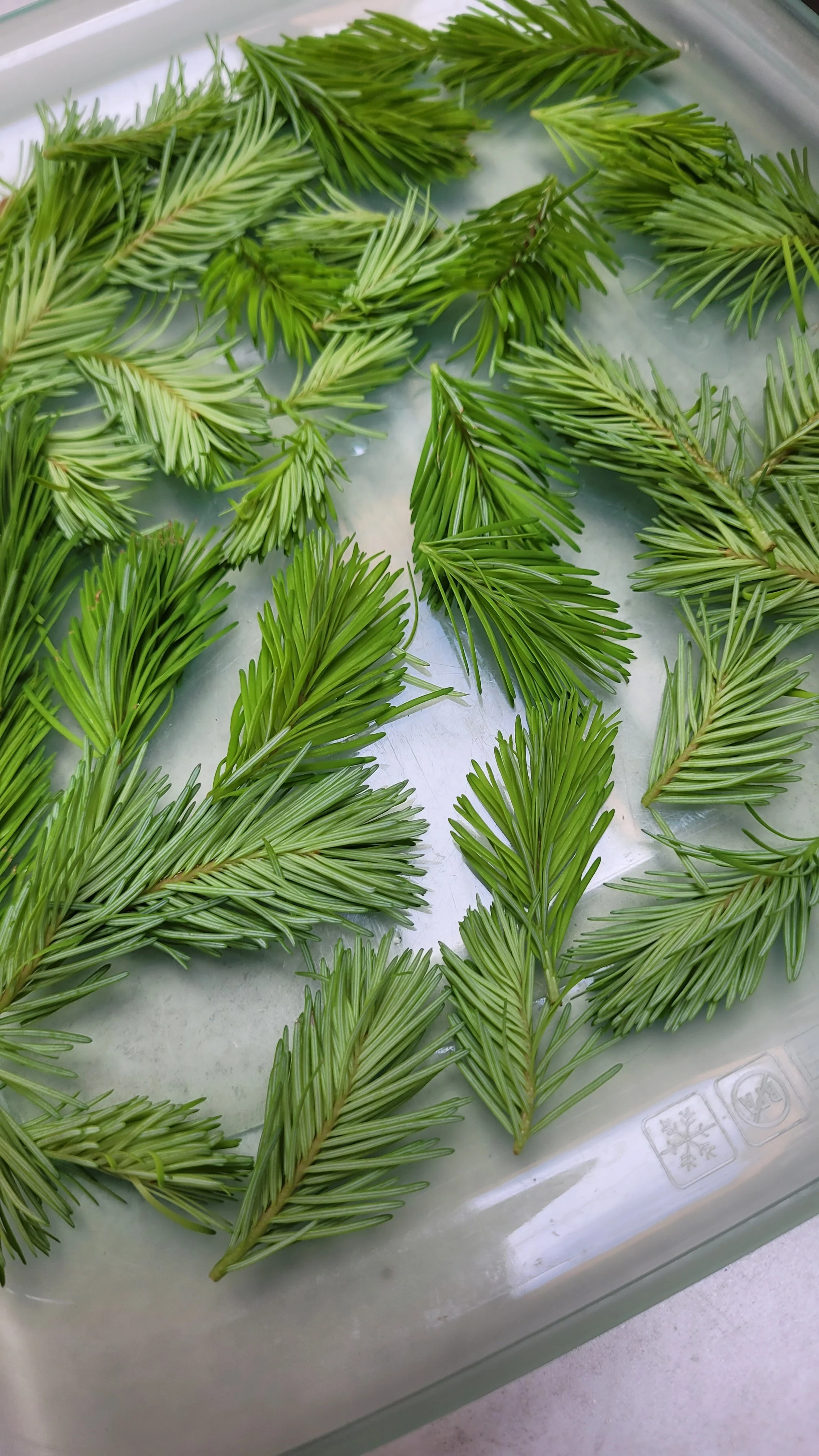
Photo Credits: Kendall McLaughlin
Uses: The wood and bark serve as an excellent fuel source, though they are known for throwing sparks and giving splinters. The wood is traditionally used to craft items such as spear handles, harpoon shafts, spoons, dip-net poles, harpoon barbs, fire tongs, salmon weirs, caskets, and fishhooks.
Its pitch acts as a sealant for joints on tools—like harpoon heads, gaffs, and fishhooks—and for caulking canoes and other water vessels. Pitch is also prepared as a medicinal salve for wounds and skin irritations, while the pitchy heartwood is ideal for making torches.
Their new growth needles (fir tips) can be harvested and used for teas or flavourings.
